
Markets
Thermoelectric Cooling For Aerospace And Defense
Detectors, sights and avionics need cooling that has no moving parts, works in any orientation and survives shock, vibration and wide temperature swings.
Industry Pain Points
What Makes Aerospace And Defense Cooling Different
- Rotating machinery is a reliability and acoustic signature problem, not just a maintenance one
- Equipment operates in any attitude, including inverted and under acceleration
- Detectors need to be cold and stable, because noise scales with temperature
- Shock and vibration levels break brittle assemblies that survive a laboratory bench
- Mass and volume budgets are tight and every gram is contested
- Qualification cycles are long, so part consistency over years matters more than unit price
Customer Requirements
What Defense And Aerospace Engineers Ask Us For
No Moving Parts
A solid state heat pump with nothing to wear, seize or make noise.
Deep, Stable Cold Points
Micro modules and cascades for detector cooling where noise floor depends on temperature.
Any Attitude
Orientation independence, which mechanical refrigeration cannot offer.
Suitable Products
What We Would Put In Front Of You First
Typical Application Scenarios
Aerospace And Defense Applications
Infrared Detectors
Cooling detector elements to reduce dark current and noise, using TES micro modules or a cascade where a single stage cannot reach the temperature.
Night Vision Equipment
Stabilising sensor temperature so image quality does not drift with ambient conditions.
Thermal Viewers And Weapons Sights
Compact, silent cooling in handheld and vehicle mounted sighting systems.
Avionics And Black Box Cooling
Electronics package cooling in sealed enclosures where ventilation is not permitted.
Inertial Guidance Systems
Holding a reference temperature so sensor bias stays predictable.
Infrared Calibration Sources
Black body references that must sit at a precisely known temperature.
Solution Process
How A Project In This Market Usually Runs
Delivery Capability
What We Can Commit To
Figures below are our own plant data, not industry averages.
Related Guides
Reading That Helps On This Kind Of Project
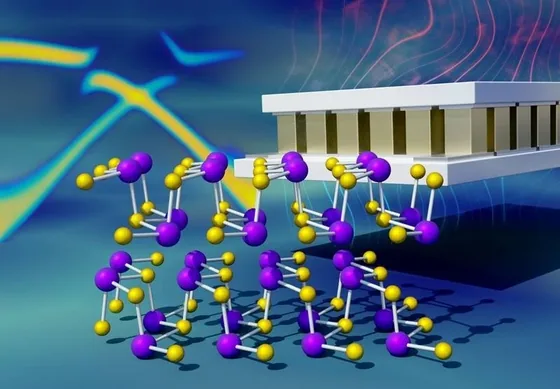
What Is A Thermoelectric Module
Peltier and Seebeck effects explained without the hand waving.
Learn more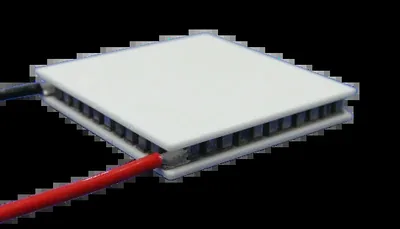
How To Select A Peltier Module
From heat load and delta-T to a shortlist of part numbers.
Learn more
Thermoelectric Module Reliability
What takes a module from 200,000 to 300,000 hours.
Learn moreFAQ
Frequently Asked Questions About Aerospace And Defense
Can a thermoelectric module cool a detector far enough?
A single stage reaches a ΔTmax of 63 to 71 °C at zero load, and much less under real load. Where that is not enough, a cascaded multi-stage module is the normal route. Send the detector temperature and load and we will tell you which is realistic.
Do you supply qualified or space rated parts?
We supply commercial modules produced under our ISO 9001 certified system with 100 % electrical test. Programme specific qualification is agreed case by case, so tell us what documentation you need before you design the part in.
Which substrate survives shock and vibration better?
Aluminium substrate modules are metallic and breakage free, which makes them more tolerant of shock and uneven clamping than brittle ceramic. The aluminium catalogue starts at 40×40 mm.
Can modules work in vacuum?
Conduction cooled plate to plate arrangements are the sensible architecture in vacuum, because there is no air to reject heat into. The hot side has to be conducted or radiated away by the structure.
Will the part still be available in ten years?
We manufacture our own material and modules, which is the main reason a part stays available. Tell us the programme lifetime at the design stage so we can flag anything that would affect long term supply.
Discuss A Detector Or Avionics Requirement
Send the temperature you need to reach, the load at that temperature, the envelope and the environment. We will say honestly whether a single stage, a cascade or a custom build is right.
No forms. Messages reach our engineering desk directly. Reply within 24 hours, Monday to Friday, 9:00 to 17:00 Beijing time.