
Thermoelectric Modules
TEA Aluminium Substrate Modules
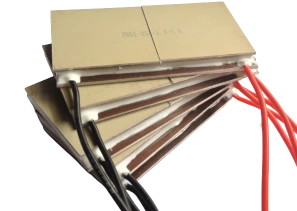
EVERREDtronics is the first company in China to develop aluminium substrated thermoelectric modules and is among the few enterprises in the world able to supply them at scale and at high quality.
Product Overview
A Substrate That Conducts Ten Times Better
Compared to a ceramic (Al2O3) substrate, aluminium far outperforms its peers in thermal conductivity, 122 W/(m·K) against 12 W/(m·K) for ceramic. That enhances cooling and heating efficiency by 30 % to 50 %.
It is also metallic and breakage free, which makes the modules far more reliable in severe conditions and longer lasting. Ceramic plates crack under shock, uneven clamping and thermal cycling; an aluminium plate does not.
We currently offer 40×40 mm, 50×50 mm, 55×55 mm and 80×120 mm. Aluminium substrate tooling is much faster than ceramic, one to two weeks against four weeks, so we welcome customers to send specifications for development when the existing modules do not match the requirement. We can also design modules of customised shape and size so the module matches the thermal interface perfectly.
Key Benefits
What Changes When You Move Off Ceramic
30 To 50 % More Efficiency
The substrate stops being the bottleneck, so more of the module's pumping capacity reaches the load instead of being lost across the plate.
Breakage Free
A metallic plate tolerates shock, vibration and imperfect clamping. This is the single biggest cause of field failure that the aluminium build removes.
Tooling In One To Two Weeks
New footprints take one to two weeks to tool instead of four for ceramic, which shortens a custom development cycle substantially.
Who It Is For
Engineers Who Specify This Series
- Designers whose ceramic modules have cracked in the field under vibration or clamping stress
- Teams that need more cooling from the same footprint without changing the power supply
- Automotive and transport applications where shock and thermal cycling are severe
- Products where the module is bolted directly to a metal chassis and flatness cannot be guaranteed
- Development programmes that cannot wait four weeks for ceramic tooling on a new size
Problems It Solves
What This Module Solves
- Ceramic plates cracking during assembly, transport or thermal cycling
- Not enough cooling from the footprint the mechanical design allows
- A thermal interface that has to be perfect because the substrate cannot spread heat
- Long tooling lead time blocking a custom size on a project schedule
- Electrically and mechanically fragile assemblies in high vibration environments
Technical Features
Aluminium Substrate Construction
Metallised Aluminium Plates
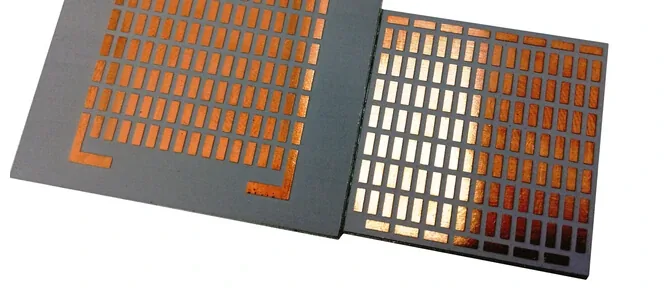
The pellet array is soldered to a metallised aluminium substrate instead of alumina ceramic, keeping the same P/N couple structure.
Qmax 29.3 To 339.7 W
The catalogue runs from TEA1-12703 at 29.3 W to TEA1-13936 at 339.7 W across four footprints.
Four Standard Footprints
40×40, 50×50, 55×55 and 80×120 mm, with heights from 4.1 mm to 13 mm.
ΔTmax 64 To 67 °C
Temperature differential is comparable with ceramic modules while the usable heat pumping is higher.
Direct Metal Mounting
Because the plate is metal it can be clamped hard against a chassis or cold plate without the risk of cracking.
Same Plating And Sealing
Nickel and stannum electroplating, vacuum anti-humidity process, silicone gel sealing and RoHS compliance.
Specifications
Full TEA1 Catalogue
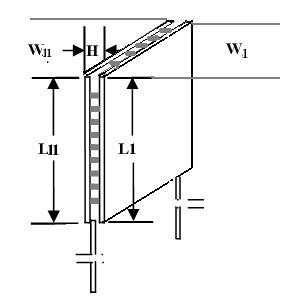
Dimensions are listed as W₁ L₁ W₂ L₂ H in millimetres.
| ITEM | Product Code | Imax (A) | ΔTmax (°C) | Vmax (V) | Qmax (W) | W₁ L₁ W₂ L₂ H (mm) | Datasheet |
|---|---|---|---|---|---|---|---|
| 1 | TEA1-12703 | 3.3 | ≥67 | 15.00 | 29.30 | 40 40 40 40 6.0 | On request |
| 2 | TEA1-12704 | 4.0 | ≥67 | 15.00 | 30.00 | 40 40 40 40 5.7 | On request |
| 3 | TEA1-12705 | 5.0 | ≥67 | 15.00 | 42.50 | 40 40 40 40 5.5 | On request |
| 4 | TEA1-12706 | 6.0 | ≥67 | 15.00 | 51.40 | 40 40 40 40 5.4 | On request |
| 5 | TEA1-12707 | 7.0 | ≥67 | 15.00 | 60.00 | 40 40 40 40 5.1 | On request |
| 6 | TEA1-12708 | 8.0 | ≥66 | 15.00 | 68.90 | 40 40 40 40 5.1 | On request |
| 9 | TEA1-12710 | 10.0 | ≥66 | 15.00 | 85.00 | 40 40 40 40 5.0 | On request |
| 12 | TEA1-12712 | 12.0 | ≥64 | 15.00 | 95.00 | 40 40 40 40 4.8 | On request |
| 7 | TEA1-12708 | 8.0 | ≥66 | 15.00 | 69.00 | 50 50 50 50 5.8 | On request |
| 10 | TEA1-12710 | 10.0 | ≥66 | 15.00 | 85.00 | 50 50 50 50 5.4 | On request |
| 13 | TEA1-12712 | 12.0 | ≥66 | 15.00 | 102.00 | 50 50 50 50 5.2 | On request |
| 14 | TEA1-12714 | 14.0 | ≥66 | 15.00 | 118.00 | 50 50 50 50 5.1 | On request |
| 15 | TEA1-12715 | 15.0 | ≥66 | 15.00 | 125.00 | 50 50 50 50 5.1 | On request |
| 16 | TEA1-12718 | 18.0 | ≥66 | 15.00 | 150.00 | 50 50 50 50 4.8 | On request |
| 17 | TEA1-12720 | 20.0 | ≥66 | 15.00 | 169.00 | 50 50 50 50 4.6 | On request |
| 18 | TEA1-12724 | 24.0 | ≥66 | 15.00 | 190.00 | 50 50 50 54 4.6 | On request |
| 20 | TEA1-13905 | 5.0 | ≥66 | 17.00 | 46.20 | 80 120 80 120 13 | On request |
| 21 | TEA1-13936 | 36.0 | ≥66 | 17.00 | 339.70 | 80 120 80 120 6.6 | On request |
| 22 | TEA1-24103 | 3.0 | ≥66 | 28.80 | 55.60 | 55 55 55 55 4.8 | On request |
| 23 | TEA1-24104 | 4.0 | ≥66 | 28.80 | 56.90 | 55 55 55 55 4.7 | On request |
| 24 | TEA1-24105 | 5.0 | ≥66 | 28.80 | 80.60 | 55 55 55 55 4.2 | On request |
| 25 | TEA1-24106 | 6.0 | ≥66 | 28.80 | 101.00 | 55 55 55 55 4.4 | On request |
| 26 | TEA1-24107 | 7.0 | ≥66 | 28.80 | 118.00 | 55 55 55 55 4.1 | On request |
| 27 | TEA1-24108 | 8.0 | ≥66 | 28.80 | 129.00 | 55 55 55 55 4.1 | On request |
| 29 | TEA1-24125 | 2.5 | ≥66 | 28.80 | 32.00 | 40 40 40 40 5.6 | On request |
| 30 | TEA1-24105 | 5.0 | ≥66 | 28.80 | 80.00 | 40 40 40 40 4.8 | On request |
| 31 | TEA1-24106 | 6.0 | ≥66 | 28.80 | 101.00 | 40 40 40 40 4.4 | On request |
Catalogue Notes
| Data reference | All catalogue values are measured at a hot side temperature Th = 30 °C |
| Flatness | ±0.05 mm |
| Height tolerance | ±0.2 mm |
| Maximum compressive load | 1 MPa |
| Lead wire | 150 mm as default, other lengths and terminations on request |
| Sealing | Silicone gel seal. Specify if you do not want the module sealed |
Symbol Definitions
| Imax | Maximum input current in amperes at Qc = 0 and ΔTmax |
| Vmax | Maximum DC input voltage in volts at Qc = 0 and Imax |
| ΔTmax | Maximum temperature differential in °C at Qc = 0 and Imax |
| QcMax | Maximum heat pumping capacity in watts at Imax and ΔT = 0 |
| Th | Temperature of the hot side during operation |
| Tc | Temperature of the cold side during operation |
Materials And Construction
What The Module Is Made Of
| Substrate | Aluminium, thermal conductivity 122 W/(m·K) |
| Reference | Alumina ceramic for comparison, 12 W/(m·K) |
| Thermoelectric material | Bi2Te3 based P-type and N-type pellets, purity 99.99 % |
| Plating | Nickel and stannum electroplating |
| Standard footprints | 40×40, 50×50, 55×55 and 80×120 mm |
| Tooling lead time | One to two weeks for a new aluminium substrate size |
Manufacturing Process
From Ingot To Finished Module
- Bi2Te3 or PbTe crystal growth in our own furnaces
- Wire electrical discharge machining of wafers and pellets for dimensional precision
- Pellet grading, nickel and stannum electroplating
- Patented soldering matched to the working temperature class
- Substrate metallisation and pellet placement
- Vacuum anti-humidity process and silicone gel sealing
- Electrical test of every module, then marking and packing
Quality Control
Every Module Is Tested Before It Leaves The Line
Quality control runs from raw material procurement through crystal growth, pellet selection and module assembly to the dispatch of the finished product. All products are 100 % tested and inspected using test equipment sourced from an American thermoelectric company.
ISO 9001
Quality management system certified
SGS
European Union certification held by the manufacturing company
RoHS
All thermoelectric modules are RoHS compliant
100 % tested
Every module is tested and inspected before dispatch
Customization Options
Customised Shape And Size
We can design modules of customised shape and size so that clients can install the modules conveniently and match the module size with the thermal interface perfectly.
Match The Interface Exactly
The module outline follows your cold plate, not the other way round.
Fast Tooling
One to two weeks for new aluminium tooling against four weeks for ceramic.
Electrical Rework
Couple count adjusted so an existing driver still fits the new module.
Comparison With Other Products
Aluminium Substrate Against Ceramic Substrate
The comparison below uses the figures published by our engineering team for the two substrate materials.
| Property | TEA1 aluminium substrate | TEC1 ceramic (Al2O3) substrate |
|---|---|---|
| Substrate thermal conductivity | 122 W/(m·K) | 12 W/(m·K) |
| Cooling and heating efficiency | 30 to 50 % higher | Baseline |
| Mechanical robustness | Metallic, breakage free | Brittle, can crack |
| Tooling lead time for a new size | 1 to 2 weeks | 4 weeks |
| Catalogue footprints | 40×40, 50×50, 55×55, 80×120 mm | 10×10 up to 80×120 mm |
| Catalogue codes | 27 | 158 |
| Best for | Severe conditions, high shock, tight thermal budget | General purpose, widest size choice |


Use Guide
Designing With An Aluminium Substrate
- Remember the substrate is electrically conductive metal, so plan the isolation between the module plate and your chassis if the chassis is a ground path.
- Take advantage of the spreading. A hot spot under an aluminium plate is levelled out far more than under ceramic.
- Recheck the electrical operating point. Because more of the pumping reaches the load, you may reach the target delta-T at lower current.
- Keep the 1 MPa compressive load limit, but design clamping with more confidence than a ceramic build allows.
- For a new footprint, send the drawing early. Tooling takes one to two weeks, which usually fits inside a prototype cycle.
- Use the same interface material and sealing practice as a ceramic module. The chemistry does not change, only the plate.
Related Products
Other Parts Of The Range
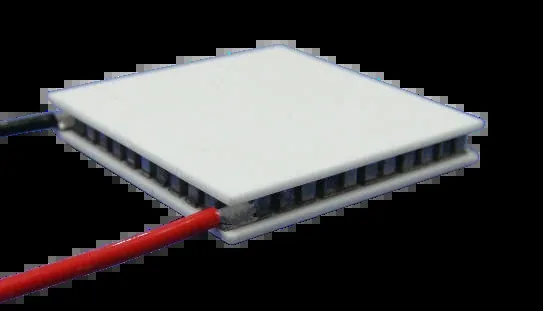
TEC Standard Peltier Modules
158 catalogue sizes from 10×10 mm to 80×120 mm, Qmax 1.6 to 480 W.
Learn more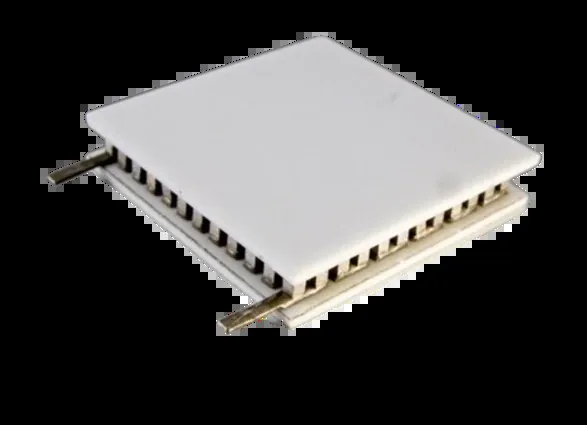
TEG Power Generators
Convert waste heat into DC power, 210 °C and 320 °C classes.
Learn moreTEC Custom Modules
Your shape, size, lead-out and interface, built from our pellet library.
Learn moreRelated Applications And Guides
Where This Product Is Used
How To Select A Peltier Module
Turn a heat load and a delta-T into a shortlist of part numbers.
Learn more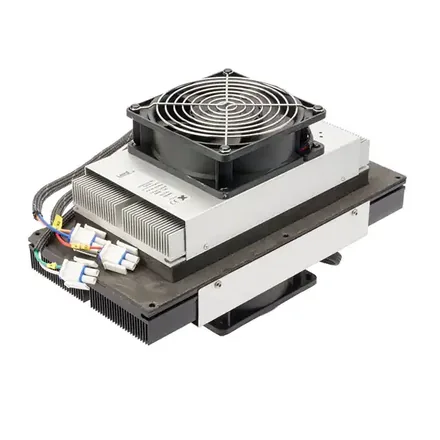
Peltier Module Installation Guide
Mounting force, flatness, thermal interface and sealing.
Learn more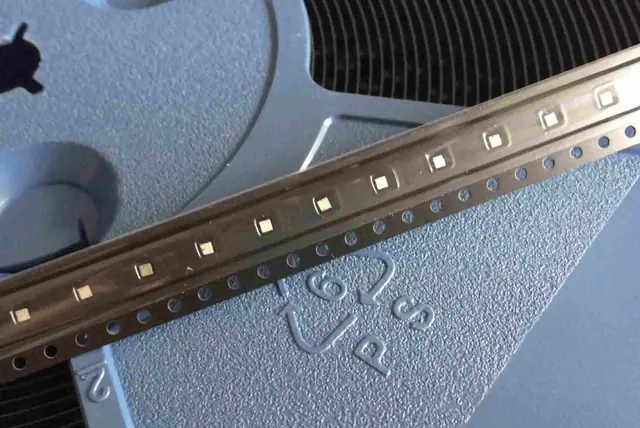
Thermoelectric Module Reliability
Why our modules reach 300,000 hours and what shortens that.
Learn moreFAQ
Frequently Asked Questions About Aluminium Substrate Modules
How much better is an aluminium substrate really?
The substrate conducts 122 W/(m·K) against 12 W/(m·K) for alumina ceramic. In our modules that translates into a 30 % to 50 % improvement in cooling and heating efficiency for the same footprint.
Is the aluminium plate electrically live?
The plate is metallic, so treat it as a conductor when you plan isolation and creepage in your assembly. Tell us how the module will be mounted and we will confirm the surface finish that suits your build.
Which sizes are available?
We currently offer 40×40 mm, 50×50 mm, 55×55 mm and 80×120 mm. Other sizes are developed on request, and aluminium tooling takes one to two weeks against four weeks for ceramic.
Can I drop a TEA module into a TEC socket?
Often yes, because several TEA codes mirror TEC codes in footprint and electrical rating, for example TEA1-12705 against TEC1-12705. Check the height, which differs, and confirm the mounting isolation.
Why is the catalogue smaller than the ceramic one?
Aluminium substrate modules are a specialised line and the standard footprints cover the sizes most customers ask for. Because tooling is fast, a size that is not listed is usually a short development rather than a long one.
Ask For The Aluminium Version Of Your Current Module
Send us the ceramic part number you use today. We will tell you whether an aluminium substrate equivalent exists, what it changes electrically, and what tooling would cost if it does not.
No forms. Messages reach our engineering desk directly. Reply within 24 hours, Monday to Friday, 9:00 to 17:00 Beijing time.