Mine-owned nepheline syenite and feldspar since 2007
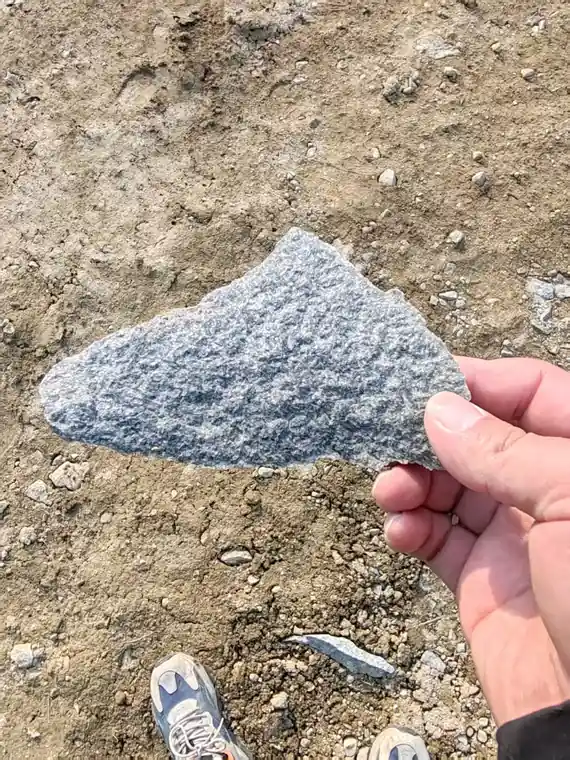
Hand-held sample of nepheline syenite fines
Formulation and Technical Guides

Nepheline for Fast Firing Ceramic Tiles (35-60 min cycles)

Why nepheline syenite is essential for modern fast-firing roller kiln production.

Modern ceramic tile production uses fast-firing roller kilns with total cycle times of 35-60 minutes — a dramatic compression from the 12-24 hour tunnel kiln cycles of decades past.

Application Overview

Fast firing demands raw materials that react quickly and completely within the shortened time at peak temperature. Nepheline syenite is ideally suited for fast firing because: its higher alkali content initiates glass phase formation at lower temperature (approximately 1050 degrees C vs 1100 degrees C for feldspar), providing more time for vitrification reactions to complete within the shortened firing cycle; the finer particle size of our K200 grade (200 mesh) increases the specific surface area available for reaction, accelerating dissolution kinetics; and the broad firing range means small variations in kiln temperature profile do not cause the dramatic property changes that narrow-range materials would. For manufacturers operating roller kilns at 40-50 minute cycles, K200 at 25-30% in the body formulation is the standard recommendation. For 50-60 minute cycles, K100 at 20-25% provides adequate reactivity at more competitive pricing..

Technical Details & Formulation
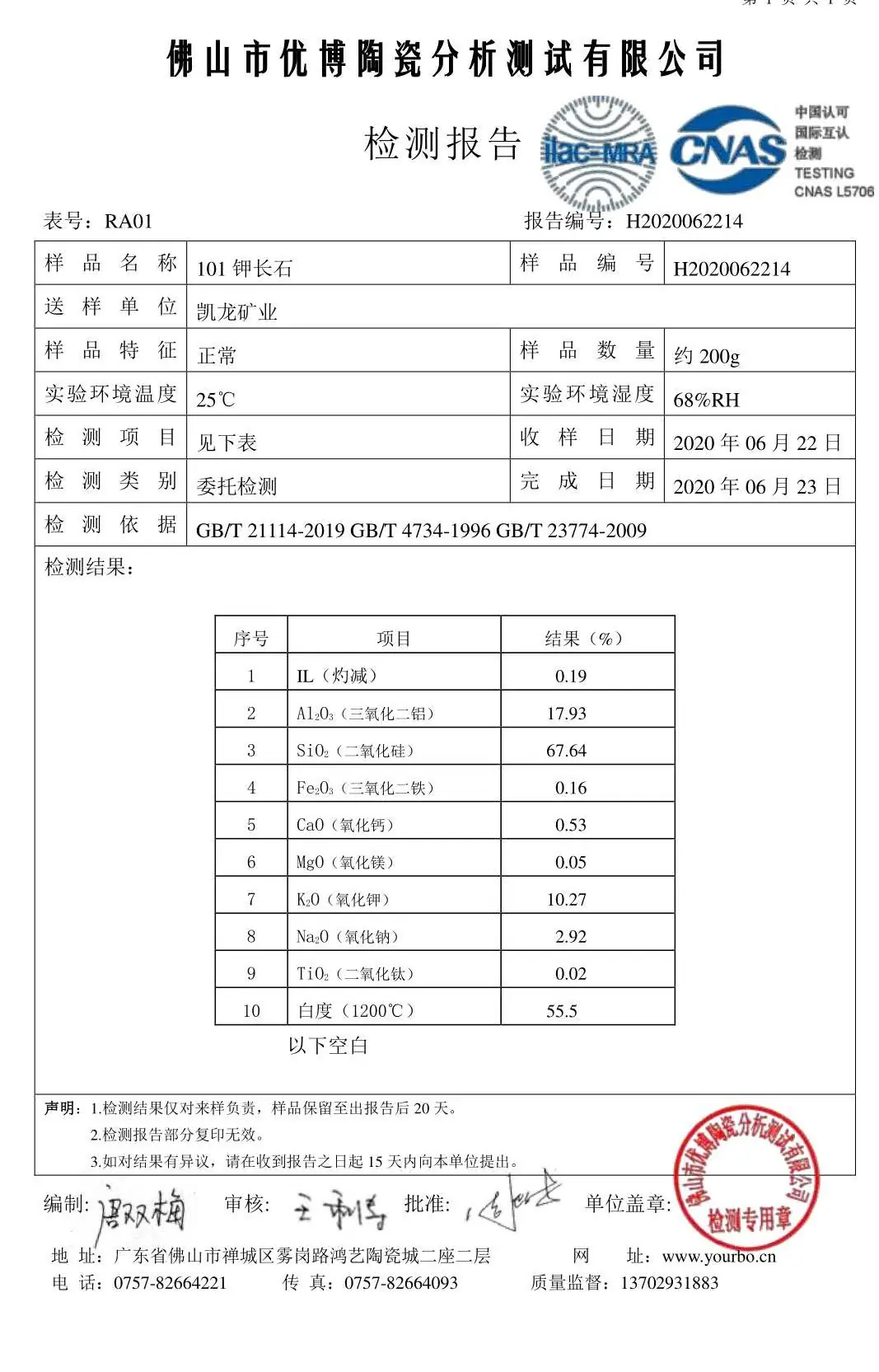
Third-party laboratory analysis report for SY101

Product Recommendation

FAQ

Questions on This Topic

What does Nepheline for Fast Firing Ceramic Tiles (35-60 min cycles) cover?

Modern ceramic tile production uses fast-firing roller kilns with total cycle times of 35-60 minutes — a dramatic compression from the 12-24 hour tunnel kiln cycles of decades past.

Do you supply under our own brand?

Yes. Bag printing, label cards, custom bag weights and a COA issued under your company name and product codes are all available for distributors and trading companies.

What is the minimum order quantity?

One 20ft container, which is about 24 tons — roughly 20 FIBC jumbo bags. Samples of 1-5 kg per grade are available before that for laboratory evaluation.

What quality documentation comes with a shipment?

A batch-specific Certificate of Analysis covering XRF chemistry, particle size, moisture and fired whiteness at 1200 degrees C. We send it for approval before loading, and originals travel with the shipping paperwork.

Take It From Reading to Testing

Send your current specification and the problem you are chasing. Samples follow within a week.