
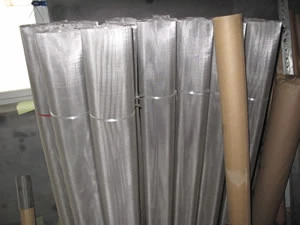
Stainless Steel Wire Mesh
Forty-eight woven specifications with open area and weight published for every one of them.
Four decisions, made in order, from tables that are already published.
Filtration mesh gets specified by mesh count alone, and then fails on pressure drop, on corrosion, or at the weld into its frame. The four numbers that matter - aperture, open area, alloy and support - are all available before the order is placed.
Find the aperture in millimetres against your particle size in the stainless cloth table, which runs from 23.37 mm down to 0.0203 mm.
Read the open area for that specification. It ranges from 23.0% to 84.6% and it is what drives pressure drop.
304 for general and outdoor service, 316 where chlorides, brines or sulphur-bearing water are present, 304L or 316L if the cloth will be welded after weaving.
Perforated metal in one of fifteen patterns at 15-46% open area, sized so it carries the cloth without blinding it.
Knitted wire mesh in monel or stainless for mist elimination upstream of the fine cloth.
Cloth, support and frame specified together, with mill certificates requested at order stage if the duty requires them.
Forty-eight woven specifications with open area and weight published for every one of them.
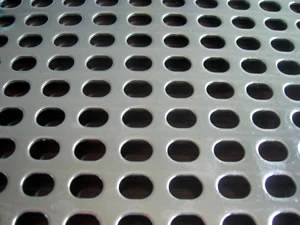
Hole size, pitch, open area and the thicknesses each pattern can be punched in - all published.
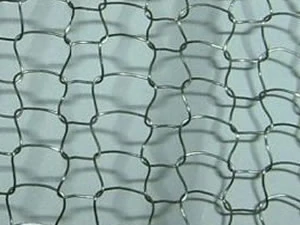
A knitted structure that compresses, conducts and separates - specified by wire material rather than by aperture.
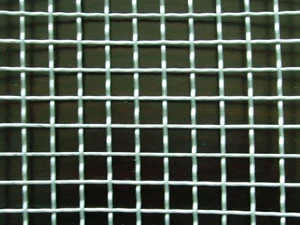
Fifteen mesh counts with wire diameter and aperture stated for each, in widths up to 1.5 m.
For stainless cloth: mesh count, wire diameter in inches and millimetres, aperture in inches and millimetres, open area and weight per 100 square feet, for all 48 specifications.
Because two cloths of the same mesh count can differ by more than twenty points of open area depending on wire diameter, and open area is what drives pressure drop.
Send the finished element dimensions. Cloth, perforated support and knitted mesh are all made here, so they can be quoted as a package.
Square wire mesh in galvanized iron, selected by aperture from 11.10 mm down to 0.27 mm, in widths to 1.5 m so the deck has no seam.
Send what you know and we will tell you what else we need. No form, no call centre - the factory answers.