
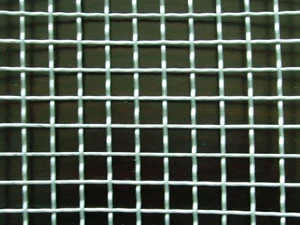
Square Wire Mesh
Fifteen mesh counts with wire diameter and aperture stated for each, in widths up to 1.5 m.
Forty-eight woven specifications with open area and weight published for every one of them.
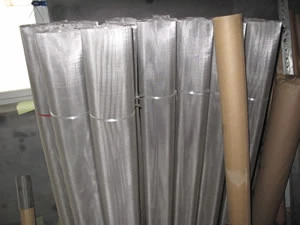
Stainless steel wire mesh is woven from type 304, 304L, 316 and 316L wire, the four alloys most commonly used for wire cloth.
It is specified for filtration, screening, separation and protection wherever a coated carbon steel mesh would corrode.
Anwang publishes wire diameter, aperture, open area and weight per 100 square feet for all 48 mesh counts, from 1x1 to 635x635.
Choosing between 304 and 316 by price alone fails in the presence of brines, sulphur-bearing water or chlorides - that is exactly where 316's added molybdenum earns its cost.
Welding a fine cloth afterwards can sensitise the alloy; the low carbon L grades exist for that reason.
Open area determines flow. Two cloths of the same mesh count can differ by 20 points of open area because of wire diameter.
Ordering by mesh count alone means you do not know what the cloth weighs until it lands.
Every photograph below is from our own product record.
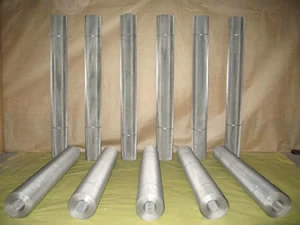
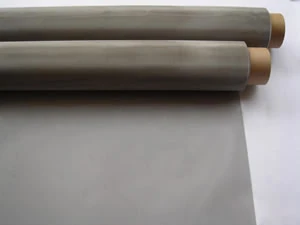
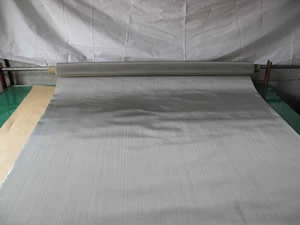
Figures published here are the ones printed in our own product record. Anything we have never published is marked TBC and confirmed in writing before you order.
| Mesh/Inch | Wire Diameter | Aperture | Open Area | Weight(LB) /100 Square Foot | ||
|---|---|---|---|---|---|---|
| Inch | MM | Inch | MM | |||
| 1x1 | .080 | 2.03 | .920 | 23.37 | 84.6 | 41.1 |
| 2X2 | .063 | 1.60 | .437 | 11.10 | 76.4 | 51.2 |
| 3X3 | .054 | 1.37 | .279 | 7.09 | 70.1 | 56.7 |
| 4X4 | .063 | 1.60 | .187 | 4.75 | 56.0 | 104.8 |
| 4X4 | .047 | 1.19 | .203 | 5.16 | 65.9 | 57.6 |
| 5X5 | .041 | 1.04 | .159 | 4.04 | 63.2 | 54.9 |
| 6X6 | .035 | .89 | .132 | 3.35 | 62.7 | 48.1 |
| 8X8 | .028 | .71 | .097 | 2.46 | 60.2 | 41.1 |
| 10X10 | .025 | .64 | .075 | 1.91 | 56.3 | 41.2 |
| 10X10 | .020 | .51 | .080 | 2.03 | 64.0 | 26.1 |
| 12X12 | .023 | .584 | .060 | 1.52 | 51.8 | 42.2 |
| 12X12 | .020 | .508 | .063 | 1.60 | 57.2 | 31.6 |
| 14X14 | .023 | .584 | .048 | 1.22 | 45.2 | 49.8 |
| 14X14 | .020 | .508 | .051 | 1.30 | 51.0 | 37.2 |
| 16X16 | .018 | .457 | .0445 | 1.13 | 50.7 | 34.5 |
| 18X18 | .017 | .432 | .0386 | .98 | 48.3 | 34.8 |
| 20X20 | .020 | .508 | .0300 | .76 | 36.0 | 55.2 |
| 20X20 | .016 | .406 | .0340 | .86 | 46.2 | 34.4 |
| 24X24 | .014 | .356 | .0277 | .70 | 44.2 | 31.8 |
| 30X30 | .013 | .330 | .0203 | .52 | 37.1 | 34.8 |
| 30X30 | .012 | .305 | .0213 | .54 | 40.8 | 29.4 |
| 30X30 | .009 | .229 | .0243 | .62 | 53.1 | 16.1 |
| 35X35 | .011 | .279 | .0176 | .45 | 37.9 | 29.0 |
| 40X40 | .010 | .254 | .0150 | .38 | 36.0 | 27.6 |
| 50X50 | .009 | .229 | .0110 | .28 | 30.3 | 28.4 |
| 50X50 | .008 | .203 | .0120 | .31 | 36.0 | 22.1 |
| 60X60 | .0075 | .191 | .0092 | .23 | 30.5 | 23.7 |
| 60X60 | .007 | .178 | .0097 | .25 | 33.9 | 20.4 |
| 70X70 | .0065 | .165 | .0078 | .20 | 29.8 | 20.8 |
| 80X80 | .0065 | .165 | .0060 | .15 | 23.0 | 23.2 |
| 80X80 | .0055 | .140 | .0070 | .18 | 31.4 | 16.9 |
| 90X90 | .005 | .127 | .0061 | .16 | 30.1 | 15.8 |
| 100X100 | .0045 | .114 | .0055 | .14 | 30.3 | 14.2 |
| 100X100 | .004 | .102 | .0060 | .15 | 36.0 | 11.0 |
| 100X100 | .0035 | .089 | .0065 | .17 | 42.3 | 8.3 |
| 110X110 | .0040 | .1016 | .0051 | .1295 | 30.7 | 12.4 |
| 120X120 | .0037 | .0940 | .0064 | .1168 | 30.7 | 11.6 |
| 150X150 | .0026 | .0660 | .0041 | .1041 | 37.4 | 7.1 |
| 160X160 | .0025 | .0635 | .0038 | .0965 | 36.4 | 5.94 |
| 180X180 | .0023 | .0584 | .0033 | .0838 | 34.7 | 6.7 |
| 200X200 | .0021 | .0533 | .0029 | .0737 | 33.6 | 6.2 |
| 250X250 | .0016 | .0406 | .0024 | .0610 | 36.0 | 4.4 |
| 270X270 | .0016 | .0406 | .0021 | .0533 | 32.2 | 4.7 |
| 300X300 | .0051 | .0381 | .0018 | .0457 | 29.7 | 3.04 |
| 325X325 | .0014 | .0356 | .0017 | .0432 | 30.0 | 4.40 |
| 400X400 | .0010 | .0254 | .0015 | .370 | 36.0 | 3.3 |
| 500X500 | .0010 | .0254 | .0010 | .0254 | 25.0 | 3.8 |
| 635X635 | .0008 | .0203 | .0008 | .0203 | 25.0 | 2.63 |
Weight is pounds per 100 square feet. Some mesh counts appear more than once because they are woven in more than one wire diameter. Download this table as CSV
Type 304 is the default wire cloth alloy: it withstands outdoor exposure without rusting and resists oxidation up to 1400 degrees Fahrenheit. Type 316 adds 2% molybdenum and has better resistance to pitting corrosion where brines, sulphur-bearing water or halogen salts such as chlorides are present, plus high creep strength at elevated temperature. The L grades are the same alloys with reduced carbon, chosen when the cloth will be welded after weaving.
Mesh count, wire diameter and aperture are checked against the table. Ask for the mill certificate for the wire when the application is pressure, food or pharmaceutical - the alloy designation is the property you cannot verify by eye.
304, 304L, 316 or 316L wire drawn to the ordered diameter.
Plain, twill or other weave to the ordered mesh count.
Cloth is tensioned so the aperture holds across the width.
Selvedges finished and the cloth cut to width.
Rolled, interleaved and boxed to protect the surface.
| Product | Where It Fits |
|---|---|
| Stainless steel wire mesh | Woven; 48 specifications; for filtration and corrosive service |
| Square wire mesh | Woven in galvanized iron; coarser; for sieving and window screening |
| Knitted wire mesh | Knitted rather than woven; compressible; for mist elimination and shielding |
Fifteen mesh counts with wire diameter and aperture stated for each, in widths up to 1.5 m.
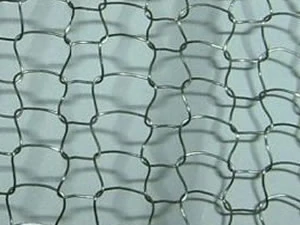
A knitted structure that compresses, conducts and separates - specified by wire material rather than by aperture.
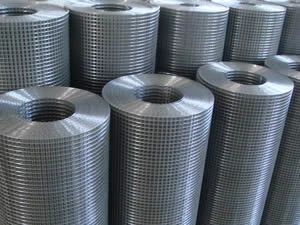
Nine export mesh sizes with the wire gauge band published against each one.
Answers taken from our own product record. Where a figure has never been published, we say so instead of guessing.
Type 316 is stabilised with 2% molybdenum. It resists pitting corrosion better than the regular chromium-nickel stainless steels where brines, sulphur-bearing water or halogen salts such as chlorides are present, and it has high creep strength at elevated temperature.
When the cloth will be welded after weaving. The L grades have reduced carbon content, which gives better weaving and secondary welding characteristics.
635x635 mesh, with 0.0203 mm wire and 0.0203 mm aperture.
Type 304 resists oxidation at elevated temperature up to 1400 degrees Fahrenheit and withstands outdoor exposure without rusting.
Yes, for all 48 specifications on this page, together with wire diameter, aperture and weight per 100 square feet.
Yes. Tell us the finished size and quantity with your enquiry.
Give us the specification, the quantity and the destination port. We reply with price, packing and the full specification written out.