
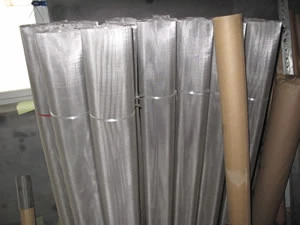
Stainless Steel Wire Mesh
Forty-eight woven specifications with open area and weight published for every one of them.
Alloy, open area and coating chosen against the chemistry, not the catalogue price.
Chlorides, brines and sulphur-bearing water pit standard chromium-nickel stainless.
Cloth welded into a frame after weaving can sensitise at the weld unless a low carbon grade was specified.
Mist eliminator performance depends on wire material and density, which most suppliers will not discuss.
Filter supports made from burred perforated sheet damage the media they carry.
Forty-eight woven specifications with open area and weight published for every one of them.
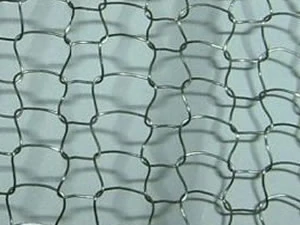
A knitted structure that compresses, conducts and separates - specified by wire material rather than by aperture.
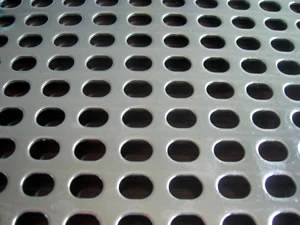
Hole size, pitch, open area and the thicknesses each pattern can be punched in - all published.
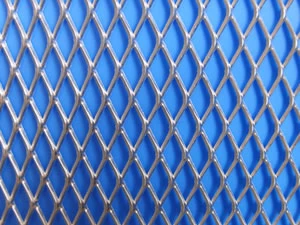
One sheet slit and stretched into mesh - no wire, no welds, nothing to unravel.
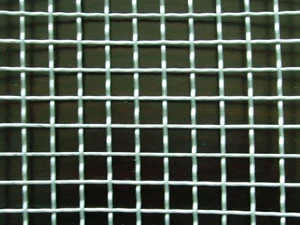
Fifteen mesh counts with wire diameter and aperture stated for each, in widths up to 1.5 m.
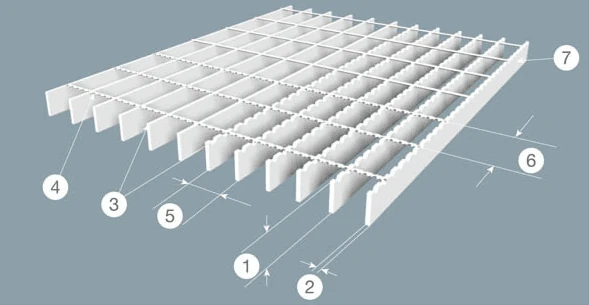
The only product in this range where the raw material, the welder qualification and the galvanizing standard are all named.
Knitted mesh pads in monel for extreme environments, or stainless as a wear face.
Fine stainless cloth on a perforated metal support, rolled into a cylinder.
Expanded metal mesh as steel reinforcement in petroleum and chemical industry work.
Serrated steel bar grating walkways, hot dip galvanized to BS EN ISO 1461:2009.
Cloth, knitted mesh, perforated sheet and grating are all made or finished in Anping, so a filtration package does not have to be split between suppliers. Mill certificates for stainless wire are available on request at order stage.
Where brines, sulphur-bearing water or halogen salts such as chlorides are present. Type 316 is stabilised with 2% molybdenum and resists pitting corrosion better, and it has high creep strength at elevated temperature.
When the cloth will be welded after weaving. The reduced carbon content gives better weaving and secondary welding characteristics.
Tinned copper clad steel has the best shielding performance of the wires used in knitted meshes - unless the joint is abrasive, in which case the tin can wear through to the copper.
For stainless wire, yes, on request. Ask at order stage rather than after shipment.
Drawings, mesh sizes, metres or tonnes, destination port. That is all we need to come back with a firm price.