
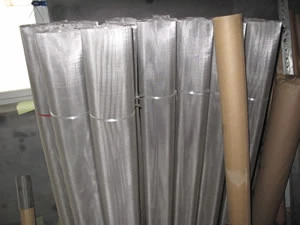
Stainless Steel Wire Mesh
Forty-eight woven specifications with open area and weight published for every one of them.
Aperture, wire diameter and open area are one decision with three numbers, not three decisions.
Aperture is the number that decides retention. In the stainless cloth table it runs from 23.37 mm at 1x1 mesh down to 0.0203 mm at 635x635. In square wire mesh it runs from 11.10 mm at 2 mesh to 0.27 mm at 60 mesh. In welded wire mesh it starts at 6.4 mm. Find the aperture first, in millimetres, not in mesh count.
Open area is aperture and wire diameter combined, and it is what drives pressure drop. Stainless cloth open area ranges from 23.0% to 84.6%, and two cloths of the same mesh count can sit twenty points apart because of wire diameter. Perforated metal runs from 15% to 46% open area across its fifteen patterns.
Most apertures are available across a band of wire diameters. A heavier wire in the same aperture lowers open area and raises service life - which is the right trade in abrasive duty such as stone crushing, and the wrong one in a low-pressure filter.
Stainless cloth publishes weight per 100 square feet, and expanded metal mesh publishes weight per square metre from 0.73 to 28.26 kg. On structural and reinforcement work, weight is a better specification check than aperture.
Woven cloth reaches the finest apertures. Welded mesh holds its aperture rigidly. Perforated sheet gives exact round holes in a stiff panel. Expanded mesh has no welds to fail. Knitted mesh compresses. Picking the construction first narrows the aperture choice usefully.
Aperture in millimetres, wire diameter in millimetres, and either open area or weight. A specification with all three cannot be substituted without you noticing.
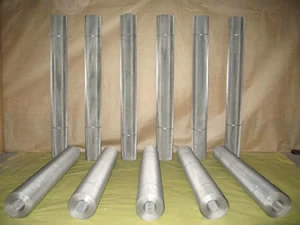
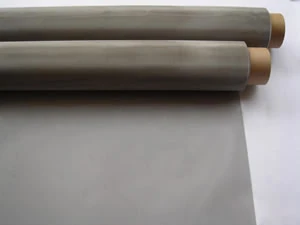
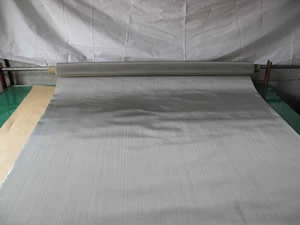
Forty-eight woven specifications with open area and weight published for every one of them.
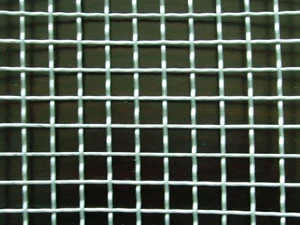
Fifteen mesh counts with wire diameter and aperture stated for each, in widths up to 1.5 m.
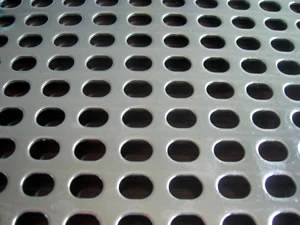
Hole size, pitch, open area and the thicknesses each pattern can be punched in - all published.
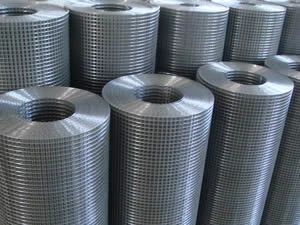
Nine export mesh sizes with the wire gauge band published against each one.
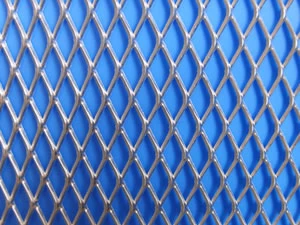
One sheet slit and stretched into mesh - no wire, no welds, nothing to unravel.
Aperture, in millimetres. Mesh count alone does not tell you the opening, because the same count is woven in several wire diameters.
It depends entirely on allowable pressure drop, which is why the open area figure is published for all 48 stainless specifications and all fifteen perforated patterns.
In abrasive service, yes - but it reduces open area, so it also reduces flow. That is the trade.
Tell us the application rather than the part number. We will work back to the specification with you.