
Perforated Metal
Hole size, pitch, open area and the thicknesses each pattern can be punched in - all published.
One is punched and loses material, the other is stretched and loses none. That single difference decides most cases.
Perforated metal is sheet punched with a repeating hole pattern; the slug is removed and the sheet loses weight and some stiffness. Expanded metal mesh is slit and stretched from a single sheet, so nothing is removed and the finished mesh is one continuous piece of metal with no welds and no loose ends.
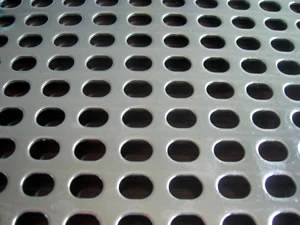
Exact round hole geometry, a flat surface, and a published open area from 15% to 46% across fifteen patterns with hole sizes from 0.80 mm to 3.00 mm. That precision is what filter elements, speaker grilles, battery components and decorative panels need.
Heavy gauges and structural duty. Expanded mesh runs from 0.5 mm up to 8 mm thick, from 0.73 up to 28.26 kg per square metre, and is used as steel reinforcement material in petroleum, chemical industry and building decoration. No welds means nothing to unravel at a cut edge.
Perforated metal in the published patterns runs 0.4 mm to 1.5 mm. If the job needs more than that, the answer is expanded mesh - or grating, if it has to be walked on.
Punching discards the slug, so heavy-gauge perforated sheet gets expensive quickly. Expanding wastes nothing, which is why it dominates the heavier end of the range.
If the surface has to carry foot or vehicle load, use steel bar grating instead, with bearing bars from 20 to 100 mm deep and serrated bar where slipping is a risk.
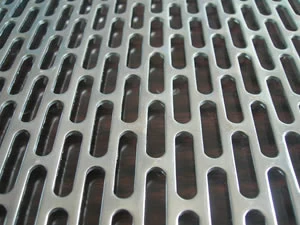
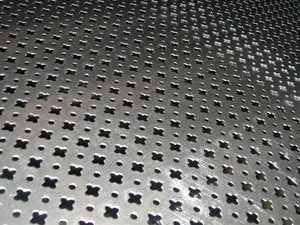
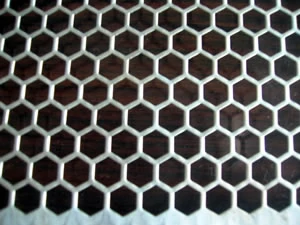
Hole size, pitch, open area and the thicknesses each pattern can be punched in - all published.
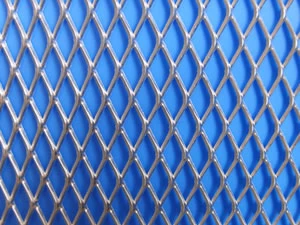
One sheet slit and stretched into mesh - no wire, no welds, nothing to unravel.
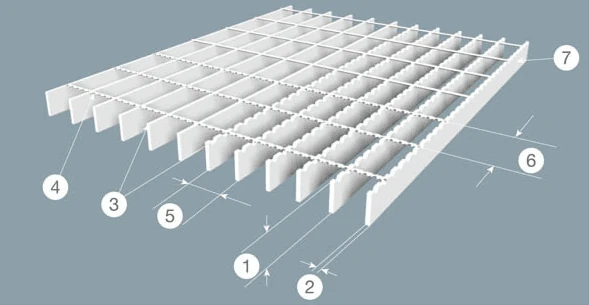
The only product in this range where the raw material, the welder qualification and the galvanizing standard are all named.
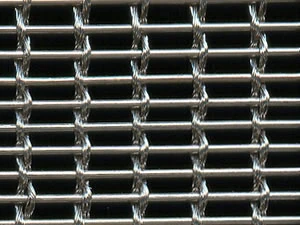
Architectural mesh supplied to the project, not from a fixed size list.
Expanded metal mesh, because it is one continuous piece of metal with nothing punched out of it.
Perforated metal. Hole size, pitch and open area are published for all fifteen standard patterns.
Use steel bar grating, not either of these. It is engineered by bearing bar depth and pitch against the span.
Tell us the application rather than the part number. We will work back to the specification with you.