
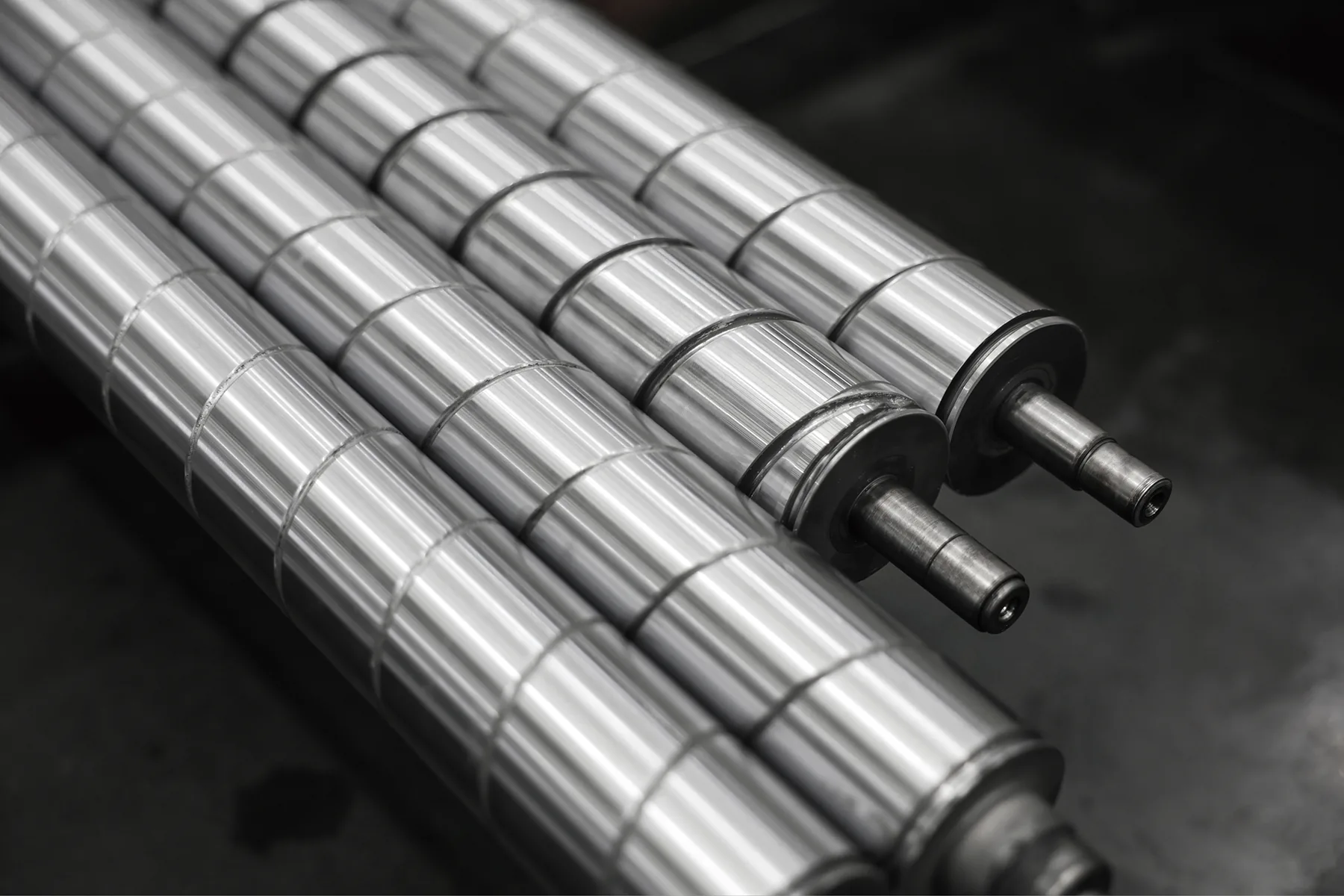
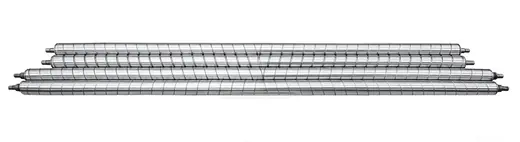
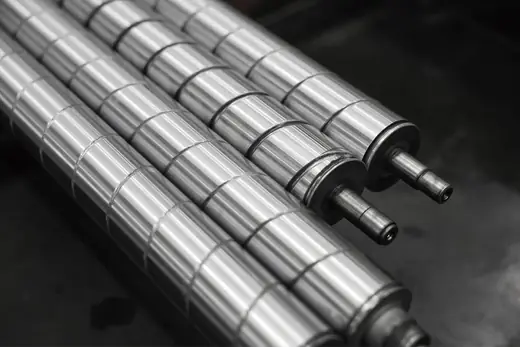
Intermediate Rolls for Tension Levelers in Metallurgical Plants
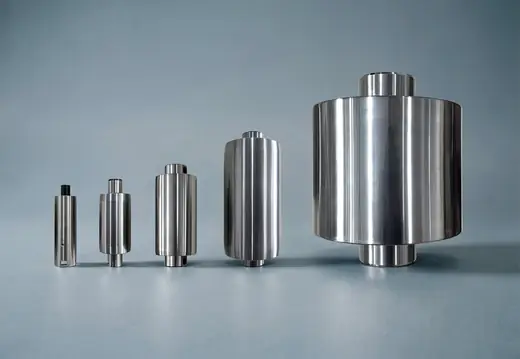
Rolls in a mill are consumable tools that carry pressure into the metal and impart the final mechanical and surface properties. Roll performance therefore sets the efficiency, product precision and operating cost of the whole rolling process, which is why the intermediate roll specification is worth getting right.
- Geometric accuracy in the 0.006 mm class
- Surface finish around 0.2 micron
- Made for extreme load and temperature conditions
- Produced as a consumable spare to drawing
Key Benefits
What roll quality decides.
Product Precision
The performance and quality of the roll directly determine product precision on the finished strip.
Process Efficiency
Rolls that hold geometry keep the process running at rate instead of forcing adjustment between coils.
Operating Cost Per Tonne
Roll life is a direct operating cost, so wear resistance shows up in cost per tonne rather than only in the purchase price.
Where It Is Used
Applications.
- Tension levelers in metallurgical plants
- Rolling mills working billets, slabs and strip
- Strip finishing lines
- Non ferrous levelling equipment
Who It Is For
- Mills purchasing consumable rolls regularly
- Maintenance stores holding intermediate roll spares
- Rebuild shops servicing leveler cassettes
- Buyers comparing roll suppliers on cost per tonne
Problems It Solves
- Roll wear raising operating cost
- Product precision drifting between roll changes
- Rolls failing under extreme load and temperature
- Inconsistent geometry between replacement batches
Technical Features
Manufacturing specification.
Tight Geometric Control
Rolls are produced to a 0.006 mm geometric class so they run true inside the cassette.
Fine Surface Finish
Surface finish around 0.2 micron protects the work roll surface and the strip behind it.
Built For Extreme Conditions
Material and treatment are selected for the high load and temperature conditions rolls experience in service.
Specifications
Dimensions are produced to your drawing or sample.
| Geometric Accuracy | 0.006 mm class |
|---|---|
| Surface Finish | Around 0.2 micron |
| Function | Support and transmission between work rolls and back up rolls |
| Operating Conditions | High load and elevated temperature |
| Supply Type | Consumable spare, produced to drawing |
| Sets | Available matched per cassette |
Materials
- Alloy steel roll body
- Hardened working surface
- Ground journals
Manufacturing Process
Drawing Review
Dimensions and cassette position are confirmed before production.
Turning
The roll is turned with allowance for heat treatment and grinding.
Heat Treatment
The working surface is hardened for wear resistance under load.
Precision Grinding
Barrel and journals are ground to the 0.006 mm class and 0.2 micron finish.
Quality Control
- Hardness verification on the barrel
- Geometric inspection to the 0.006 mm class
- Surface finish measurement
- Runout check before packing
Customization Options
- Dimensions to drawing or sample
- Hardness matched to line duty
- Matched sets by cassette position
- Packing per set for shutdown replacement
Use Guide
- Order intermediate rolls together with work rolls for a full cassette refresh
- Track tonnage per set to plan the next order
- Check journal seats when fitting new rolls
- Store rolls protected against corrosion
How It Compares
Against generic replacement rolls.
| Rolls ground to looser tolerance | A 0.006 mm geometric class keeps support even along the barrel through the campaign. |
|---|---|
| Unfinished or coarse ground surfaces | A 0.2 micron finish avoids transferring surface texture through the work roll into the strip. |
| Buying only when a roll fails | Planned consumable supply keeps a set on the shelf and avoids emergency lead times. |
Related Products
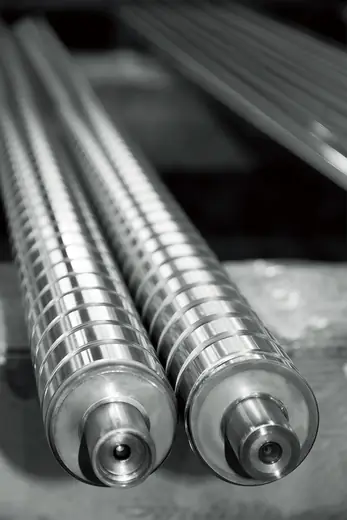
Intermediate Roll in GCr15 and 9Cr2Mo
Induction hardened intermediate rolls, HRC 61-63 surface with 3-4 mm hardened layer.
View DetailsIntermediate Roll in GCr15 and 9Cr2Mo
Induction hardened intermediate rolls, HRC 61-63 surface with 3-4 mm hardened layer.
View Details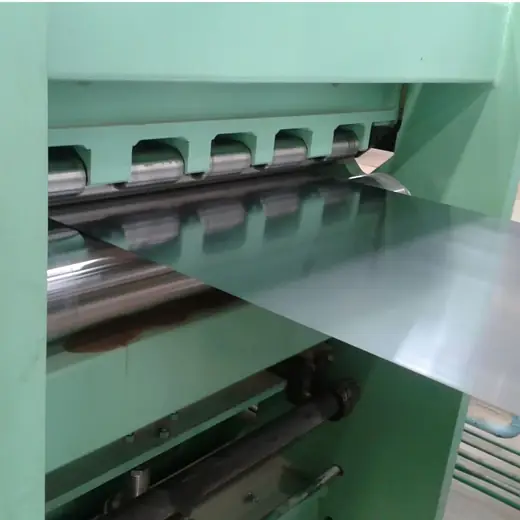
Intermediate Roll for Tension Levelers FAQ
How accurate are these rolls?
Geometry is held in the 0.006 mm class with surface finish around 0.2 micron.
Can you produce to our sample?
Yes. Send the drawing or a worn roll and we produce to those dimensions with documented hardness.
Why does the intermediate roll matter?
It transmits and supports load between work rolls and back up rolls. If it loses geometry, the work roll deflects and product precision falls.
Do you supply complete cassette sets?
Yes, work rolls, intermediate rolls and back up rolls can be supplied as a matched set.
How should we plan orders?
Track tonnage per roll set. Most plants order the next set before the current one reaches its regrind limit.
What do you need to quote?
Roll drawing or sample, cassette position, line width and strip material, and quantity per set.
Plan Your Intermediate Roll Supply
Send your drawing and annual consumption and we quote a repeat supply programme.