





ABS PP PC And ASA For Moulded Industrial Parts
The four materials in this catalogue, what each is chosen for, and what changing between them does to the mould.
The material choice reaches back into the steel
Material is usually decided by the product engineer and the mould is quoted afterwards, which hides how much the two interact. Shrinkage sets the cavity size. Melt temperature sets the cavity steel. Abrasiveness sets the gate wear. Change the material after the tool is cut and you are not changing a process setting, you are changing the size of the part.
ABS
The default for bathroom and consumer parts, and the most common material in this catalogue. It moulds easily, plates well and is forgiving at the press. Its one awkward habit is off-gassing in the tool, which corrodes plain cavity steel over time. That is why the ABS tools here so often run stainless grades such as S136.
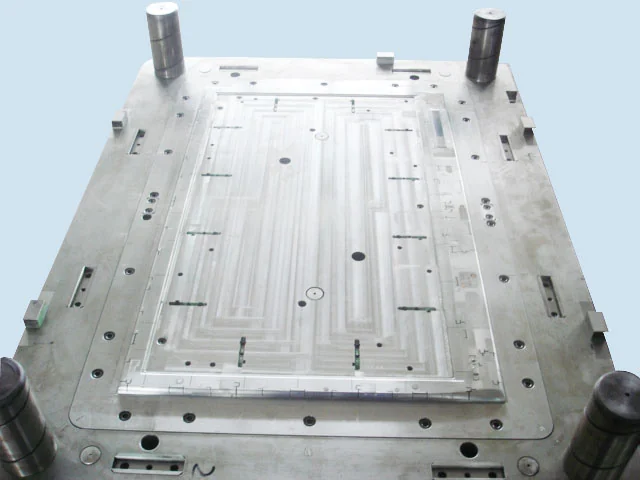
An ABS tool in stainless steel
PP
Polypropylene is cheap, chemically resistant and shrinks considerably more than the styrenics. That shrinkage is the whole story for the mould maker: the cavity is cut oversize by a calculated amount, and if the allowance is wrong the parts come out the wrong size and no setting fixes it. It also needs cooling laid out for the part rather than carried over from an ABS tool.
PC and PC ABS
Polycarbonate is strong, clear and runs hot. It wants a hotter, more stable mould than ABS and will not hold cycle in a tool cooled for a styrenic. PC ABS sits between the two: easier to fill than straight PC, stiffer and hotter than ABS. Both push the cavity steel towards a hot work grade such as SKD61, especially in filled or flame retardant versions.
ASA
ASA is chosen for one reason: it keeps its colour and surface outdoors where ABS chalks and fades within a season. It costs more per kilogram, and substituting ABS to save that cost is a decision that shows up as a warranty claim a year later rather than as a moulding problem.
Products Referenced In This Guide
Moulds For Sanitary Ware Parts
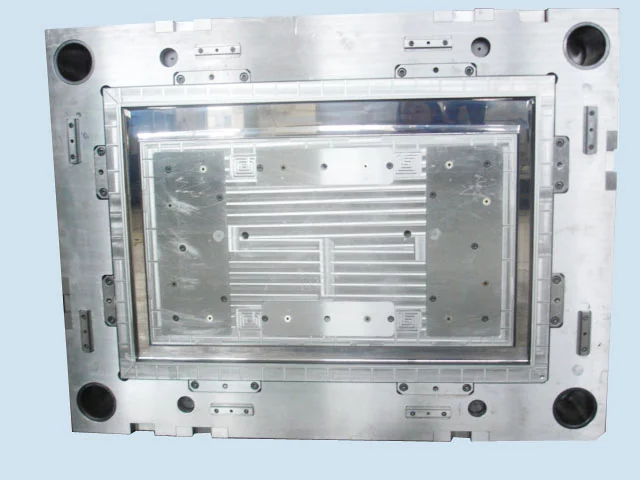
PP Cover Plate Mould With NAK80 Cavity Steel
Pre-hardened NAK80 on a large flat polypropylene part
Product materials PPMould material DAIDO NAK80
Moulds For Other Product Series
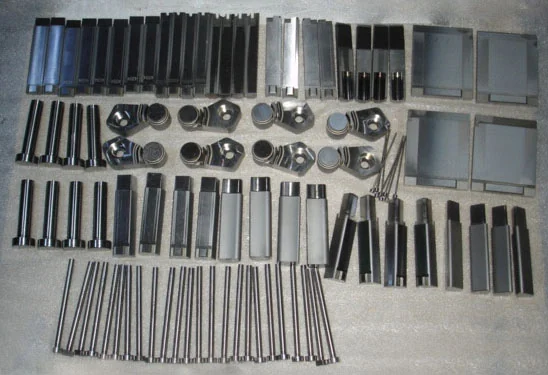
ASA Family Mould On LKM Base
A 4+1 family layout matched to a real four to one part ratio
Product materials ASAMould material LKM
Moulds For Home Appliance Parts
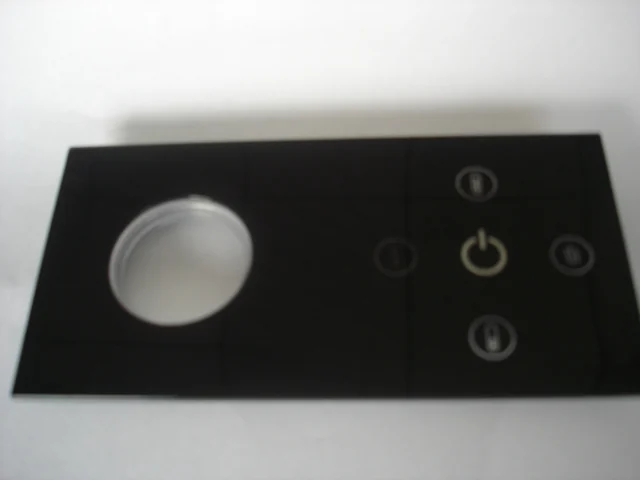
PC Home Appliance Mould With Two Cavities
The fastest cycle in the whole archived catalogue
Product materials PCMould material S136 quenching

Moulds For Sanitary Ware Parts
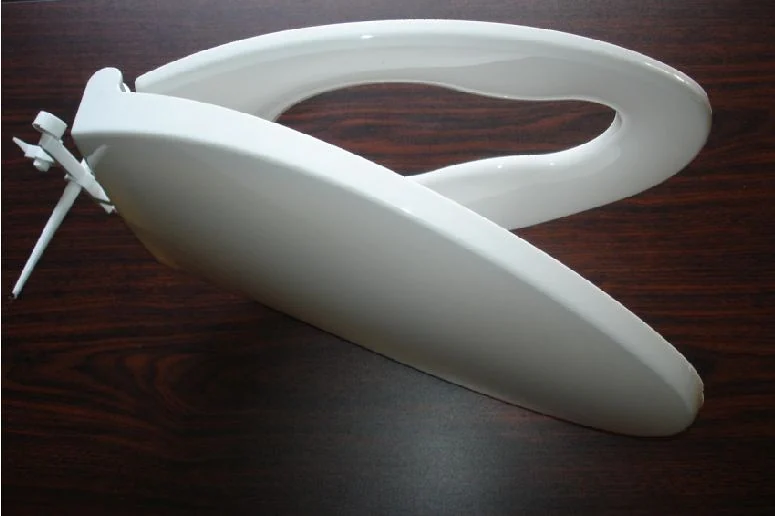
ABS Sanitary Part Mould With S136 Cavity Steel
Stainless quenched cavity for a plated bathroom part
Product materials ABSMould material S136 quenching
Related Reading
Material Guide
How To Choose Cavity Steel For An Injection Mould
S136, NAK80, S-Star, SKD61 and 718 all appear in this catalogue. What each one is actually for, and what it costs you to pick the wrong one.
FAQ Article
What A 500000 Shot Mould Warranty Actually Covers
Every mould in this catalogue is rated at 500,000 or 600,000 shots. What that figure means, what it excludes, and how to make it hold.
Industry
Sanitary Ware
Shower heads, hand showers, cisterns, toilet seats and cover plates moulded in ABS and PP
Industry
Home Appliance
Housings, control panels and trim parts for white goods and small domestic appliances
Industry
Automotive Interior
Support brackets, door panel parts and tray tables moulded in PC ABS and engineering blends
Questions On This Topic
Follow up questions this guide raises.
Can I run a different material in an existing mould?
Only after re-measuring parts and accepting the new dimensions. Shrinkage differs between grades, so the same cavity produces a different sized part in a different material.
Which of these is cheapest to mould?
PP on material cost, ABS on ease of processing. But the cheapest material for a part that fails in service is not cheap, so the question belongs with the product requirement rather than with the moulder.
Do filled grades need a different mould?
Often a different cavity steel, yes. Glass filled and flame retardant grades are abrasive and wear gates and shut offs noticeably faster. Name the exact grade at enquiry, not just the polymer family.
Apply This To Your Own Part
General guidance only goes so far. Send the model and the moulding grade and we will tell you what it means for your tool.