
The Versatile and Essential Tool
A turnbuckle is a mechanical device that adjusts tension in cables, ropes, or chains by rotating a central body with opposing threads. It is essential in rigging, structural support, and load control where precise tensioning is required. This guide explains how it works, what components matter, and where it belongs in a rigging system.
What a Turnbuckle Actually Is
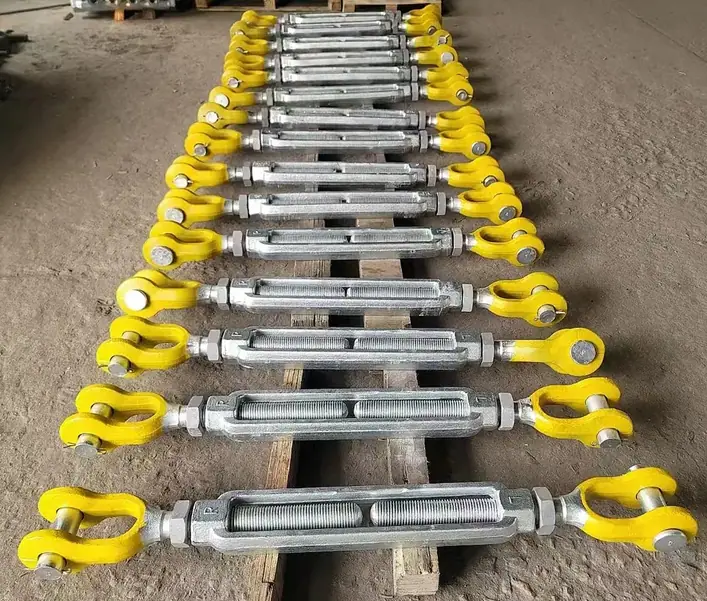
A turnbuckle is a threaded mechanical device used to adjust tension or length in a system of cables, rods, or chains. It consists of a central body with opposite threads at each end, allowing the body to rotate and either tighten or loosen the assembly. The ends typically feature eyelets, hooks, or jaws for attachment. When rotated, the turnbuckle shortens or lengthens the overall span, which changes the tension in the connected components. It is not a load-bearing connector by itself but a tensioning tool that maintains stability in systems under dynamic or static load.
Key Components and Their Roles
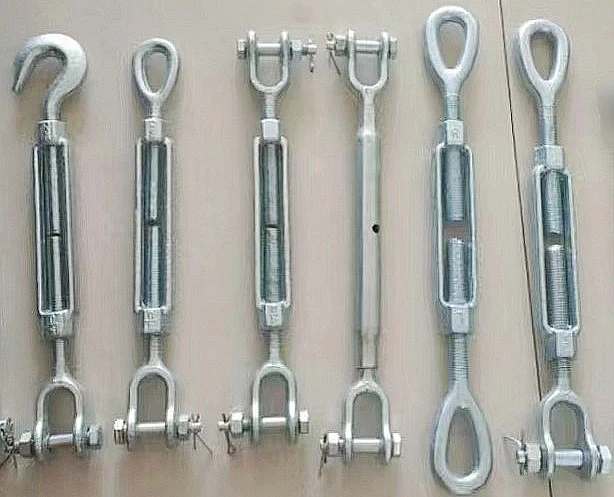
The body is the central metal shaft, usually forged or machined from carbon steel, and it carries the threaded ends. The end fittings-eyelets, hooks, or jaws-are attached to the body and connect to the cable, chain, or other rigging component. Threads on the body and end fittings are matched to allow smooth rotation and tension adjustment. Clevis pins may be used to secure the end fittings, especially in high-vibration or high-load environments. The finish-zinc plated, electrophoretic black, or plain-indicates corrosion resistance and environmental suitability. The grade of the material, such as Grade 43 or Grade 70, determines the working load limit and application.
Tow Chain V Bridle with Large Shank J Hooks and Grab Hooks WLL 4700 lbs
Where Turnbuckles Are Used in Rigging and Lifting
In rigging and lifting, turnbuckles are used to balance or adjust the tension in lifting slings, especially when multiple slings are used to support a single load. They help ensure even load distribution and prevent twisting or uneven stress. They are commonly found in overhead crane setups, temporary scaffolding, and mobile crane outrigger systems. In marine and offshore applications, they maintain tension in mooring lines and anchor systems. For industrial users, they are used in conveyor systems, tensioning chains, and securing heavy machinery during transport. The ability to fine-tune tension without re-rigging makes them essential in field adjustments.
Tow Chain V Bridle with Large Shank J Hooks and Grab Hooks WLL 4700 lbs
How to Match a Turnbuckle to the Application
Match the turnbuckle grade to the chain, cable, or sling it is used with. A Grade 43 turnbuckle is suitable for medium-duty tie-downs and general rigging, while a Grade 70 version is used in heavy transport, towing, or lifting systems. The end fitting type-eyelet, hook, or jaw-must match the attachment point. For example, a hook end fits a chain link, while an eyelet fits a shackle. The thread size must match the mating component. Always verify that the working load limit of the turnbuckle matches or exceeds the load it will carry. Use a 4:1 design factor unless otherwise stated. If the system includes a chain, ensure the turnbuckle grade matches the chain grade.
Towing Chain Bridle With Forged 4 Inch Mini J Hooks
Why Finish Matters in Field Use
The finish on a turnbuckle is not just cosmetic. Zinc plating offers basic corrosion resistance for indoor or dry environments. Electrophoretic black provides a more durable, weather-resistant coating suitable for outdoor or marine use. Plain finish is for indoor or short-term applications. Gold chromate is used on Grade 70 components and is DOT recognised, which is important in transport and towing systems. A buyer should not assume the grade from the finish alone. Always check the grade stamp on the body and request the Material Test Certificate for the batch if the application is safety-critical.
Towing Chain Bridle With Forged 4 Inch Mini J Hooks
How to Prevent Mismatched Assemblies
A turnbuckle assembly is only as strong as its weakest component. Mixing a Grade 70 turnbuckle with Grade 43 chain or a G43 hook creates a mismatched system. The entire assembly is rated to the lowest grade. To avoid this, source the turnbuckle, chain, and end fittings from the same grade system. When ordering, confirm the grade of each part on the quotation. Keep components separated by grade in storage. Mark assemblies with the system grade and WLL. If your customer requires traceability, ensure the batch certificate is included.
Towing Chain Bridle With Forged 4 Inch Mini J Hooks
How to Order for a Complete Rigging System
When sourcing a turnbuckle, specify the chain or cable size, the end fitting type, the required grade, and the finish. If you are building a complete system, ask for a single quotation covering the turnbuckle, chain, and any required shackles or hooks. This ensures all parts are compatible and rated to the same system. We can provide proof load testing, WLL marking, and traceability for the full assembly. For custom applications, we can build assemblies to your drawing, including custom lengths, custom end fittings, or private label marking.
Ordering note. A turnbuckle adjusts tension in cables, chains, or rods using opposing threads on a rotating body Match the turnbuckle grade to the chain or cable it connects to—Grade 43 for medium duty, Grade 70 for heavy transport or lifting End fittings must match the attachment point—eyelets for shackles, hooks for chain links Zinc plating is for indoor use; electrophoretic black or gold chromate for outdoor