
Anchor Chains
Marine anchor chains are not interchangeable by appearance or size. This guide explains the three main types-stud-link, studless, and buoy chains-what each is designed for, how their construction affects performance, and how to select the right one for a vessel's duty, environment, and installation method.
What Stud-Link Anchor Chains Are For
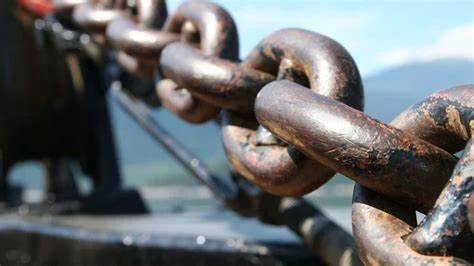
Stud-link chains are the standard for large vessels and offshore installations where strength and resistance to link deformation under load are critical. The central stud prevents the links from flattening or collapsing when subjected to high tension, making them ideal for deep-water anchoring, offshore platforms, and mooring systems. They are typically used with heavy anchors and long chain lengths, where the chain's weight contributes to the catenary curve that absorbs dynamic forces from wind, waves, and current. Their robust construction suits applications where failure is not an option.
When Studless Chains Make Sense
Studless chains are lighter and more flexible than stud-link chains, which makes them suitable for smaller vessels such as fishing boats, yachts, and workboats where weight and ease of handling are priorities. They are not designed for high-stress anchoring duties but are adequate for short-term mooring in calm waters or light-duty applications. Their lack of a central stud reduces manufacturing cost and weight, but it also means they are more prone to link deformation under heavy load. Use studless chains only when the vessel's size and operating environment do not demand the full strength of a stud-link system.
Tow Chain V Bridle with Large Shank J Hooks and Grab Hooks WLL 4700 lbs
Buoy Chains for Buoys Not Vessels
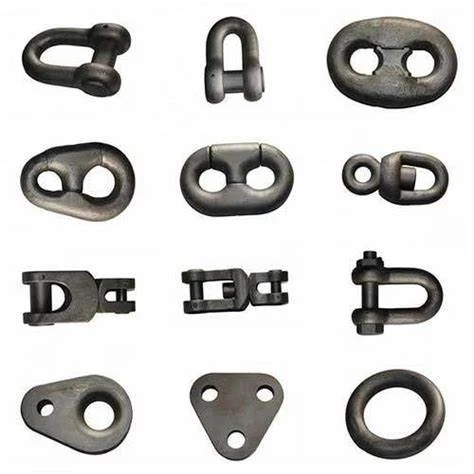
Buoy chains are not used to anchor ships. Instead, they connect mooring buoys to the seabed. They are shorter, lighter, and designed for vertical or near-vertical loads rather than the dynamic, multi-directional forces seen in vessel anchoring. Buoy chains are typically made from high-grade steel and may be galvanized for corrosion resistance. They are used in navigation aids, weather buoys, and temporary mooring points. Because they are not subjected to the same forces as vessel anchor chains, they do not require the same strength or stud reinforcement.
Tow Chain V Bridle with Large Shank J Hooks and Grab Hooks WLL 4700 lbs
How Anchor Chains Are Made
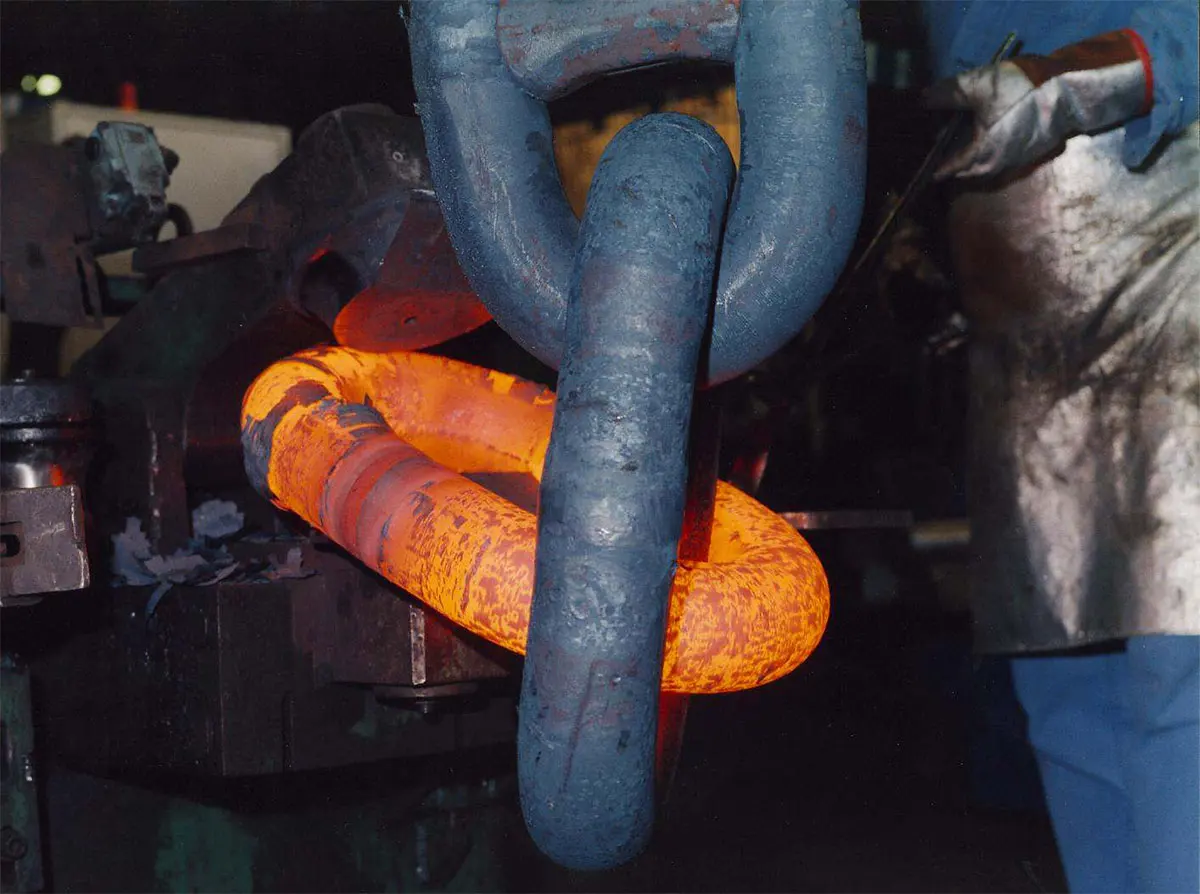
Anchor chains are manufactured from high-grade steel rods cut to length, formed into links, and then welded at the ends. The entire chain undergoes heat treatment to improve toughness and resistance to fatigue. The stud-link design requires an additional step to insert and secure the central stud into each link. The process ensures dimensional consistency and mechanical integrity. Each batch is proof load tested and breaking strength validated. Material Test Certificates to EN 10204 3.1 are supplied with orders. The chain is marked with the grade, working load limit, and traceability information.
Towing Chain Bridle With Forged 4 Inch Mini J Hooks
Where Each Chain Type is Used
Stud-link chains are used on commercial ships, offshore drilling rigs, floating production systems, and wind turbine platforms. Studless chains are used on small recreational boats, fishing vessels, and utility craft. Buoy chains are used in navigation systems, environmental monitoring buoys, and temporary mooring setups. The choice depends on vessel size, operating environment, and the required retention force. A procurement engineer must match the chain type to the vessel's anchor system and expected load profile, not just the chain's appearance or weight.
Towing Chain Bridle With Forged 4 Inch Mini J Hooks
How to Select the Right Chain for Your Project
Start by identifying the vessel size, anchor weight, and expected sea conditions. For large vessels in open waters, stud-link chains are required. For small boats in sheltered waters, studless may be sufficient. For mooring buoys, use buoy chains. Check the chain's grade-Grade 80 or Grade 100 is typical for marine applications-and confirm that the chain is marked with the working load limit and traceability stamp. Ask for the Material Test Certificate and confirm the chain is proof load tested. Do not assume a chain is rated for marine use based on finish or appearance.
Towing Chain Bridle With Forged 4 Inch Mini J Hooks
Why Chain Type Matters in a System
A chain is only as strong as its weakest component. Using a studless chain on a heavy anchor system risks link deformation and failure. Using a buoy chain on a ship's anchor point is not rated for the forces involved. The chain must be matched to the anchor, the vessel, and the environment. A mismatched system can lead to anchor drag, loss of position, or even total failure in storm conditions. Always verify that the chain type, grade, and size are compatible with the rest of the anchoring system.
How to Confirm a Chain's Rating Before Ordering
Ask the supplier for the chain's grade, working load limit, and proof load test results. Confirm that the chain is stamped with the grade and WLL. Request the Material Test Certificate to EN 10204 3.1. Check that the chain is made from high-grade steel and that the stud-link design includes a central stud. Ask whether the chain is galvanized or coated for corrosion resistance. Do not rely on the finish or weight alone. A plain chain may be Grade 80, while a galvanized one may be Grade 70. The stamp and certificate are the only reliable indicators.
Ordering note. Stud-link chains are for heavy-duty marine anchoring and offshore platforms; studless chains are for smaller vessels where weight and flexibility matter; buoy chains are for mooring buoys, not ships The central stud in stud-link chains prevents link deformation under load and is essential for high-stress applications All anchor chains are proof load tested and breaking strength validated; Material