
China Lifting Chain Supplier and Manufacturer
Grade 80 and Grade 100 lifting chains are both used in overhead hoisting, but they serve different strength levels and are paired with different rigging hardware. This guide explains how to identify them, where each belongs, and how to source them as part of a complete lifting assembly.
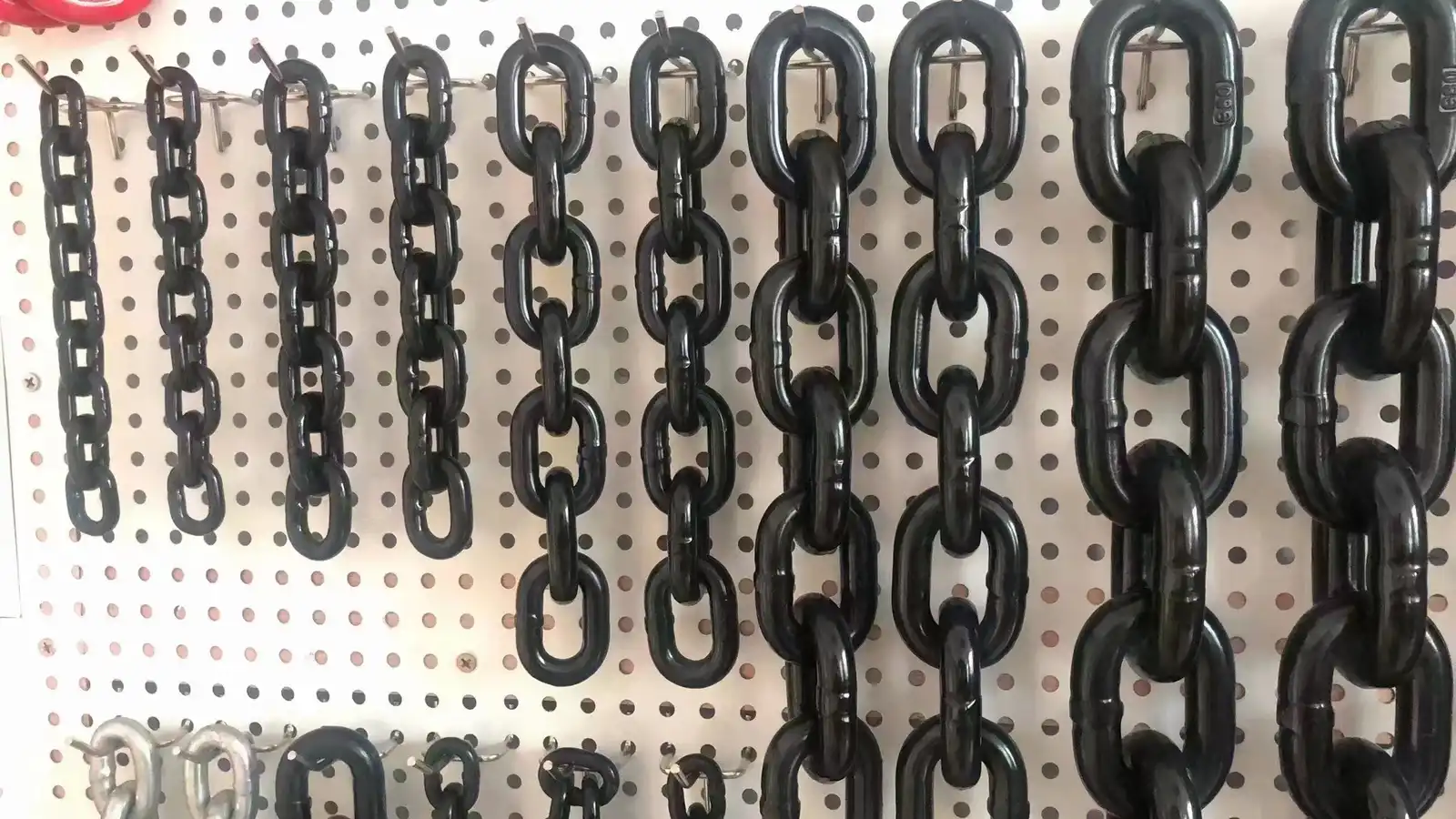
What Grade 80 and Grade 100 Lifting Chains Actually Are
Both are fully automatic welded alloy steel chains designed for overhead lifting and hoisting duties. They are not for transport or tie-down use. Grade 80 and Grade 100 refer to the minimum tensile strength of the chain material, with Grade 100 being stronger. The grade is stamped on every link at regular intervals, typically every meter, to allow for field verification. These chains are normally assembled with G80 or G100 hooks, link rings, and other rigging hardware to form a complete chain sling. The chain is only as strong as its weakest component, so matching the grade across all parts is essential.
Where Grade 80 Chains Belong
Grade 80 chains are used in general overhead lifting applications where high strength is needed but not extreme. Typical duties include lifting industrial machinery, steel beams, concrete components, and heavy equipment in manufacturing and construction. They are common in crane operations, factory maintenance, and material handling where the load is predictable and the environment is controlled. For a buyer, Grade 80 offers a balance of strength, cost, and availability. It is the standard choice for many rigging projects that do not require the highest strength rating but still need compliance with EN 818-2 and ASME B30.26.
Tow Chain V Bridle with Large Shank J Hooks and Grab Hooks WLL 4700 lbs
Where Grade 100 Chains Belong
Grade 100 chains are designed for high-stress overhead lifting tasks where maximum strength and reliability are required. They are used in heavy lifting applications such as offshore rigging, large-scale construction, steel mill operations, and lifting critical or oversized components. These chains are typically paired with G100 hooks and fittings to maintain the full strength of the system. The higher strength allows for smaller chain sizes to carry the same load, which can reduce weight and improve handling. Buyers in oil and gas, marine, and heavy infrastructure projects often specify Grade 100 for safety-critical lifts.
Tow Chain V Bridle with Large Shank J Hooks and Grab Hooks WLL 4700 lbs
How to Identify the Chain Grade on Arrival
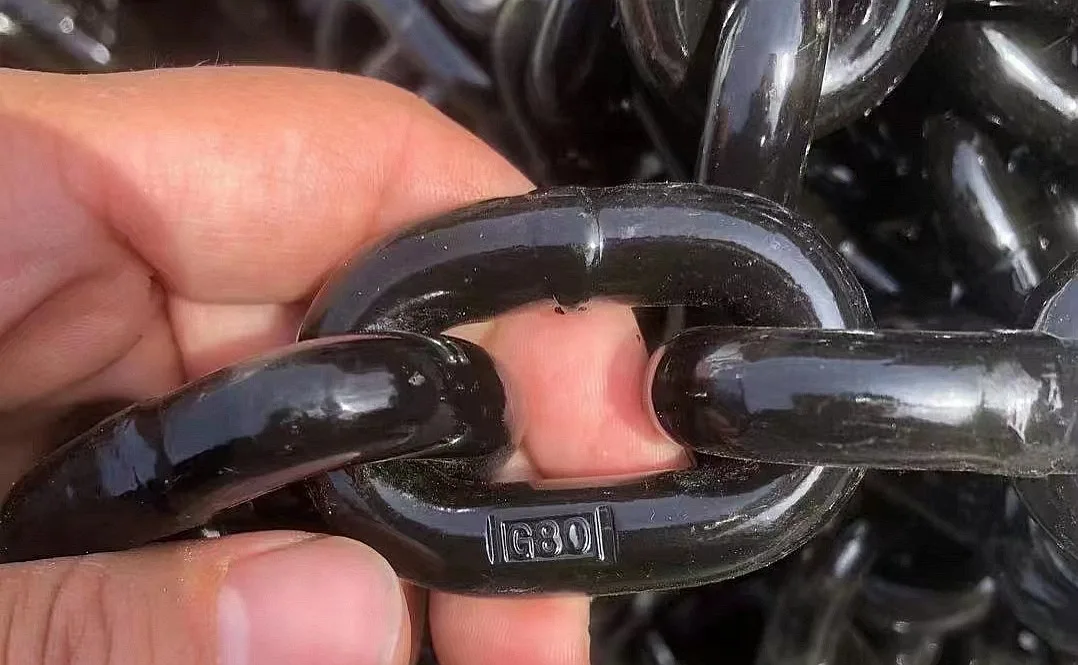
The grade is marked directly on the chain link, usually every meter. A Grade 80 chain will have "G80" stamped on the link, and a Grade 100 chain will have "G100". The marking is clear and permanent, and it is the primary method for verifying the chain's rating. Do not rely on color or finish alone. If the marking is missing or unclear, request a Material Test Certificate for the batch. The grade stamp must match the hardware used in the assembly. A G80 chain with G100 hooks does not make a G100 assembly.
Towing Chain Bridle With Forged 4 Inch Mini J Hooks
Matching the Chain to the Rest of the Assembly
A lifting assembly is only as strong as its weakest component. Using a Grade 80 chain with G100 hooks creates a Grade 80 system. Using a Grade 100 chain with G80 hooks creates a Grade 80 system. To achieve the full strength of the chain, all components-hooks, link rings, and fittings-must be the same grade. When sourcing, confirm the chain grade, the hook grade, and the fitting grade on a single quotation. We can assemble and proof test the full sling, and mark it with the system's working load limit and grade for traceability.
Towing Chain Bridle With Forged 4 Inch Mini J Hooks
How to Source as a Complete Lifting Assembly
Instead of sourcing chain, hooks, and fittings from separate suppliers, we recommend ordering the complete chain sling as one unit. We confirm the chain grade, the hook grade, and the fitting grade together, proof load test the assembly, and mark it with the working load limit and grade. This eliminates the risk of mismatched components and ensures compliance with EN 818-2 and ASME B30.26. For buyers, this reduces inspection time, simplifies documentation, and ensures the system performs as rated in service.
Towing Chain Bridle With Forged 4 Inch Mini J Hooks
What to Ask a Supplier Before You Order
Ask which grade the chain is manufactured to and confirm the marking pattern. Ask for the chain size range each grade covers. Ask whether the hooks and fittings are available in the same grade. Ask for a Material Test Certificate for the batch. Ask whether the supplier can quote and assemble the full chain sling with matching components. And ask whether the assembly is proof load tested and marked with the working load limit and grade. A single quotation for the complete system is the only way to ensure the assembly is rated correctly.
Ordering note. Grade 80 and Grade 100 lifting chains are both used in overhead hoisting and are made from high-quality alloy steel Grade is stamped on the chain link every meter; look for "G80" or "G100" to identify the chain The chain assembly is only as strong as its weakest component, so all parts must match the same grade Grade 80 is suitable for general industrial lifting; Grade 100 is for high-stress or cr