
Two Shot Molding Versus Overmolding
Both put two materials on one part. The difference is where the first shot sits when the second one arrives.
The same result by two different routes
Two-shot molding and overmolding both produce a part in two materials. In two-shot the first shot never leaves the tool: it is rotated or transferred to a second station and the second material is molded onto it. In overmolding the first component is molded, removed, and then placed into a second tool.
Where two-shot wins
Register. Because the first shot never leaves its core, the two materials meet exactly where the tool says they meet. On a visible color split — a keypad, a contrast grip, a scanner housing — that line is the part.
Where overmolding wins
Flexibility and tooling cost. Two separate tools cost less to build than one two-station tool, and a molded insert can come from anywhere.
What decides it in practice
Volume and the visibility of the boundary. If the line between the two materials is on a face the customer looks at, and the volume supports the tool, two-shot is the safer answer.
What to settle before the tool is cut
The rotation strategy, the shut-off strategy and the shrinkage of the first shot. All three belong in the DFM and, for anything complex, in a mold motion simulation.
Tooling and Parts Behind This Guide
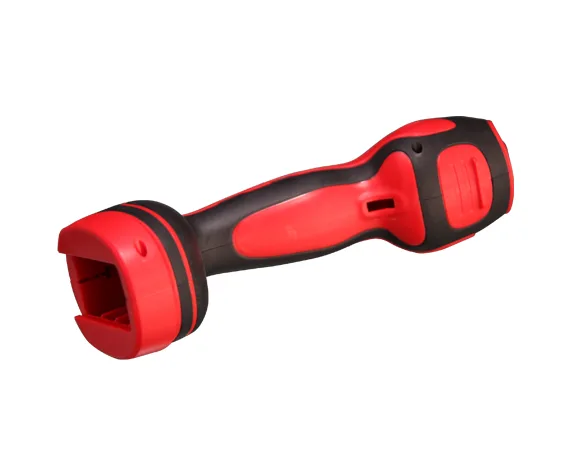
Two Shot Power Tool Handle
Power tool handle with a rigid core and an over-molded soft grip.
View details →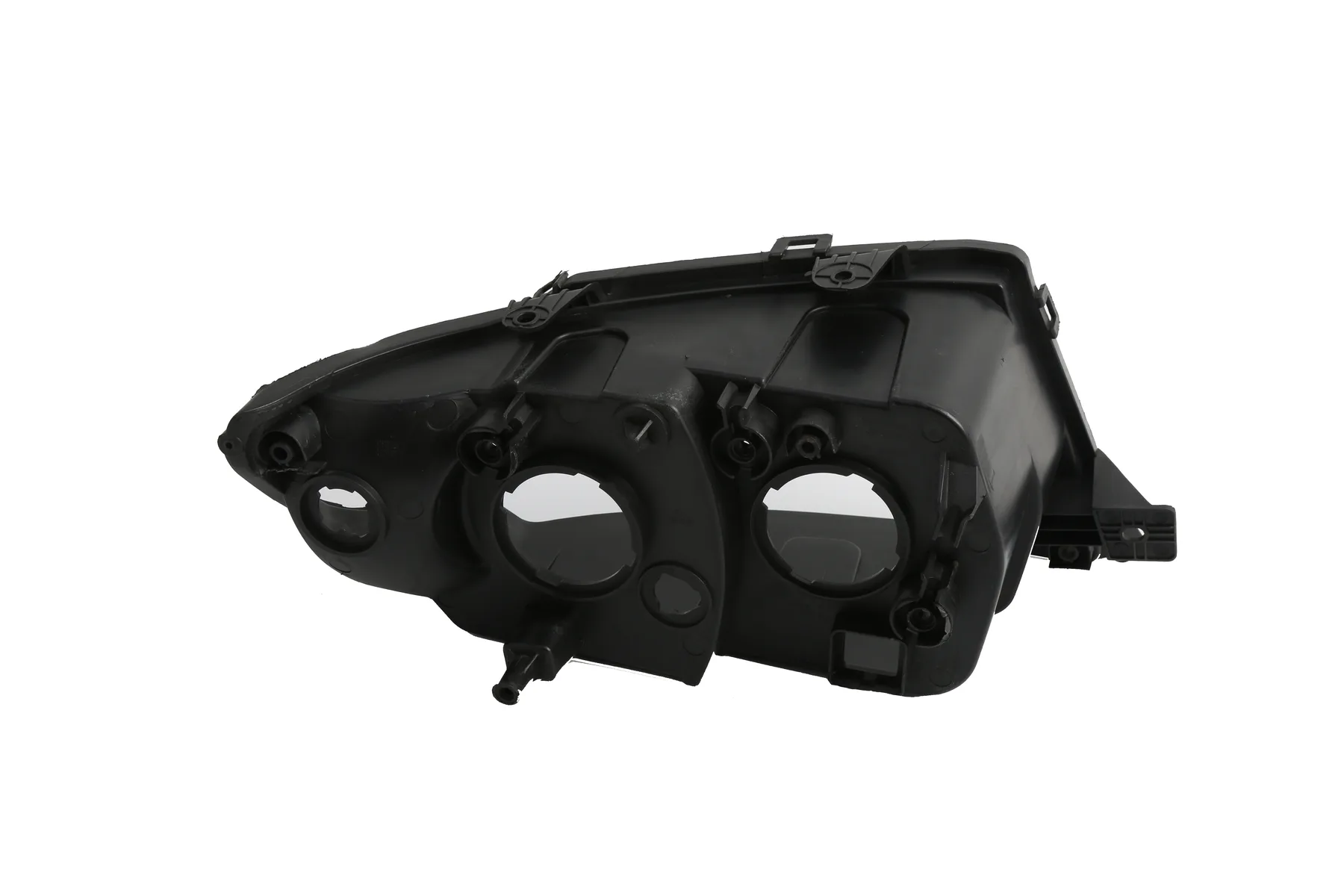
Automotive Headlamp Housing
Black headlamp housing with twin reflector bowls, connector apertures and adjuster pockets.
View details →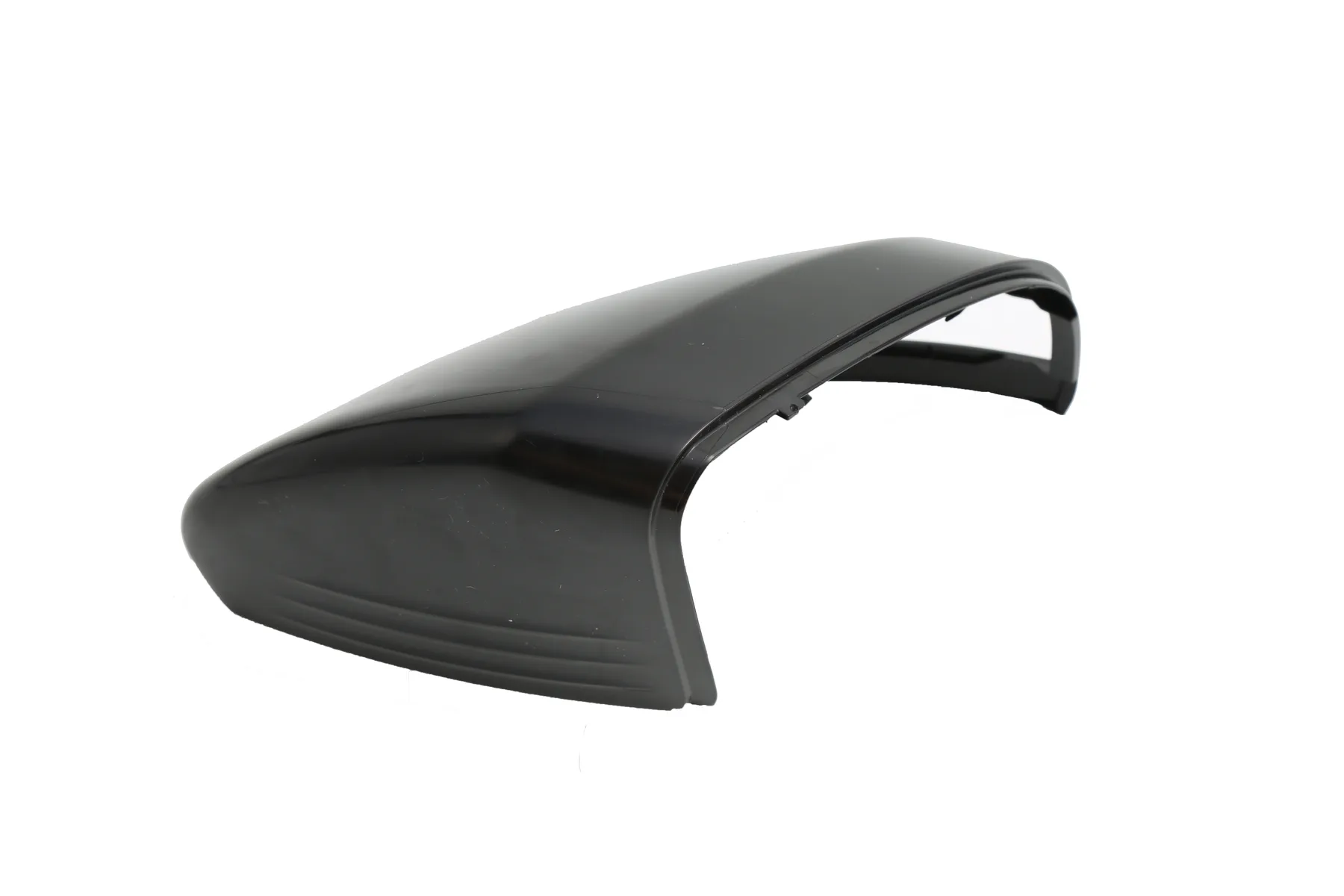
Automotive Mirror Cap
High-gloss curved mirror cap with a clean unbroken Class-A outer surface.
View details →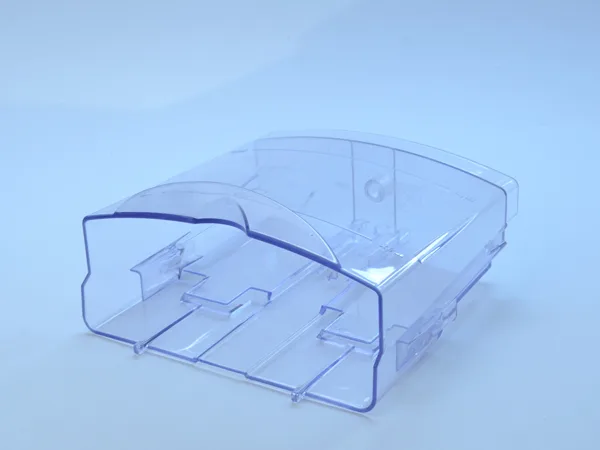
Transparent Medical Cassette Housing
Clear rectangular cassette with internal dividing ribs and a stepped sealing edge.
View details →Other Guides
What a Mold DFM Study Should Contain
The ten items we put in every DFM we send, and what each one is there to prevent.
What MoldFlow Analysis Actually Catches
Filling, packing, warpage, cooling — what each stage of the analysis is looking for.
Mold Standards DME HASCO Meusburger and MISUMI
Why the standard you name in the purchase order decides how your tool is maintained for the next ten years.
Mold Trials and FAI Reports
What you should receive when a tool is tried, and what to do with it.
Why Mold Motion Simulation Is Worth the Time
For complex tools, watching the mold open step by step finds the collisions a static model hides.
Choosing Between a Prototype Mold and a Production Mold
A prototype tool answers a different question. Buying the wrong one wastes the whole stage.
About This Guide
Who is this guide written for?
Buyers and engineers specifying injection mold tooling in Asia. It reflects how we work at JEC Mold rather than a generic textbook process.
Can you apply this to our project?
Yes. Send the 3D data, the resin and the annual volume and a professional quotation with technical comment comes back within two working days.
Where can I see the tools and parts referred to here?
All seventy-one parts and tools we show are on our products page, grouped by category, with the tooling route on each product page.
Apply This to Your Own Tool
Send the part and the volume and we will comment on it directly in the quotation, within two working days.