
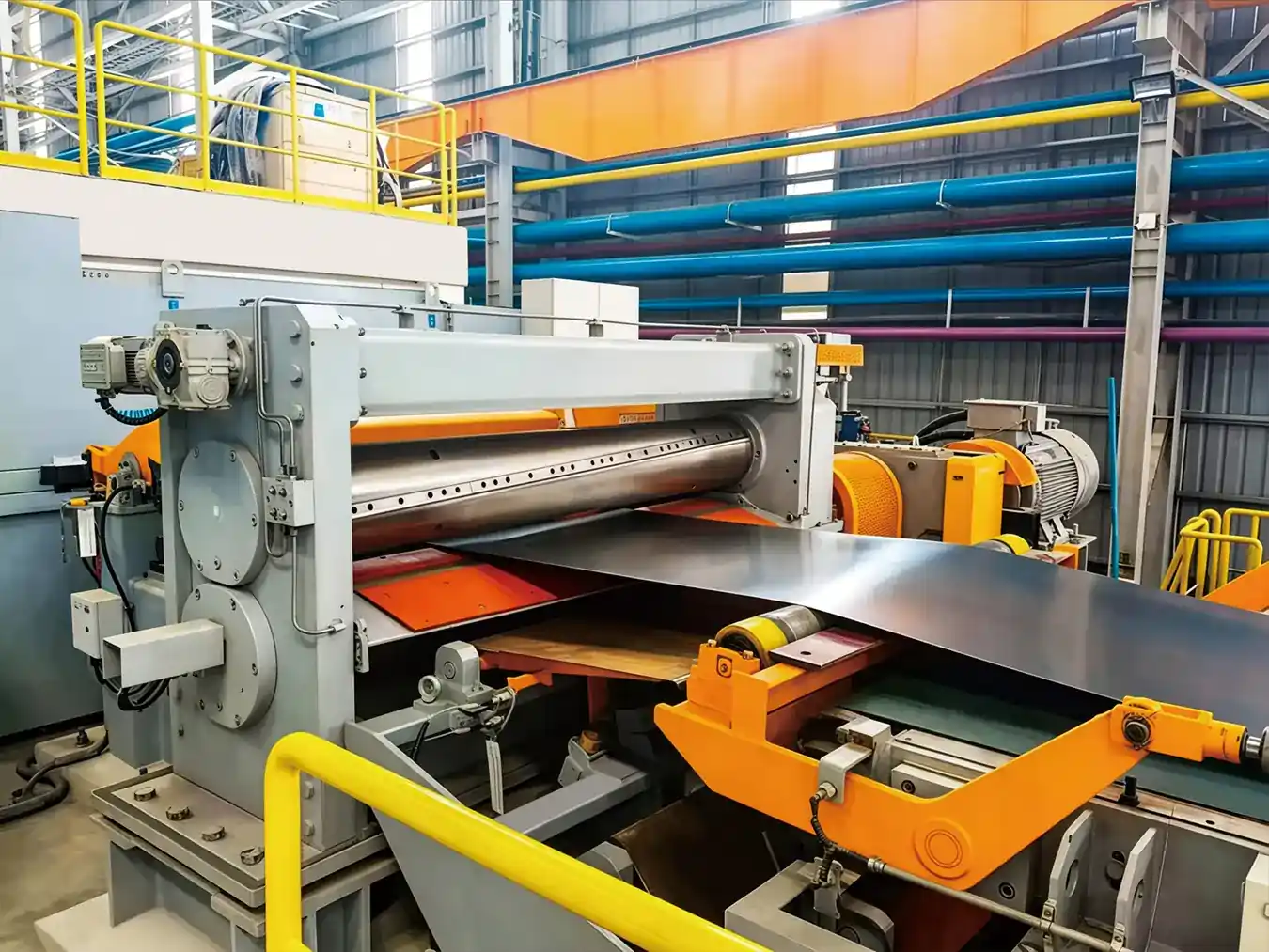
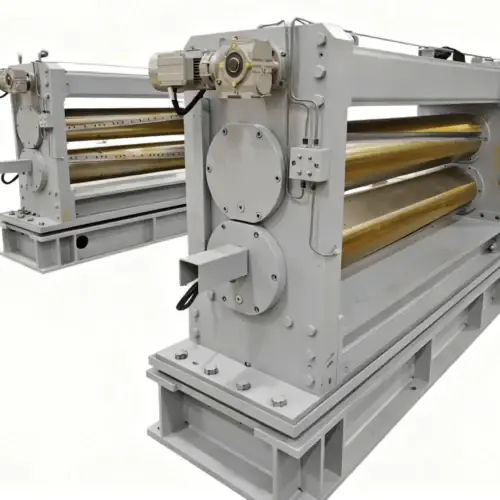
High Speed Fly Shear for Continuous Metal Strip Cutting
A conventional stop and cut shear has to halt the strip for every cut, which caps line speed and costs yield. A fly shear cuts while the strip keeps running, synchronising the shear head with strip travel so sheets of preset length are cropped on the fly.
- Maximum cutting frequency 2500 strokes per minute
- Carbide tipped blades, friction reduced 60 percent and service life up 50 percent
- Output roughly 40 percent higher than a hydraulic static shear
- Strip keeps moving, no line stop per cut
Key Benefits
What changes when cutting no longer stops the line.
Throughput Instead Of Stop Start
Output rises about 40 percent against a hydraulic static shear because the line never decelerates for a cut.
Strip Surface And Tension Protected
Tension integrity is maintained through the cut, so there is no warping and no surface damage from repeated stop and restart.
Length Accuracy From Closed Loop Control
Encoder, PLC motion controller and servo drive close the loop on shear position and speed, which is how micron level cut precision is held at speed.
Where It Is Used
Lines where a fly shear is fitted.
- Pickling lines cropping head and tail
- Continuous galvanizing lines
- Slitting and cut to length lines
- Thin gauge high speed strip processing
Who It Is For
- Line operators whose shear is the speed bottleneck
- Service centres cutting sheets to preset length
- Project teams modernising an older cut to length line
- Plants moving to thinner gauges at higher line speed
Problems It Solves
- Line speed capped by stop and cut shearing
- Yield loss at every deceleration and restart
- Surface marks and strip warping from static shearing
- Unplanned downtime from blade wear at high cut frequency
Technical Features
How the unit is built and controlled.
Rotary Shear Roller Set
Two large diameter working rollers carry carbide shear blades, and rotary motion gives high frequency cyclic cutting suited to fast thin gauge strip.
Servo Synchronised Motion
The shear set accelerates to match strip line speed, cuts at synchronisation, then decelerates back to home position ready for the next trigger.
Heavy Duty Welded Frame
A heavy welded frame and high torque servo drive unit are specified for long term continuous operation in pickling, galvanizing and cut to length lines.
Specifications
Blade and drive sizing follow your strip programme. The figures below are the design data for this unit.
| Maximum Cutting Frequency | 2500 strokes per minute |
|---|---|
| Cut Precision | Micron level with no strip warping |
| Blade Material | Carbide tipped, friction reduction 60 percent, service life up 50 percent |
| Output Versus Hydraulic Static Shear | Approximately 40 percent higher |
| Working Mode | Synchronous on the fly cutting, strip does not stop |
| Applicable Material | Carbon steel, stainless steel, aluminium, titanium alloy |
| Control Loop | Length encoder, PLC motion controller, servo drive, closed loop position and speed feedback |
Materials
- Heavy duty welded and stress relieved steel frame
- Alloy steel shear rollers
- Carbide tipped blades
Manufacturing Process
Line Data Review
Strip material, gauge, width, line speed and required cut length range are collected before design.
Frame And Roller Manufacture
The welded frame is stress relieved and machined, rollers are turned and ground.
Drive And Control Build
Servo drive, encoder and motion controller are configured to the line automation interface.
Assembly And Run Test
The unit is assembled and run tested for synchronisation and cut repeatability before shipment.
Quality Control
- Frame machining check after stress relief
- Roller runout and blade seat inspection
- Servo synchronisation test at rated frequency
- Cut length repeatability record from the run test
Customization Options
- Strip width and thickness range to your programme
- Blade material and geometry for your material mix
- Drive package and interface to your existing PLC
- Scrap handling and discharge layout
Use Guide
- Set cut length in the controller, not by mechanical stops
- Inspect carbide blade edges at the interval set for your gauge
- Keep the encoder coupling tight, length error usually starts there
- Check roller parallelism after any blade change
How It Compares
Fly shear against static shearing.
| Hydraulic static shear | Every cut on a static shear needs line deceleration, stop, cut and restart. The fly shear removes that cycle and lifts output by around 40 percent. |
|---|---|
| Guillotine shear at the exit | Cutting happens at line speed, so strip tension and surface quality are preserved through the cut. |
| Mechanical stop and cut units | Servo closed loop control holds cut length at high frequency instead of relying on mechanical settings. |
Related Products
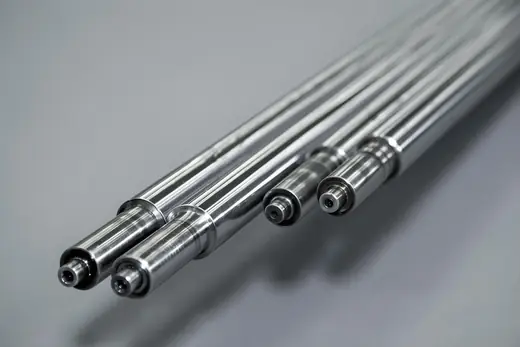
Flying Shear for Continuous Rolling Lines
High speed head and tail cropping at full line speed without deceleration or stoppage.
View Details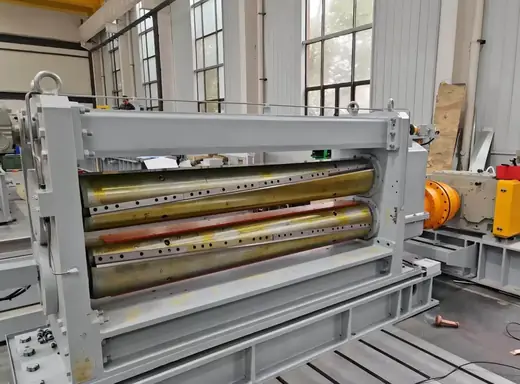
Fly Shear for Metal Sheet and Strip Cutting
2500 strokes per minute cutting with 40 percent higher output than conventional hydraulic shears.
View DetailsFlying Shear for Continuous Rolling Lines
High speed head and tail cropping at full line speed without deceleration or stoppage.
View DetailsFly Shear for Metal Sheet and Strip Cutting
2500 strokes per minute cutting with 40 percent higher output than conventional hydraulic shears.
View Details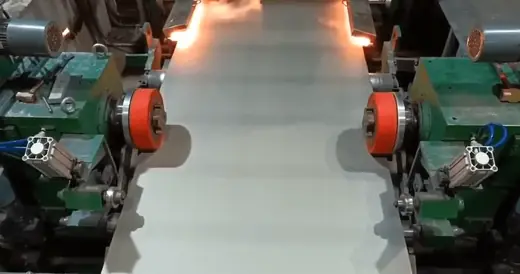
High Speed Fly Shear for Continuous Strip Cutting FAQ
How fast can it cut?
Maximum cutting frequency is 2500 strokes per minute, with the rotary shear roller set synchronised to strip line speed.
Which materials can it handle?
Carbon steel, stainless steel, aluminium and titanium alloy strip, within the gauge and width range agreed for your line.
How much output do we gain?
Against a hydraulic static shear, output is approximately 40 percent higher because the line no longer decelerates and restarts for each cut.
What blade life can we expect?
Carbide tipped blades give around 50 percent longer service life with 60 percent lower friction than the standard blade they replace. Actual life depends on gauge, material and cut frequency.
Can it be retrofitted to our line?
Yes, if there is space and the automation can exchange the length signal. Send the line layout, speed, gauge range and PLC type and we check the interface.
What do you need for a quotation?
Material, thickness and width range, line speed, required cut lengths and the control system you use.
Cut At Line Speed Instead Of Stopping
Send your line speed, gauge range and cut length requirement and we come back with a fly shear configuration.