
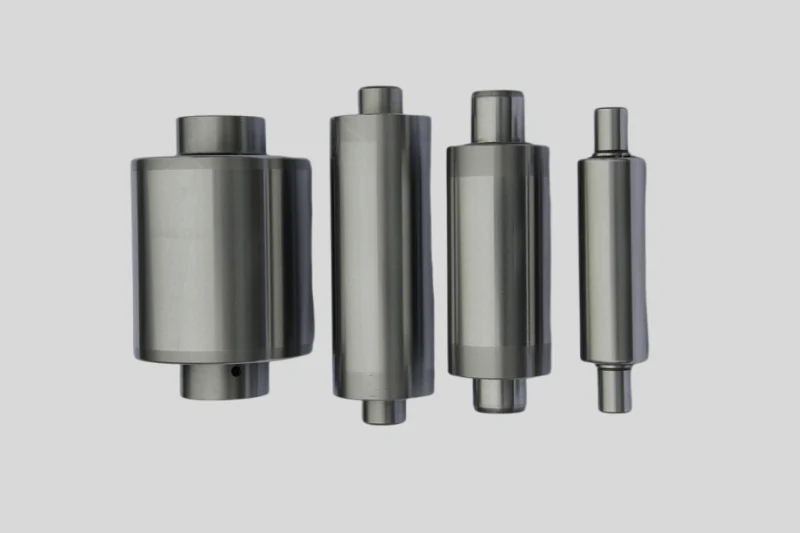
Why The Back Up Roll You Bought Is Not Durable
Three reasons back up rolls fail early, and how to tell which one you have by opening the roll and measuring runout.
What A Proper Back Up Roll Contains
Because of the environment it works in, the back up roll withstands a large radial force, which makes it the most critical mechanical part of the equipment after the work roll.
Many equipment builders do not understand the structure and assemble back up rolls themselves from ball bearings and bushing parts. Those are not durable and the accuracy is poor. A proper back up roll consists of a mandrel, bearing sleeve, needle rollers, seal, fastener and heat resistant extreme pressure grease, with heat treatment hardness, material selection, clearance fit, assembly and debugging all specified.
What Service Life Should Look Like
On a tension leveling line running below 450 m/min, back up roll service life should be between half a year and two years, depending on the initial plate shape and the working environment.
If a back up roll fails in two or three months, tell the supplier. That is either a quality problem or improper use, and it is worth establishing which before buying the next set.
Cause One: Roll Quality
Open the roll. If the internal structure is assembled from standard parts such as complete bearings, it is basically an inferior product. The inside should be needle rollers, or needle rollers with cages, because the back up roll itself is a non standard bearing.
Then measure circumferential runout with the roll installed on the cassette. If runout is greater than 0.01 mm the roll is defective and should be replaced.
Cause Two: Wrong Selection
When sheet thickness exceeds 0.3 mm, or line speed exceeds 300 m/min, light duty back up rolls with cages are not the right choice. Heavy duty rolls with a full complement of rollers should be used instead.
After dismantling a roll, if the internal cylindrical needle rollers are held by a ring cage made of nylon, brass or cast iron, it is a light duty type. For those duties, ask the supplier to replace it with the full complement version.
- Sheet thickness above 0.3 mm: use heavy duty full complement rolls
- Line speed above 300 m/min: use heavy duty full complement rolls
- Nylon, brass or cast iron cage inside means light duty construction
- Circumferential runout above 0.01 mm on the cassette means defective
Cause Three: Cassette Accuracy
The accuracy of the roll cassette directly affects whether the back up roll survives. A cassette that has lost alignment loads individual rolls unevenly, and the roll that takes the extra load fails first.
This is why replacing rolls repeatedly without checking the cassette produces the same failure every few months. If two sets of rolls have failed early in the same position, measure the cassette.
Products Mentioned In This Article
Back Up Roll in GCr15 for Straightening Levelers
GCr15 back up rolls, 74 by 192 mm, with 20CrMnTi carburized shafts for straightening machines.
View Details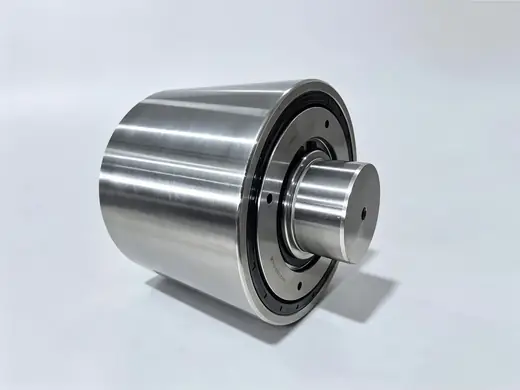
Back Up Roll in GCr15 for Tension Levelers
GCr15 back up rolls on carburized 20CrMnTi shafts at HRC 58-62, size 74 by 192 mm.
View Details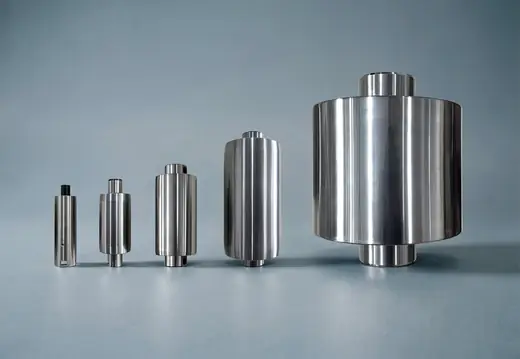
Premium Back Up Rolls for Leveling Machines
Deep heat treated and precision ground back up rolls, roundness held to 0.005 mm class.
View Details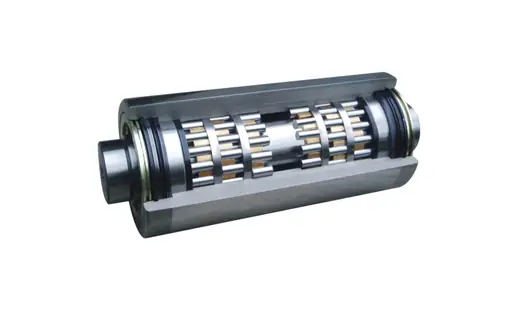
Support Roll 74 mm for Fast Galvanizing Lines
GCr15 support roll, 74 by 192 mm, with 20CrMnTi carburized shaft for high speed lines.
View DetailsReader Questions
How long should a back up roll last?
Between half a year and two years on a tension leveling line running below 450 m/min, depending on the incoming plate shape and the working environment.
How do I tell light duty from heavy duty?
Dismantle the roll. If the needle rollers are held in a ring cage of nylon, brass or cast iron, it is light duty. Full complement rollers with no cage is heavy duty.
What runout is acceptable?
Install the roll on the cassette and measure circumferential runout. Above 0.01 mm the roll should be replaced.
We keep replacing rolls in the same position, why?
Check the cassette. Cassette accuracy directly affects back up roll life, and an out of alignment cassette will keep destroying rolls in the same place.
Get Rolls Built Properly
Send your roll dimensions and line speed and we specify the right construction for the duty.