
How Hard Chrome Plated Working Rolls Improve Tension Leveler Stability
Wear resistance, friction and rigidity, and the numbers behind each of them on a 16 to 68 mm roll.
Wear Resistance Holds The Roll Profile
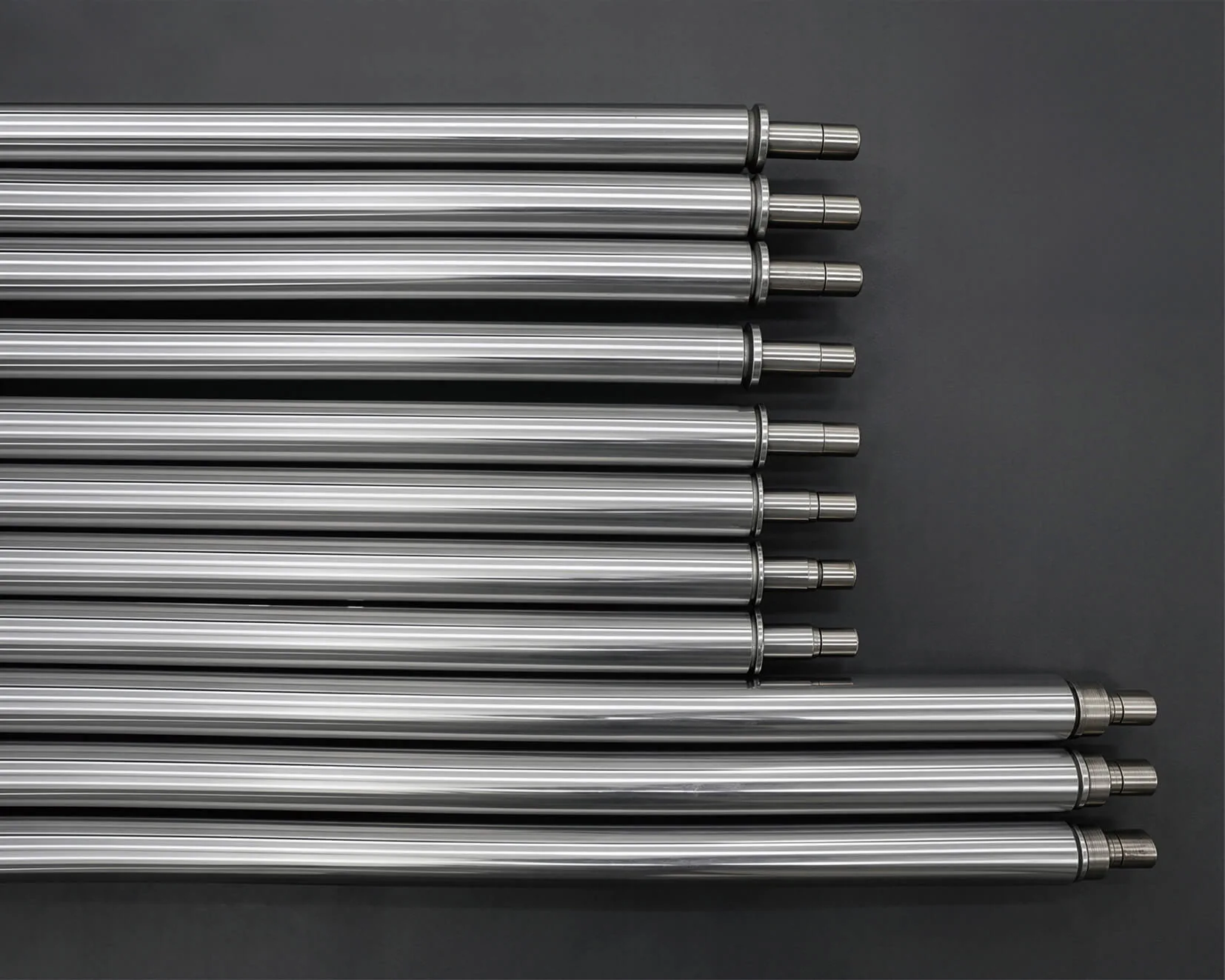
Continuous high speed heavy load operation produces uneven roller wear, and uneven wear produces fluctuating strip tension and unplanned downtime. Precision hard chrome plated working rolls from 16 mm to 68 mm address that directly.
Electroplated chrome lifts surface hardness to HV 800-1000. The compact uniform coating lowers abrasive wear by 60 to 70 percent compared with uncoated rollers and extends maintenance cycles by up to 50 percent. Slow, even wear preserves the original roll profile through long production runs, and stable geometry is what keeps tension distribution consistent across the full strip width, within a flatness tolerance of 2 I.
Low Friction Cuts Vibration And Power
The micro finished chrome surface reaches Ra 0.1 micron or better, which reduces the friction coefficient by 40 to 45 percent. The optimised contact surface avoids material adhesion and transfer between roll and strip, so stains and indentations do not appear on finished coils.
Lower friction also eases driving loads, cutting power consumption by 15 to 20 percent. Since fluctuating load is one of the main sources of mechanical vibration in a leveling unit, smoother contact suppresses vibration resonance at high speed.
- Surface hardness HV 800-1000 after electroplating
- Abrasive wear reduced 60-70 percent against uncoated rolls
- Maintenance cycles extended by up to 50 percent
- Surface roughness Ra 0.1 micron or better
- Friction coefficient reduced 40-45 percent
- Driving power consumption reduced 15-20 percent
Rigidity Keeps Tension Uniform
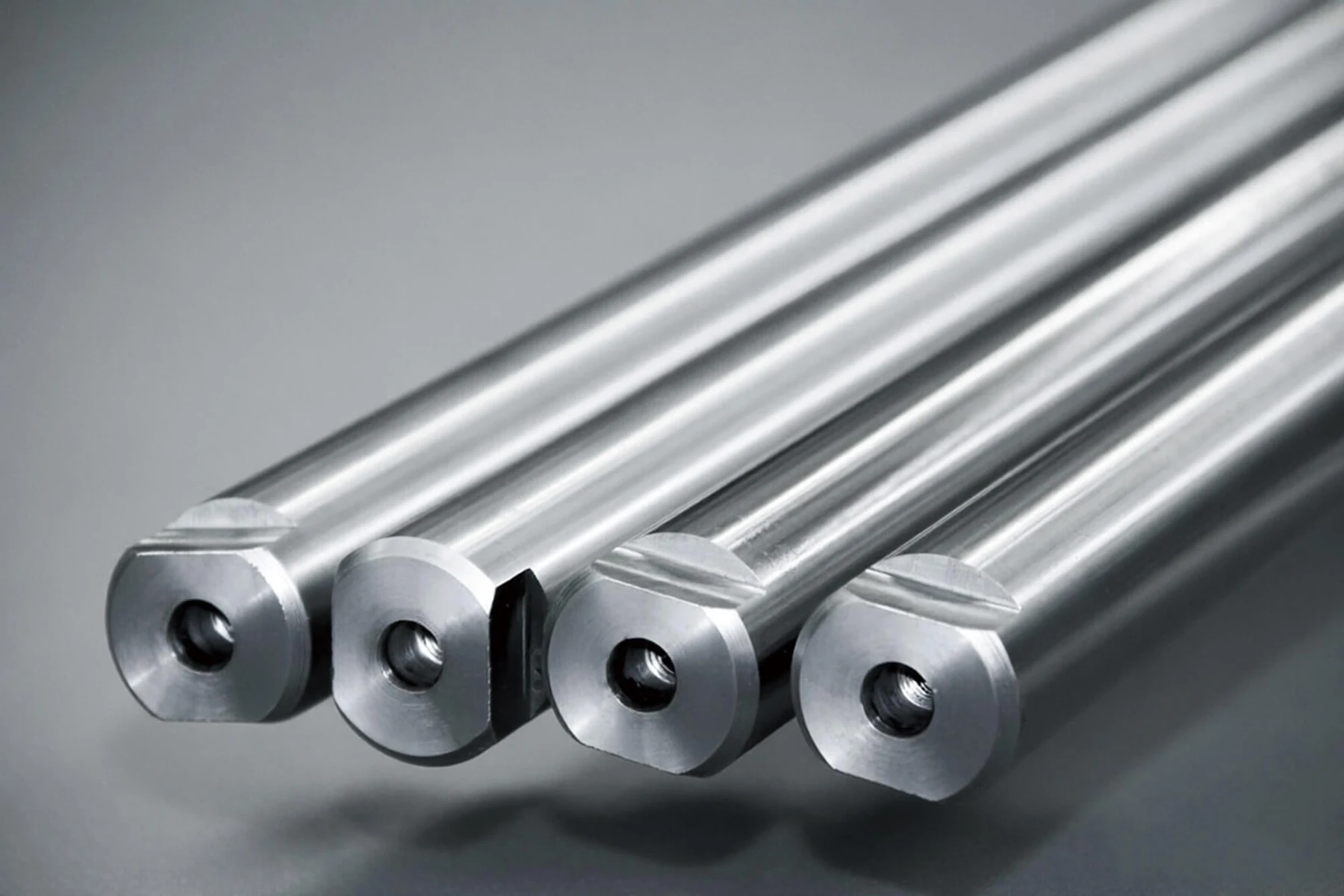
A roll that deflects under load changes the tension distribution across the strip width, and that shows up as wave edges and buckling regardless of how good the plating is.
Structural rigidity therefore has to be designed in alongside the surface treatment. Roll neck and barrel geometry, material and hardened layer depth all contribute, and none of them can be traded away for a better surface finish.
What This Means In Practice
If your leveler is showing fluctuating tension, surface stains on the coil or rising drive current, the roll surface condition is a reasonable first suspect.
Replacing with plated rolls in the correct diameter changes three things at once: profile stability, surface quality and energy consumption. It is one of the few maintenance decisions that improves all three.
Products Mentioned In This Article
Chrome Plated Work Rolls 16-68 mm
16-68 mm work rolls paired with chrome plated back up rolls, surface hardness HV 800-1000.
View Details
Precision Work Rolls 9-68 mm With Hard Chrome Plating
Chrome plated work rolls, HV 800-1000 surface hardness, matched to chrome plated back up rolls.
View Details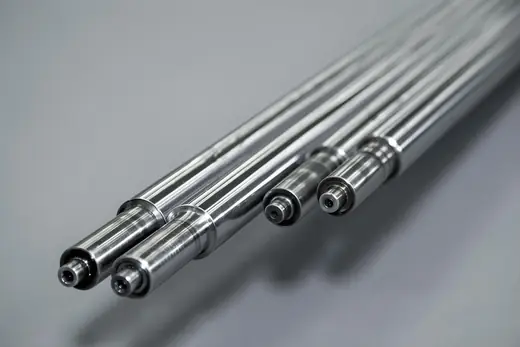
Chrome Plated Working Roll for 1450 mm Tension Leveler
Consumable work roll for 1450 mm galvanizing line tension levelers, chrome plated 0.05 mm.
View Details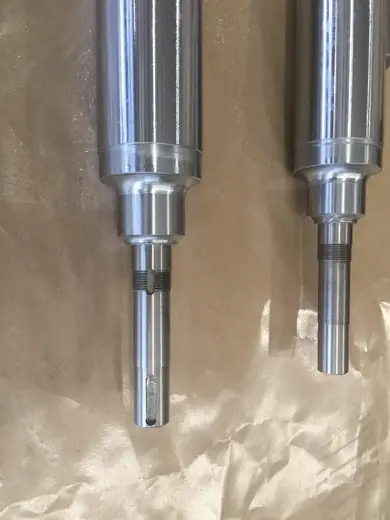
Work Roll for 1450 mm Tension Leveler
Primary contact rolls for 1450 mm galvanizing line levelers, diameters 9-68 mm.
View DetailsReader Questions
How much longer do plated rolls last?
Abrasive wear is reduced by 60 to 70 percent against uncoated rolls, which extends maintenance cycles by up to 50 percent in this diameter range.
Does plating affect strip surface quality?
Yes, positively. The micro finished surface at Ra 0.1 micron or better avoids adhesion and transfer, which removes stains and indentations on the finished coil.
Does it really cut power consumption?
Lower friction eases driving loads, with a reduction of 15 to 20 percent reported in this configuration.
What diameters are covered?
Precision hard chrome plated working rolls from 16 mm to 68 mm, produced to your cassette drawing.
Upgrade Your Roll Surface
Send your roll drawing and line data and we quote plated rolls with the plating specification stated.