Why stripping matters
Tin and silver are both widely used in welding, plating, protective coatings, electroplating and electroforming. Tin's solderability and corrosion resistance make it central to PCB and component soldering; silver's electrical and thermal conductivity put it on electronic components, contacts and circuits as well as in jewelry, utensils and imaging materials.
Rework, accumulated waste and defective production inevitably generate large amounts of tin and silver waste. Mishandled, that both wastes precious metal and pollutes: silver-bearing waste fixer and tin-bearing electronic scrap discharged directly cause heavy metal contamination of water.
Stripping runs across four sectors: electronic scrap recycling, where the solder layer is removed to allow sorting and metal recovery; jewelry and handicraft manufacturing, where defective pieces are reworked instead of scrapped; photography and imaging, where silver is recovered from fixer and film; and electroplating and electroforming, where substandard layers are removed to protect product quality.
The shared principle
However different the applications, both processes follow the same basic principle: through chemical or electrochemical reaction, the metal layer is converted into soluble ions or complexes and thereby separated from the substrate.
Chemical routes
Tin is commonly stripped with a solution containing a strong oxidant or chelating agent, which oxidises metallic tin to divalent tin ions and removes it from the surface. In a strong acid environment tin is oxidised to stannous chloride and dissolves; with a strong oxidiser such as nitric acid it is fully oxidised to a stannous nitrate solution.
Silver does not react readily with dilute acid but oxidises easily in nitric acid. In cyanide-containing solutions it forms a stable complex with cyanide ions, which is why early silver removal processes widely used cyanide systems.
Those cyanide systems are now being replaced. Because of severe toxicity and environmental risk they are giving way to thiosulfate, ammonia complexes and environmentally friendly organic ligands.
Electrochemical routes
Electrolysis is the alternative to reagent-driven stripping. In the cell, the workpiece to be stripped serves as the anode; applied current drives metallic tin or silver into solution as ions, while hydrogen or other reduction products are released at the cathode.
Current density, electrolyte composition and temperature are the three parameters that determine efficiency and quality. The method is fast and highly controllable, which is what makes it suitable for large-scale industrial operation rather than batch chemistry.
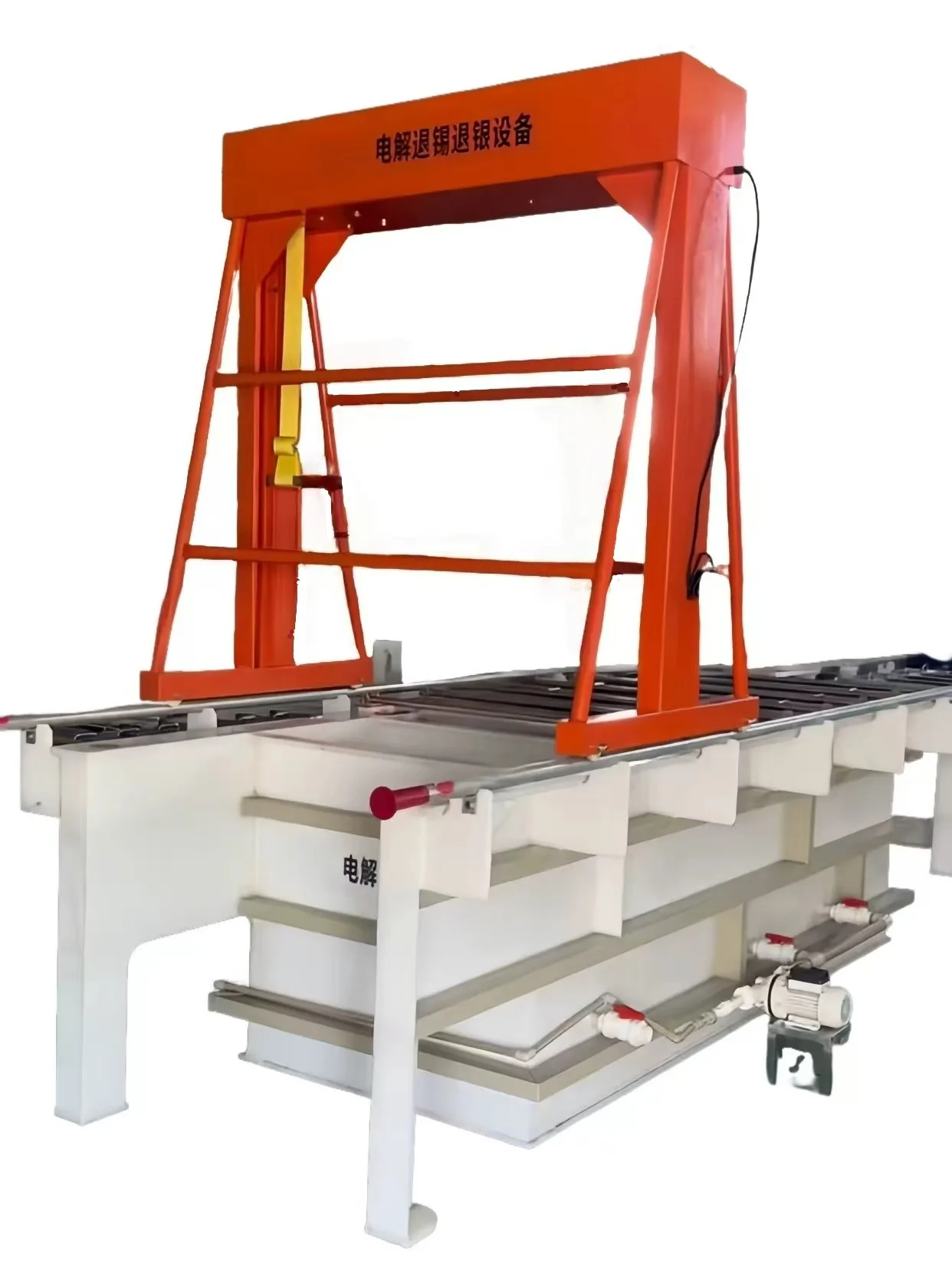
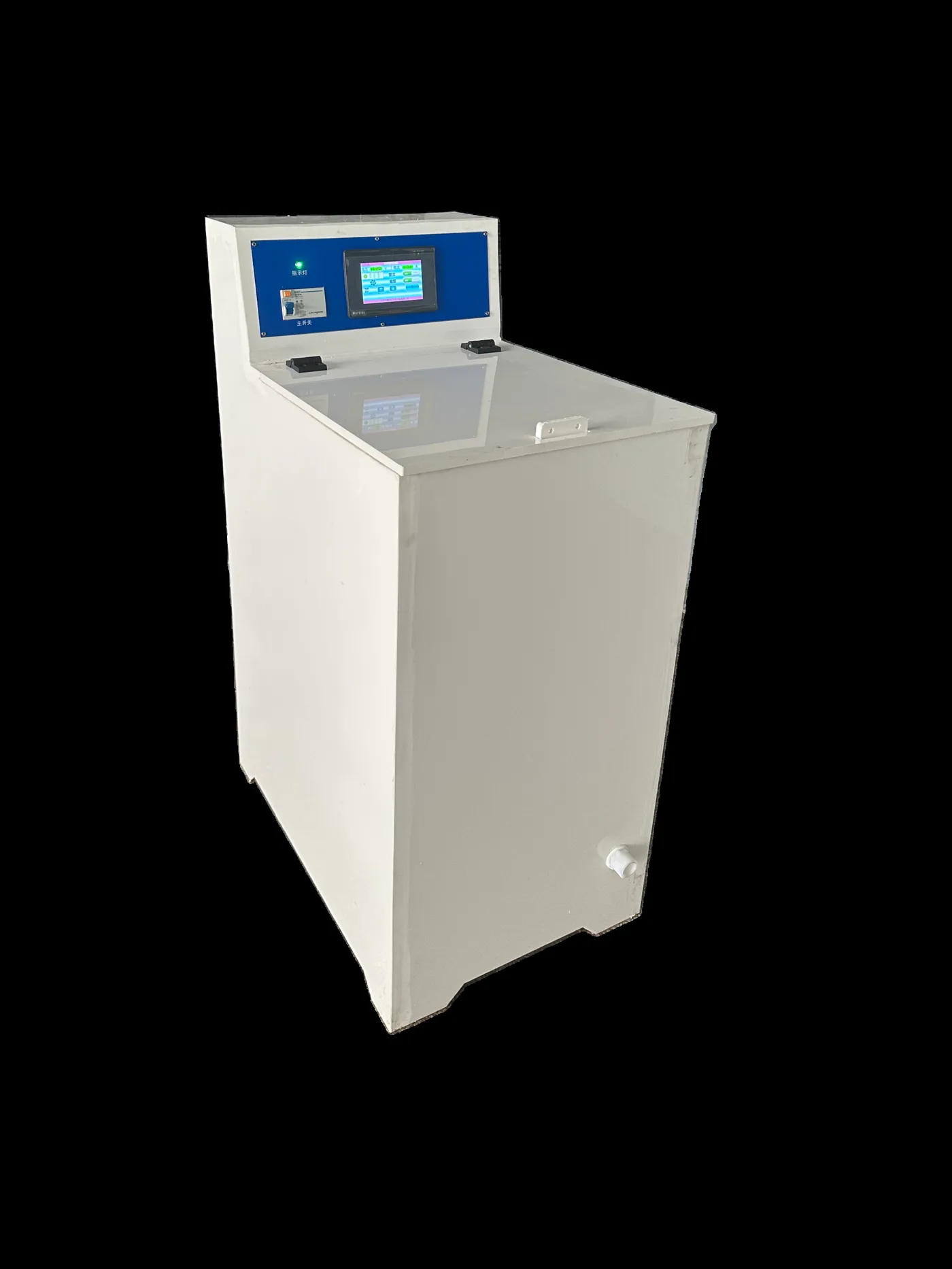
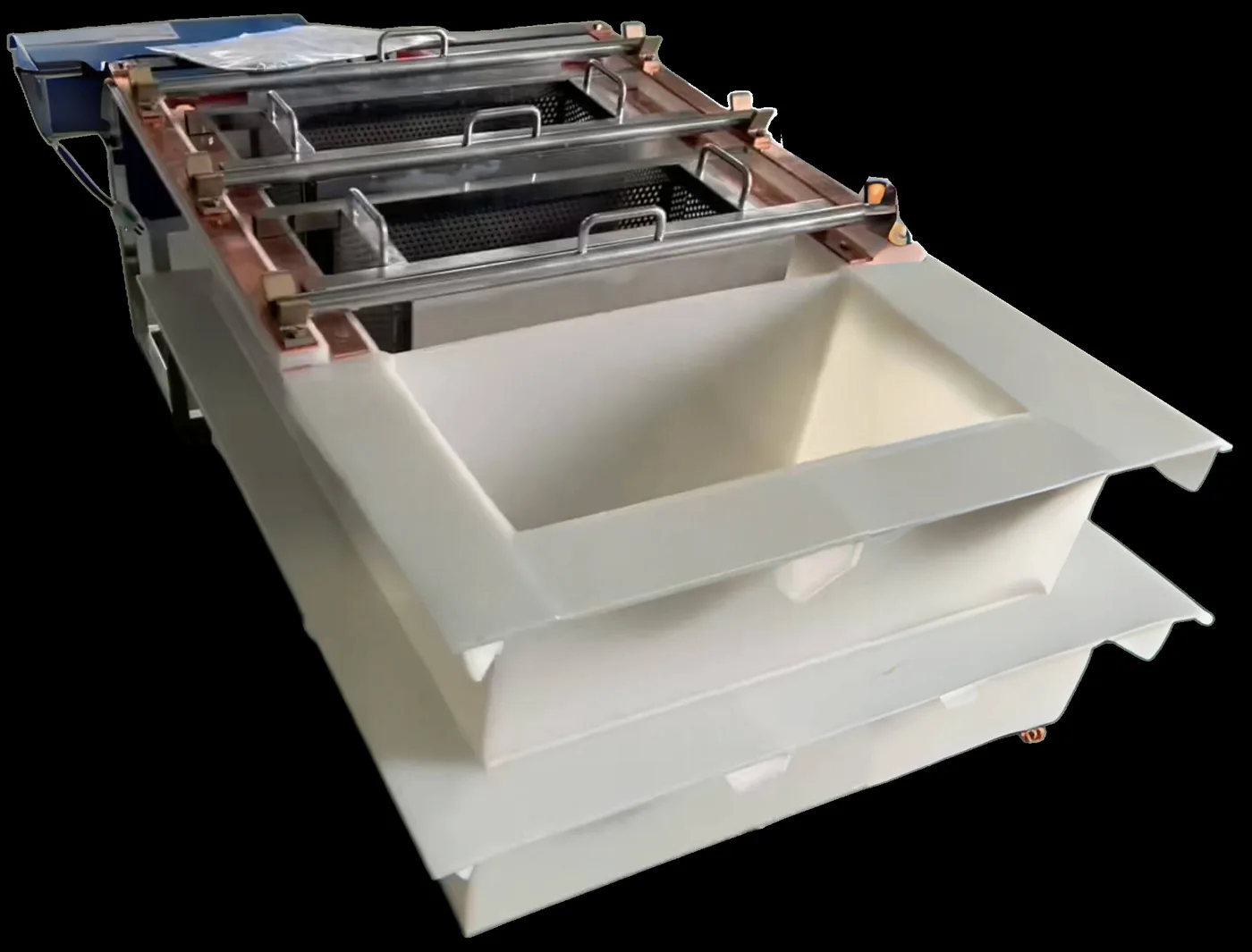
That is the principle the silver stripping machines are built on: a PP tank, stainless baskets on an iron crane, and a rectifier sized so current density stays uniform across a full load. The small machine runs 6 kW at 380 V over four baskets; the large one runs 10 kW over a 2000 litre bath and six.