

How Prefab Buildings Ship Overseas
Ocean freight decides more of the delivered price than most buyers expect. Understanding the three shipping formats is the cheapest engineering decision you will make.
A prefab building can cross an ocean in three formats, and the one you choose changes the landed cost far more than a negotiation on unit price ever will.
Format One: Knocked Down in Containers
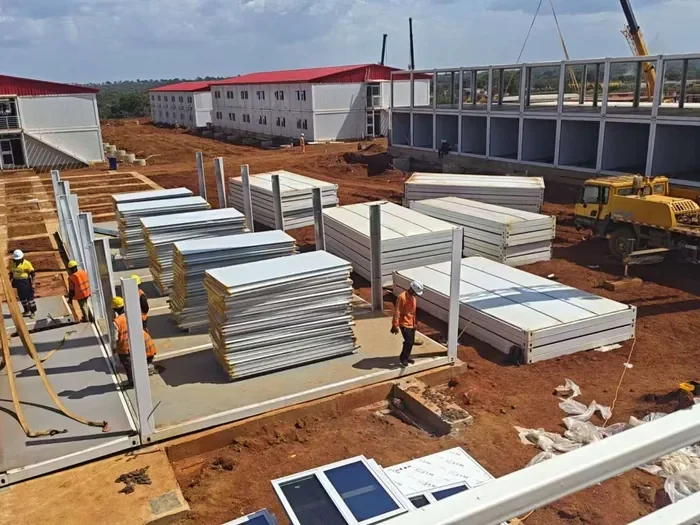
Expandable and flat-pack units are knocked down so several homes fit one 40HQ container. Panels stack flat, frames nest, and the container carries building rather than air. This is the default for camps and for any long sea leg.
The trade is site labour. Panels have to be refitted to their marked positions, so the crew at the destination does more work than they would with a finished module.
Format Two: Panelised Kits
For buildings rather than container units, the same logic applies at a larger scale. Wall, floor and roof panels ship flat and the frame ships as marked members — a numbered kit with erection drawings and a bolt and panel schedule.
This is how a 3,000 m² two-storey complex was delivered to El Salvador. Shipping that area as finished volumetric modules would have dominated the project cost.
Format Three: Out-of-Gauge and Break-Bulk
Fixed steel modules that cannot be knocked down ship as out-of-gauge or break-bulk cargo with a tailored loading plan. It costs more per unit, and it is the right answer when the specification demands a finish level that will not survive dismantling and rebuilding.
What a Loading Plan Does
A loading plan is a container-by-container packing design produced before anything is packed. It exists to do four things:
- Maximise the number of units per box, which is what keeps freight per unit down
- Protect finished interiors, glazing and fittings across the sea leg and any inland haul
- Confirm completeness against the bolt and panel schedule before the doors close
- Sequence containers so the modules needed first arrive first
Why Sequencing Matters on Large Projects
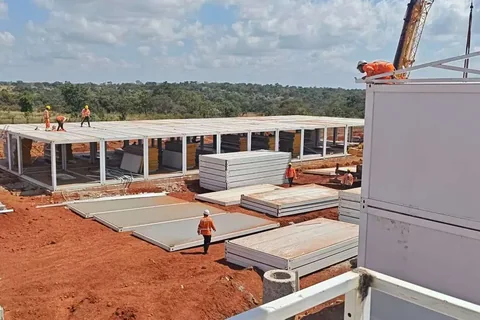
Over 500 modules is not one shipment, it is a sequence of them. If containers arrive in an arbitrary order the site ends up with a yard full of unrelated parts and a crew that cannot start a building. Numbering containers to the erection sequence is what keeps the crane working.
Photo Reports and Documentation
Every container is photographed at quality control and again at loading before it is sealed. Material certificates and load-test reports ship with the order. Between them these are what turn a delivery dispute into a five-minute conversation.
Choosing Your Incoterms
We quote FOB, CIF or DAP. FOB suits buyers with their own forwarder and good visibility of the route. CIF and DAP suit buyers who would rather the freight be someone else's problem — which on an unfamiliar route is often the cheaper decision overall.
Products For This Requirement

Detachable Container House
The unit we build most camps from. It knocks down to a flat stack for the sea leg, then opens back out into a finished room that can…
View product
Panelised Building Kit
When freight volume matters more than site labour, the building ships as flat panels and marked members — a numbered kit that a loca…
View product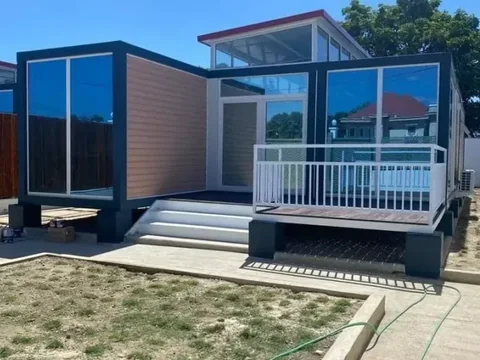
Expandable Container House
The fastest way to put a finished, serviced living space on a site. It travels as a compact stack and unfolds into a room with the w…
View productWhere We Have Done This
Prefab Building Complex
A prefab building complex of over 3,000 m² — two-storey blocks on a light steel frame with finished facades, external staircases…
Read the projectSimandou Bauxite Mine Camp
A workforce camp for one of the world's largest bauxite and iron-ore developments — dormitories, canteens, offices and ablution …
Read the projectQuick Answers
How many prefab homes fit in a 40HQ container?
Expandable and flat-pack units are knocked down so several homes fit one 40HQ container. The exact number depends on the specification and is confirmed on your loading plan before the order is placed.
What if a module cannot be knocked down?
Fixed steel modules ship as out-of-gauge or break-bulk cargo with a tailored loading plan.
Do you provide photos before shipping?
Yes. Photo reports are issued at quality control and at loading, before every container is sealed.
Which Incoterms do you offer?
FOB, CIF or DAP. Tell us the destination port and your preferred terms with the enquiry.
Still Deciding
Describe your project and an engineer will tell you which option fits — with drawings and a price.