

Detachable vs Expandable Container House
Both ship flat and both open out on site, but they answer different problems. This is how to tell which one your project actually needs.
Buyers usually arrive asking for a price on a container house, and the first useful question back is which kind. Detachable and expandable units look similar in a catalogue and behave very differently on a project.
What a Detachable Container House Is
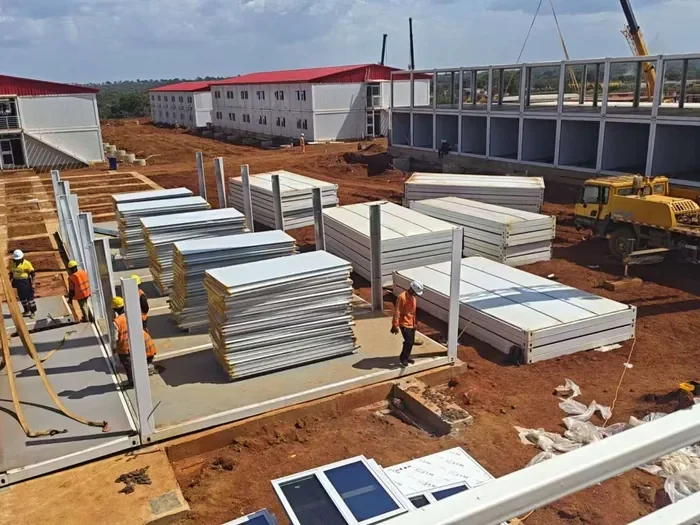
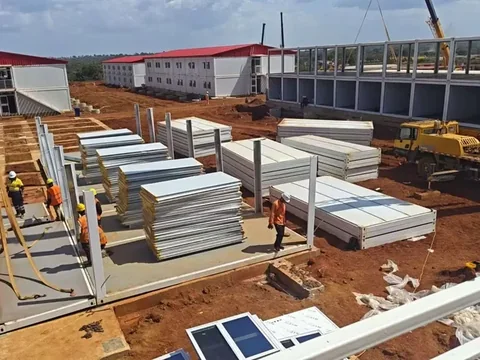
A detachable unit is a steel frame with wall, floor and roof panels that bolt on rather than weld in. For the sea leg the panels come off and stack flat inside the frames, which is why several units fit one 40HQ container. On site the panels go back to their marked positions.
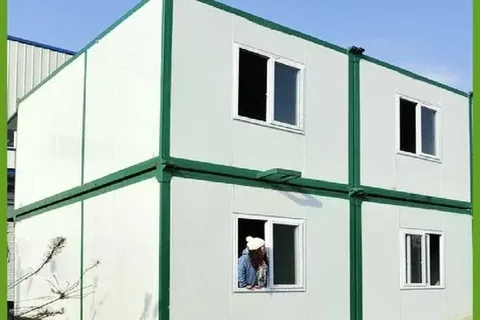
Because the panels are removable, the unit can be combined sideways with its neighbours on a common grid and stacked up to three storeys with external steel staircases. That is what makes it the unit most camps are built from.
What an Expandable Container House Is
An expandable unit ships as a compact stack and unfolds into a finished living space. The walls, windows, wiring and fittings are already installed, so site work is lifting, unfolding, levelling and connecting services.
It trades flexibility for speed. It does not combine or stack the way a detachable unit does, but it is habitable very quickly and standard units ship in 20 to 30 days.
Side by Side
| Detachable | Expandable | |
|---|---|---|
| Freight | Several units per 40HQ | Several units per 40HQ |
| Site labour | Panels refitted to marked positions | Unfold, level, connect |
| Combinable into larger rooms | Yes, on a common grid | Limited |
| Stacking | Up to 3 storeys | Single storey |
| Lead time | Quoted per project volume | 20 to 30 days for standard units |
| Best for | Camps and multi-building compounds | Small, fast deployments |
| Extendable later | Yes, bolted | Limited |
How to Choose
If you are building a camp — dormitories, a canteen, offices and ablutions on one grid — the detachable unit is almost always right. One module family means one bill of materials, one erection sequence and the ability to stack when the pad is tight.
If you need a handful of habitable units quickly — a site office, a supervisor's house, a show unit for a distributor, or first-phase accommodation while the main camp is in fabrication — the expandable unit gets people under a roof sooner.
- Building a camp of any size: detachable
- Need beds in weeks, not a compound: expandable
- Pad is smaller than the headcount: detachable, stacked two or three storeys
- Testing a market with a single sample: expandable
- Compound will be extended mid-project: detachable
What They Share
Both are engineered to AS/NZS, EN (CE) and the wind and seismic loads you specify. Both are fitted out and function tested in Weifang before shipping. Both leave with a photo report issued before the container is sealed, and both have no fixed minimum order on standard units.
Products For This Requirement
Detachable Container House
The unit we build most camps from. It knocks down to a flat stack for the sea leg, then opens back out into a finished room that can…
View product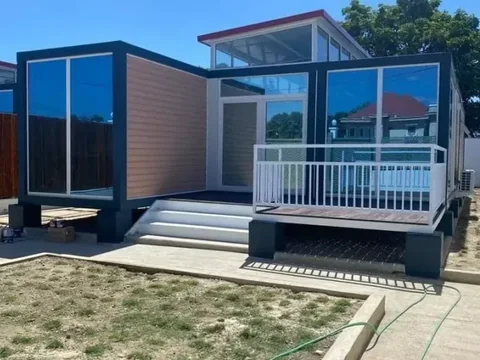
Expandable Container House
The fastest way to put a finished, serviced living space on a site. It travels as a compact stack and unfolds into a room with the w…
View product
Worker Dormitory Block
The sleeping accommodation that most of a camp is made of. Rooms are combined from standard units, stacked two storeys with external…
View productWhere We Have Done This
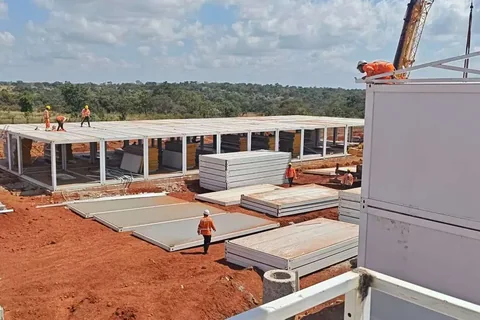
Simandou Bauxite Mine Camp
A workforce camp for one of the world's largest bauxite and iron-ore developments — dormitories, canteens, offices and ablution …
Read the projectRefugee Accommodation Camp
A refugee accommodation camp in a German river valley, supplied to EN (CE) expectations — container modules with finished kitche…
Read the projectQuick Answers
Which is cheaper to ship?
Both knock down so several homes fit one 40HQ container. Across a large camp the detachable unit usually wins on delivered cost per bed, because rooms are combined from a common module.
Can expandable units be stacked?
Expandable units are supplied as single storey. Where you need two or three storeys, the detachable unit with external steel staircases is the right product.
Which has the shorter lead time?
Standard expandable container homes ship in 20 to 30 days. Detachable camp volumes are quoted per project.
Can I mix both on one site?
Yes, and it is common — expandable units for immediate first-phase accommodation while the detachable camp is in fabrication.
Still Deciding
Describe your project and an engineer will tell you which option fits — with drawings and a price.