
Types of Spreader Bars
Spreader bars are essential for balanced lifting of heavy or wide loads, but choosing the wrong type can lead to uneven stress, instability or equipment failure. This guide outlines the core types of spreader bars, their structural differences, typical applications, and how to select the right one based on load shape, lifting method and site constraints.
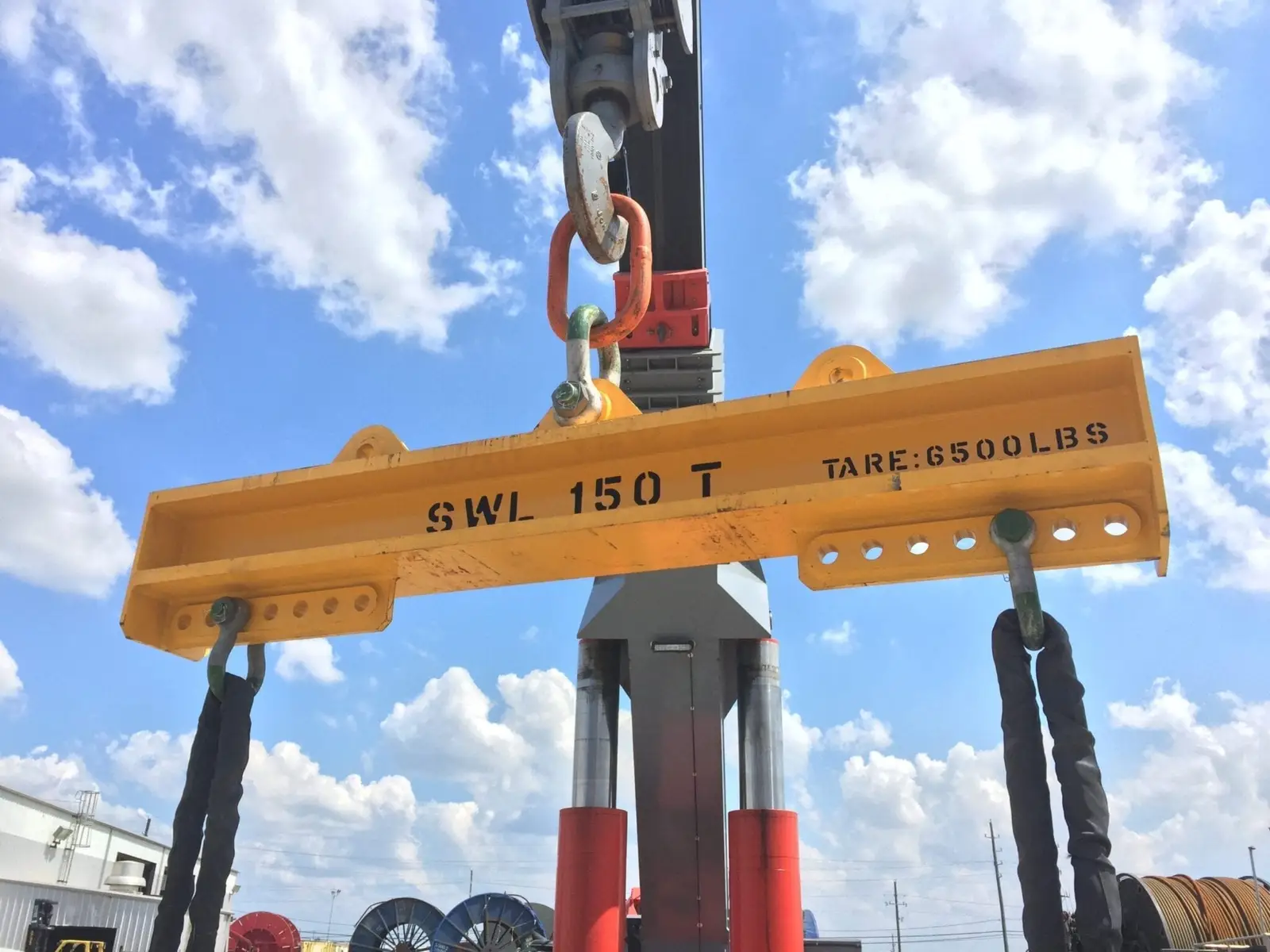
What Spreader Bars Actually Do
Spreader bars are rigid load-distributing devices used to connect lifting equipment like cranes or hoists to a load. Their primary function is to prevent the load from collapsing or twisting during lift by maintaining even tension across multiple slings or lifting points. They are not load-bearing in the sense of carrying weight alone, but they transfer and balance the load across the lifting system. Without a spreader bar, wide or flexible loads may shift, tilt or damage the lifting gear. The bar itself must be strong enough to resist bending under the load's weight and the forces generated by sling angles.
Straight Bar Spreader Bars
The most common type, straight bar spreader bars consist of a single rigid beam with attachment points at each end. They are ideal for lifting long, flat, or symmetrical loads such as steel plates, beams, or precast concrete panels. The simplicity of the design makes it cost-effective and easy to inspect. They are typically used with two slings connected at the ends, with the lifting point at the center. The bar resists lateral forces and keeps the slings at a consistent angle. They are not adjustable, so they must be matched exactly to the load width and sling length.
Adjustable Spreader Bars
These spreader bars feature telescoping sections that allow the overall length to be changed in the field. They are used when the load width varies or when multiple load types are lifted from the same location. The adjustability reduces the need for multiple fixed-length bars, improving equipment utilisation. They are commonly used in shipyards, fabrication shops, and construction sites where different-sized components are lifted daily. The locking mechanism must be robust and verified before each lift. They are not suitable for high-precision or high-speed lifts due to potential movement under load.
Lifting Beam Spreader Bars
A lifting beam is a spreader bar with a central lifting point on the top surface, usually a ring or eye bolt. It is designed to lift loads that have a single attachment point or require central lifting, such as large motors, generators, or cylindrical objects. The beam distributes the load evenly across its length and provides a stable platform. It is often used in overhead crane operations where the load is too wide or too heavy for a single sling. The beam must be rated for the full working load limit and must be checked for bending and torsion under load.
Australia Standard Ratchet Chain Load Binder With Winged Grab Hook
Basket Sling Spreader Bars
These spreader bars are specifically designed to work with basket slings, where the sling passes under the load and up to the lifting point. The bar sits across the top of the load and supports the sling legs, preventing them from slipping or collapsing. They are used for lifting long, narrow, or irregularly shaped loads such as pipes, beams, or rolled materials. The bar must be long enough to keep the sling legs at a safe angle and prevent excessive stress on the sling. They are often used in steel fabrication and pipeline projects.
Australia Standard Ratchet Chain Load Binder With Winged Grab Hook
Adjustable Sling Spreader Bars
A hybrid design combining adjustability with basket sling compatibility. These bars allow the distance between the sling attachment points to be changed, making them suitable for loads of varying widths that are lifted using basket slings. They are used in environments where flexibility is key, such as maintenance yards or modular construction sites. The adjustment mechanism must be secure and resistant to vibration. They are not recommended for high-speed or repetitive lifts where the bar may shift during operation.
Australia Standard Ratchet Chain Load Binder With Winged Grab Hook
Modular Spreader Bars
Modular spreader bars are built from interchangeable components such as beams, connectors, and attachment points. They allow for rapid reconfiguration to suit different load shapes and sizes. They are used in complex lifting operations where multiple configurations are needed in a single day. The modular system is ideal for temporary or mobile lifting setups. Each module must be rated and inspected individually, and the entire assembly must be proof tested before use. They are more complex to assemble but offer the highest adaptability.
How to Choose the Right Type for Your Lift
Selecting a spreader bar starts with the load's geometry, weight, and lifting method. For symmetrical, flat loads, a straight bar is sufficient. For variable widths, an adjustable bar reduces inventory. For central lifting or heavy rotating equipment, a lifting beam is best. For loads with no central point, basket sling bars are required. For frequent reconfiguration, modular systems offer the most flexibility. Always verify the working load limit, material grade, and finish. Match the bar to the sling type and crane capacity. If the load is irregular or the lift is complex, consult a rigging engineer or request a custom design.
Custom Design and Production
All standard spreader bar types can be customised to meet specific lifting requirements. We can design and manufacture bars based on a drawing, load profile, or site condition. Custom features include non-standard lengths, special attachment points, custom finishes like zinc plating or electrophoretic black, and custom tonnage stamping. We also offer private label and OEM marking. If your lift involves unusual load shapes, extreme angles, or high-impact forces, we can produce a custom solution with full traceability and proof load testing.
Ordering note. Straight bar spreader bars are best for symmetrical, flat loads with fixed width Adjustable spreader bars suit variable load sizes and reduce the need for multiple fixed bars Lifting beam spreader bars are ideal for central lifting of heavy or rotating equipment Basket sling spreader bars prevent sling collapse under wide or irregular loads Adjustable sling spreader bars combine flexibility with b