
What is a Turnbuckle? and How to Use a Turnbuckle?
A turnbuckle adjusts tension in cables, ropes, or rods by rotating a central body with opposing threads. This guide explains how to select the right type, material, finish, and application for rigging, lashing, and structural support, with clear distinctions between forged and carbon steel, and between eye-eye, hook-eye, and hook-hook configurations.
What a Turnbuckle Actually Is
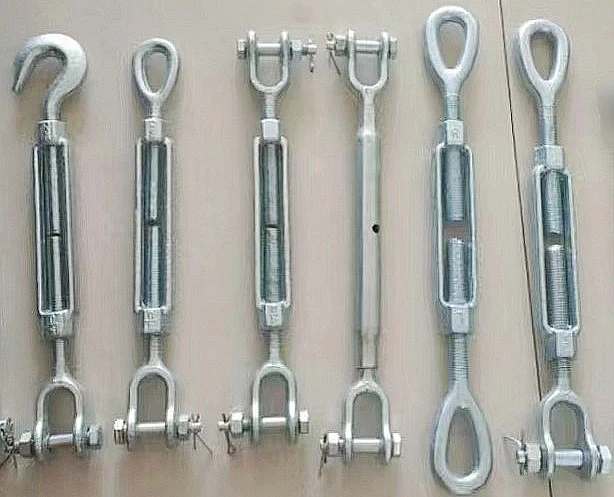
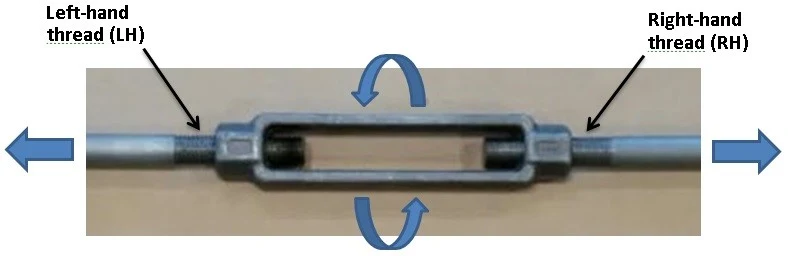
A turnbuckle is a mechanical device that adjusts the length or tension in a cable, rope, rod, or wire system. It consists of two threaded end fittings-typically eye bolts or hooks-connected by a central body with right-hand threads on one end and left-hand threads on the other. Rotating the central body moves the two ends closer or farther apart, allowing precise tension control. It is not a load-bearing connector on its own but a tensioning tool used in assemblies where adjustability and stability are required.
How Turnbuckles Are Used in Rigging and Lashing
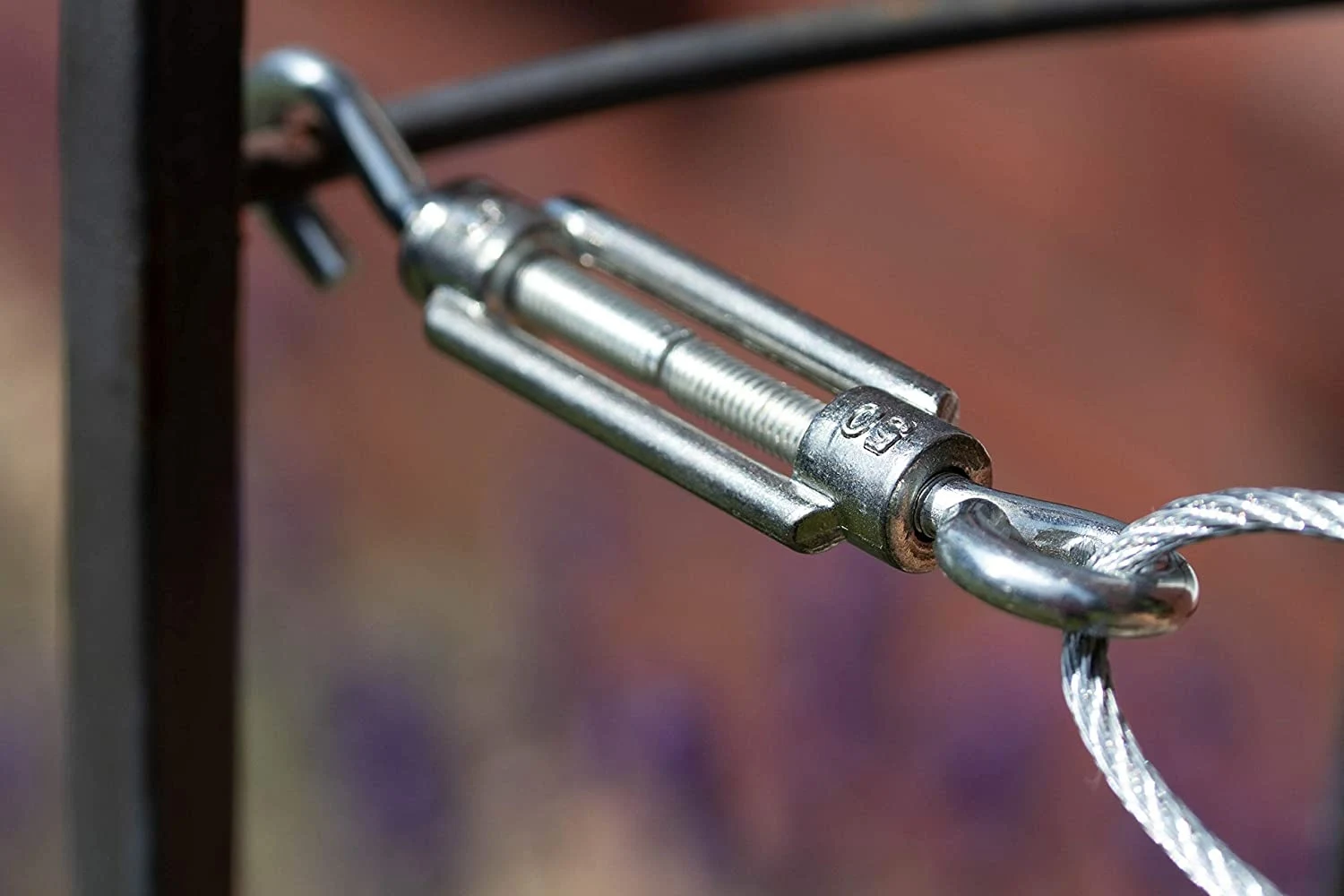
In rigging and cargo control, turnbuckles are used to maintain consistent tension in slings, cable stays, and structural supports. They are common in securing heavy loads on flatbed trailers, stabilizing crane booms, tensioning wire ropes in construction scaffolding, and connecting steel cable rods in structural frameworks. The ability to fine-tune tension after installation makes them essential for systems where initial slack must be removed or where thermal expansion or settling may affect alignment.
Material Types and Their Appropriate Uses
Turnbuckles are made from three main materials: cast malleable steel, ordinary carbon steel, and forged steel. Forged turnbuckles are used in lifting, freight lashing, and structural reinforcement where strength and reliability are critical. Carbon steel turnbuckles are suitable for static applications such as garden windbreaks, greenhouse support, or temporary fencing where load is low and disassembly is rare. Cast malleable steel is less common in industrial rigging but may appear in lower-duty applications. Always match the material to the duty-forged is required for dynamic or suspended loads.
End Fitting Configurations and When to Use Them
Turnbuckles come in three primary end configurations: eye-eye, hook-eye, and hook-hook. Eye-eye turnbuckles are used where disassembly is infrequent and a secure, fixed connection is needed, such as in permanent cable stays or structural bracing. Hook-eye types are ideal when one end needs to be frequently disconnected-common in cargo tie-downs where the hook attaches to a trailer anchor and the eye connects to a load. Hook-hook turnbuckles are used when both ends require frequent attachment and detachment, such as in temporary rigging setups or equipment hoisting where quick reconfiguration is needed.
Surface Finish Options and Corrosion Resistance
Surface treatment is critical for longevity in outdoor or humid environments. Two common finishes are electro-galvanizing and hot-dip galvanizing. Electro-galvanizing provides a smooth, thin coating and is standard on most non-US style turnbuckles. Hot-dip galvanizing offers a thicker, more durable layer and is typically used on US-style forged turnbuckles. It resists corrosion better than electro-galvanizing but costs more. Choose based on environmental exposure: hot-dip galvanize for marine, offshore, or coastal use; electro-galvanize for indoor or dry environments.
How to Use a Turnbuckle Correctly
Before use, inspect the turnbuckle for cracks, deformation, or thread damage. Attach one end to a fixed anchor point and the other to the object being tensioned. Rotate the central body clockwise to tighten and decrease the distance between ends, or counterclockwise to loosen. Adjust until the desired tension is achieved. Do not over-tighten-this can damage threads or overstress the system. Always ensure both ends are properly secured and the central body is not loose. Use a torque wrench if precision is required, especially in structural applications.
Matching the Turnbuckle to the System
The turnbuckle must be compatible with the rest of the system. The end fittings must match the anchor points-eye to eye, hook to hook, or hook to eye. The material and strength grade must suit the application. For lifting or dynamic loads, use forged steel with a 4:1 design factor. For static or low-duty use, carbon steel may suffice. Never mix materials or grades within a single assembly. If the system includes slings, chains, or binders, ensure all components are rated for the same working load limit.
What to Ask a Supplier Before Ordering
Ask whether the turnbuckle is forged or carbon steel, and confirm the material grade. Ask for the working load limit and proof load test results. Confirm the finish type-hot-dip galvanized or electro-galvanized-and whether it is marked on the part. Ask if the end fittings are stamped with the grade and WLL. Request a Material Test Certificate for the batch if the application is safety-critical. And ask whether the supplier can provide a matched set of turnbuckles, chains, and binders on one order to avoid mismatched assemblies.
Ordering note. Forged turnbuckles are for lifting, freight lashing, and structural reinforcement; carbon steel is for static, low-duty applications Eye-eye for infrequent disassembly; hook-eye for one end frequently disconnected; hook-hook for both ends frequently disconnected Hot-dip galvanizing offers better corrosion resistance than electro-galvanizing and is standard on US-style forged turnbuckles Always ins