
Types of Webbing Slings Under EN 1492
EN 1492-1 flat woven webbing slings and EN 1492-2 round slings are both polyester-based lifting slings governed by European standards, but they differ in construction, handling, and application. This guide explains where each type belongs, what the design differences mean in practice, and how a buyer should select based on load shape, surface sensitivity, and lifting environment.
What EN 1492-1 and EN 1492-2 Slings Actually Are
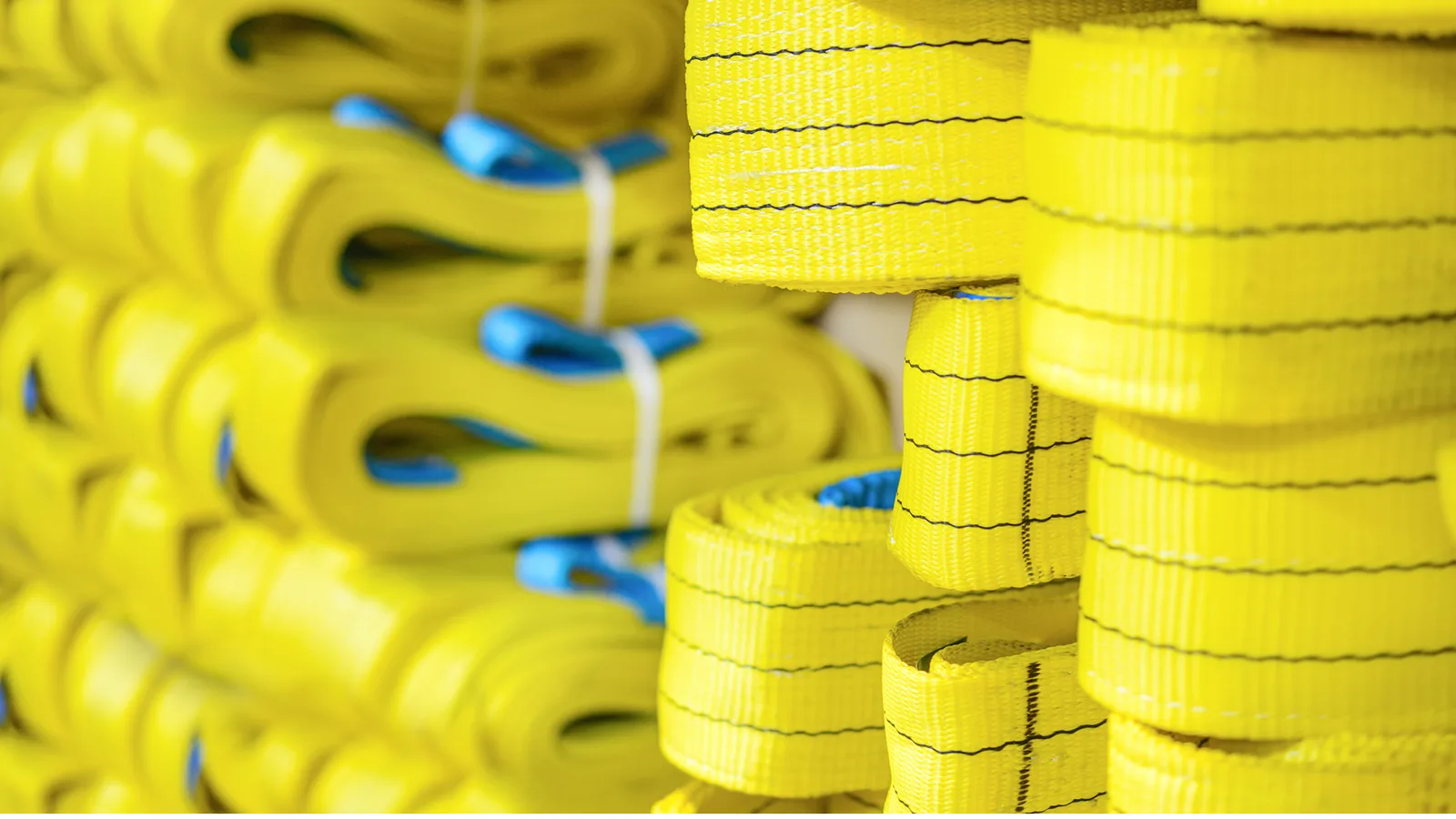
EN 1492-1 defines flat woven webbing slings made from woven polyester strips, typically used in general lifting tasks where the load shape allows for direct contact and the sling can be wrapped or draped. EN 1492-2 defines round slings, constructed from a continuous loop of high-tenacity polyester yarn encased in a protective woven cover. The round design provides uniform load distribution and better protection for the load surface. Both are rated to a 7:1 design factor as standard, and both must carry WLL, material, length, and manufacturer markings. The difference is not in strength but in how the load is engaged and how the sling behaves under tension.
Where EN 1492-1 Flat Woven Slings Belong
Flat woven slings suit applications where the load has a flat or irregular shape that allows the sling to wrap around it, such as lifting steel plates, beams, or machinery with flat surfaces. They are commonly used in construction, warehousing, and manufacturing settings where the load is stable and the sling can be positioned without risk of twisting. Their lightweight nature makes them easy to handle and store. Because they are not fully enclosed, they are more susceptible to abrasion and require careful inspection before use, especially when lifting sharp or rough-edged materials.
1T Endless Webbing Sling/Endless Polyester lifting slings
Where EN 1492-2 Round Slings Belong
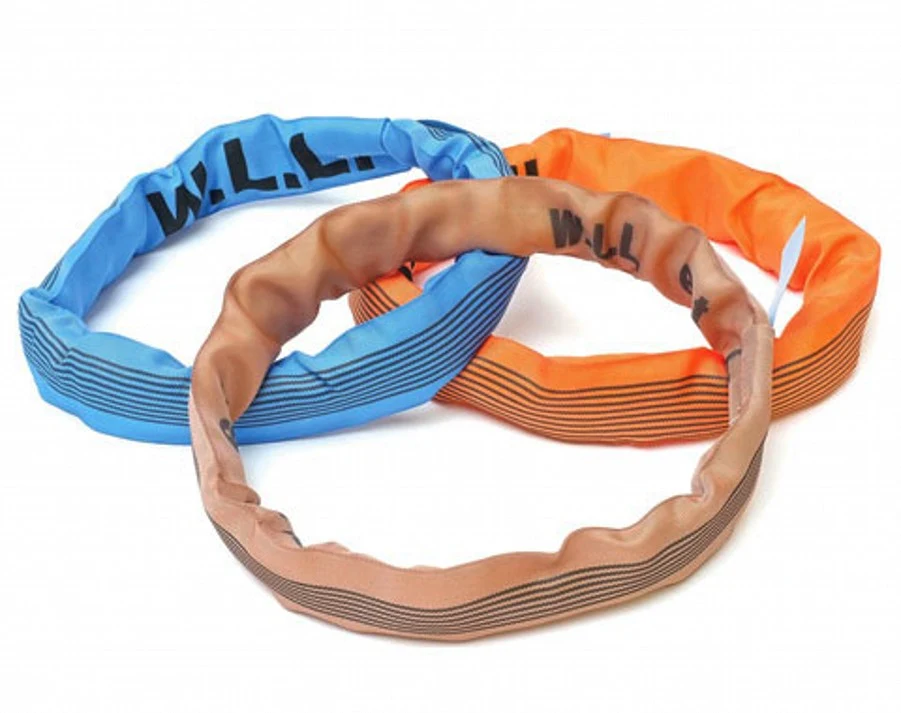
Round slings are ideal for lifting cylindrical or irregularly shaped loads such as pipes, drums, and large machinery components. The encased yarn design protects the load surface from abrasion and prevents the sling from digging into the material. They are widely used in marine and offshore operations, heavy construction, and rigging where the load may be sensitive to surface damage. The continuous loop construction ensures even load distribution and reduces the risk of internal wear. Their softness and flexibility make them suitable for lifting finished or painted surfaces without marring.
1T Endless Webbing Sling/Endless Polyester lifting slings
The Direct Comparison
On construction, EN 1492-1 is a flat woven strip; EN 1492-2 is a continuous loop with a protective cover. On material, both use high-tenacity polyester. On strength, both are rated to a 7:1 design factor. On load shape, EN 1492-1 suits flat or wrapped loads; EN 1492-2 suits cylindrical or sensitive loads. On surface protection, EN 1492-2 is superior. On handling, EN 1492-1 is lighter and easier to store; EN 1492-2 is more durable under repeated use. On application, EN 1492-1 fits general industrial lifting; EN 1492-2 fits precision or high-abrasion environments.
2T Endless Webbing Sling/Endless Polyester lifting slings
How to Read the Construction on Arrival
The construction is visible at first glance. A flat woven sling appears as a single or multi-layered flat strip with a defined width and ends. A round sling looks like a continuous loop with a smooth, tubular profile. The cover of a round sling is woven and may have a slight texture, while the flat sling has a flat, open weave. If the sling is color-coded, the color indicates the WLL, but the construction type must be confirmed by inspection. Never assume the type from the color alone.
2T Endless Webbing Sling/Endless Polyester lifting slings
Matching the Sling to the Load Shape and Surface
A flat woven sling is not suitable for lifting a pipe or drum without a protective sleeve or padding, as it can cut into the surface under load. A round sling is not ideal for lifting a flat steel plate unless the plate is small and the sling can be secured with a spreader bar. The key is to match the sling's geometry to the load's geometry. For a load with sharp edges, use a flat sling with edge protection or a round sling with a protective sleeve. For a delicate surface, use a round sling to avoid marks.
2T Endless Webbing Sling/Endless Polyester lifting slings
How to Split the Range as a Distributor
Stock EN 1492-1 flat woven slings in common sizes and WLLs for general industrial use, especially in construction and manufacturing. Stock EN 1492-2 round slings in mid to high WLLs for marine, offshore, and heavy lifting applications. Keep the most common round sling sizes in stock for quick dispatch. For customers with sensitive load surfaces, offer round slings as the default. For customers with flat or stable loads and lower budgets, offer flat woven slings. Always confirm the load type before recommending a sling type.
3T Endless Webbing Sling/Endless Polyester lifting slings
What to Ask a Supplier Before You Order
Ask whether the sling is EN 1492-1 or EN 1492-2 compliant and confirm the construction type. Ask for the WLL, material, length, and marking details. Ask whether the sling is proof load tested and whether the batch includes a Material Test Certificate. Ask if edge protection or sleeves are available for flat woven slings. Ask if custom lengths or WLLs are possible. And ask if the supplier can quote both types together for a single project, so the buyer can compare options on one order.
3T Endless Webbing Sling/Endless Polyester lifting slings
Ordering note. EN 1492-1 flat woven slings are for flat or wrapped loads; EN 1492-2 round slings are for cylindrical or sensitive loads Round slings provide better surface protection and are more durable under abrasion Both types are rated to a 7:1 design factor and must carry WLL, material, length, and manufacturer markings The construction type must match the load geometry to prevent damage and ensure safety A