
What's the Difference Between Eye Bolt and Hoist Ring?
Eye bolts and hoist rings both serve as lifting points, but their design and performance under load differ significantly. This guide explains when to use each, what the structural differences mean for load safety, and how to avoid common mistakes in rigging selection.
What Eye Bolts Actually Are
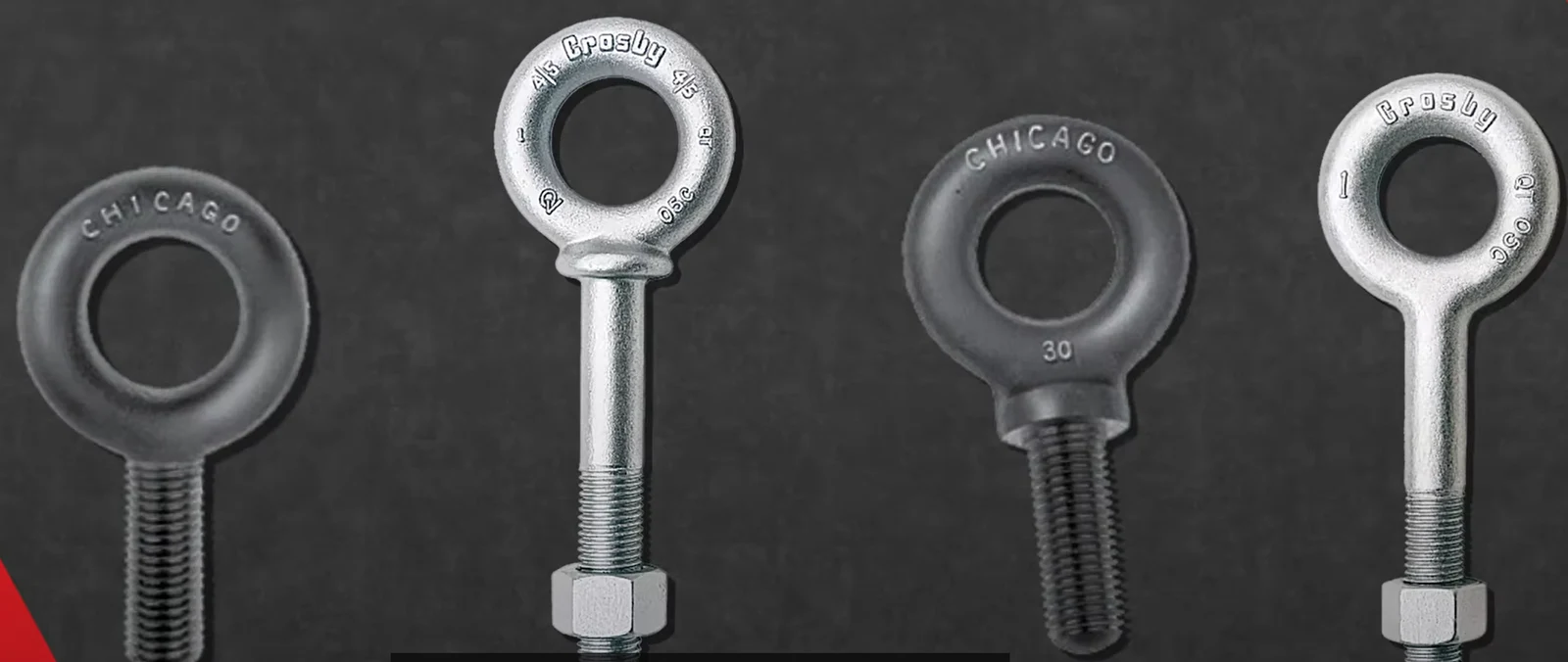
Eye bolts are threaded fasteners with a looped end designed to be installed into a structure or load as a fixed lifting point. They are typically used in applications where the lift is in-line and vertical, such as securing machinery, containers, or structural components. The load is transferred through the thread and into the base material, so proper installation and thread engagement are essential. Not all eye bolts are rated for angular lifting-only shoulder eye bolts with a specific design may support off-axis loads, and even then, the Working Load Limit must be reduced accordingly. They are often used as permanent lifting points in industrial equipment.
What Hoist Rings Actually Are
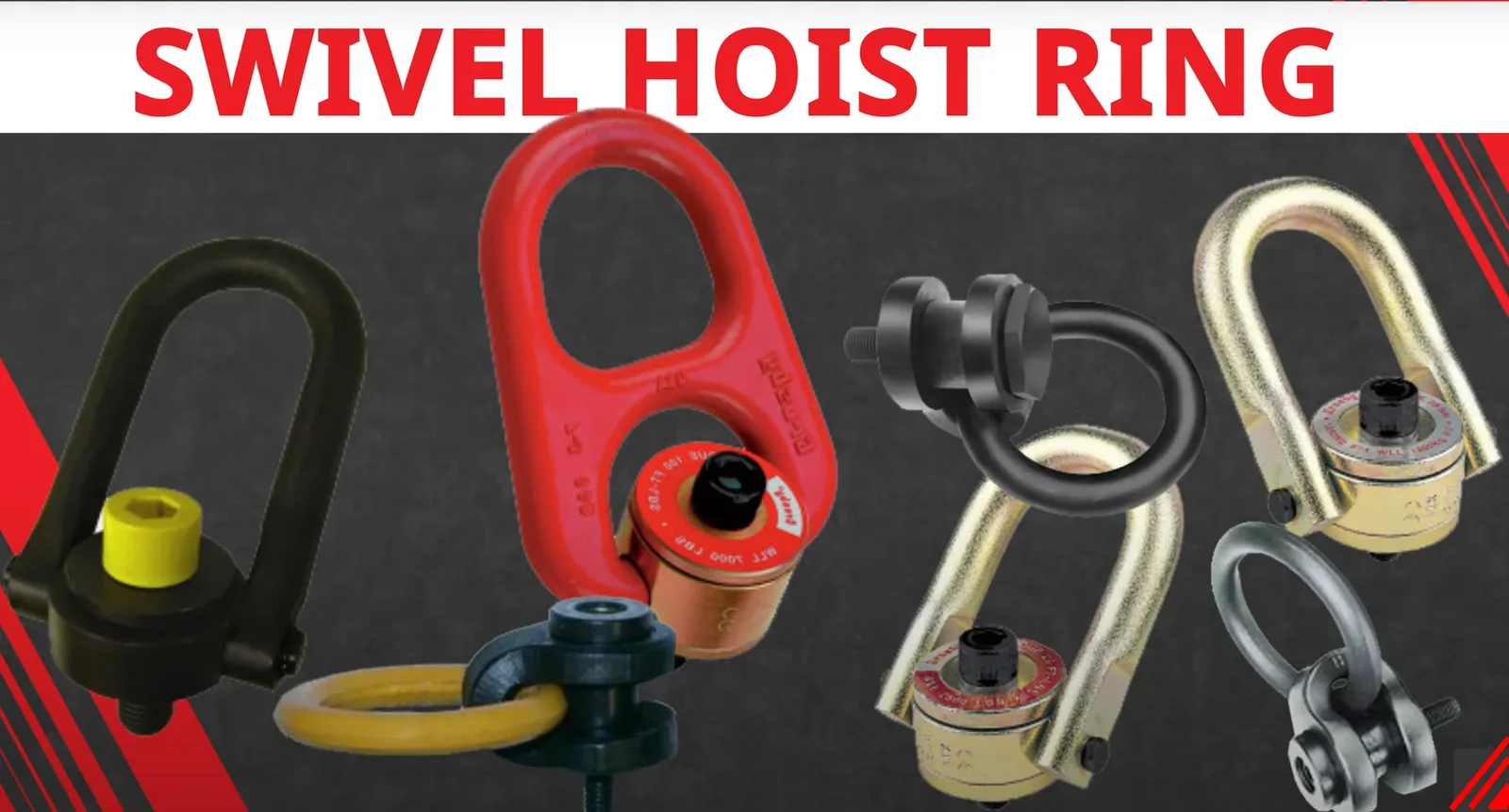
A hoist ring, also known as a swivel eye bolt, is a rigging component that screws into an engineered lifting point and features a swivel mechanism. This allows the ring to rotate freely during a lift, which helps align the sling or chain with the load path and reduces twisting or binding. The swivel feature is especially useful in angular lifts, where the load is not perfectly vertical. Because of the moving parts, hoist rings are more complex than eye bolts, but they are also more durable and often repairable. They are commonly used in overhead lifting, crane operations, and applications where load orientation changes during lift.
Pear Shaped Link Forged Weldess Pear links A-341, G-341
Design Differences That Matter
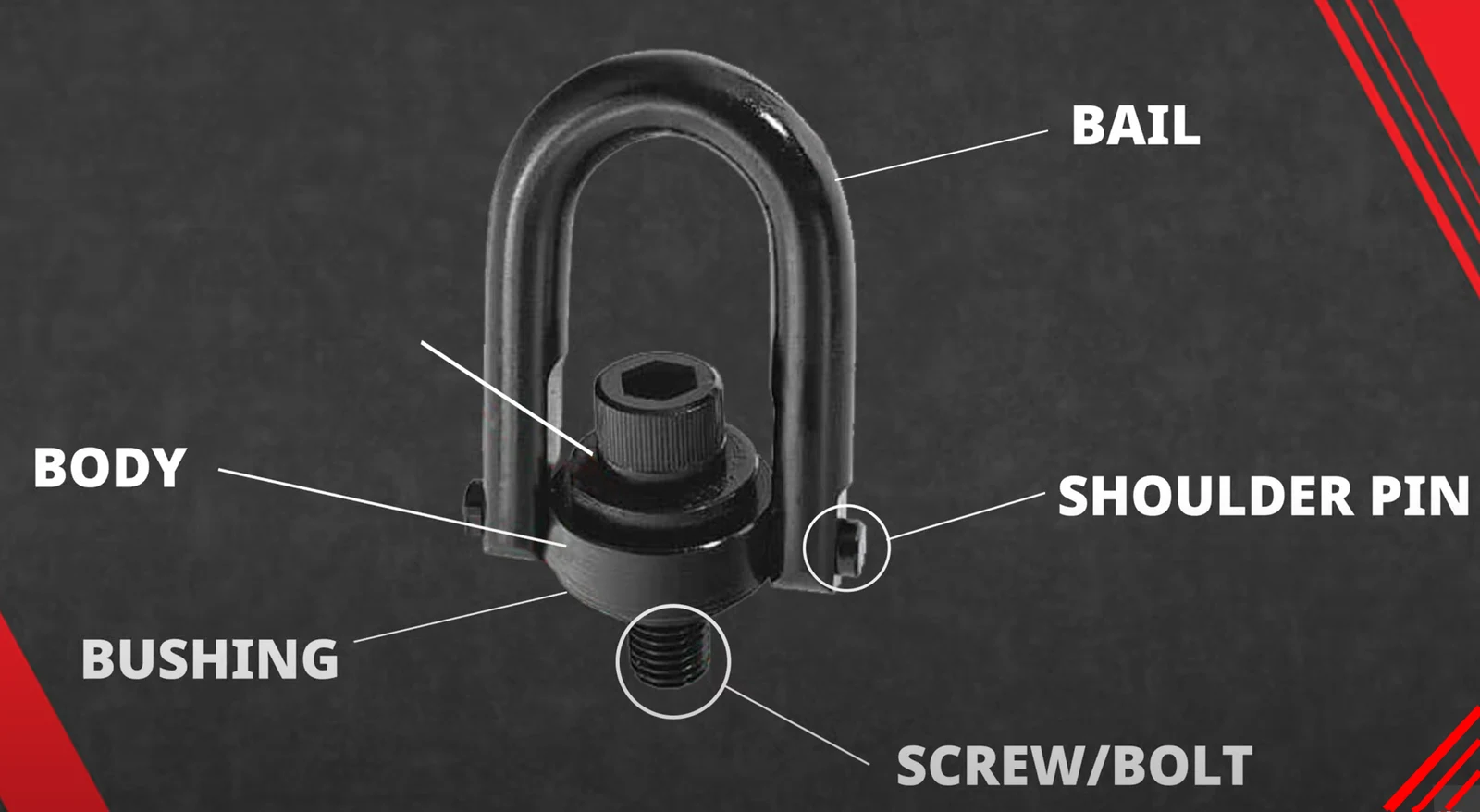
The key difference lies in the load path. An eye bolt is fixed and does not rotate, so any angular pull creates bending stress on the shank and thread. This can lead to deformation, cracking, or failure if the angle exceeds the design limit. A hoist ring, by contrast, swivels to follow the load direction, reducing stress on the shank and minimizing lateral forces. The swivel mechanism also prevents rope or sling tangling. For this reason, hoist rings are preferred in dynamic lifting environments. The presence of a swivel does not increase the rated capacity, but it improves load handling and component longevity.
Pear Shaped Link Forged Weldess Pear links A-341, G-341
Where Eye Bolts Belong
Eye bolts are best used in static, in-line lifting scenarios where the load is predictable and vertical. Typical applications include mounting on machinery frames, securing containers, or acting as a fixed anchor point in a rigging setup. They are common in manufacturing, construction, and equipment assembly. Because they are low-cost and simple, they are often used in bulk for temporary or non-critical lifts. However, they are not suitable for angular lifts unless specifically designed and rated for that duty. Always verify the WLL reduction for off-axis loads and ensure the shoulder design matches the required angle.
G-401 Regular Chain Swivel Eye and Eye
Where Hoist Rings Belong
Hoist rings are ideal for overhead lifting, crane operations, and any situation where the load may shift or the lift angle varies. They are used in industrial lifting, marine cargo handling, and heavy equipment transport. Their swivel feature allows the rigging to self-align, reducing stress on the sling and the lifting point. They are also preferred in applications where multiple lifts are performed in different directions, such as in a fabrication shop or maintenance bay. Because they are more robust and repairable, they offer better long-term value in high-use environments.
G-401 Regular Chain Swivel Eye and Eye
The Direct Comparison
Eye bolts are stationary, lower cost, and best for straight-line pulls. Hoist rings are swiveling, higher cost, and better for angular or dynamic lifts. Eye bolts are often permanent and non-repairable; hoist rings can be disassembled and repaired. The rated load of an eye bolt drops significantly with any angular pull unless it is a shoulder type. A hoist ring maintains its rated capacity across a wider range of angles. For a distributor, stock eye bolts for fixed-point applications and hoist rings for overhead or variable-angle lifting.
G-401 Regular Chain Swivel Eye and Eye
How to Read the Marking and Verify the Rating
Both eye bolts and hoist rings must be stamped with the Working Load Limit and the material grade. Look for markings such as Grade 80 or Grade 100, and confirm the WLL is clearly marked. For angular lifts, check if the part is specifically rated for that angle. A shoulder eye bolt may have a shoulder that limits rotation and provides a load-bearing surface, but not all shoulder types are rated for angular use. Always refer to the manufacturer's documentation. If the marking is unclear or missing, do not use the part. A Material Test Certificate is available upon request for batch verification.
Matching the Component to the Lift Duty
The lifting system is only as strong as its weakest component. Using an eye bolt with a swivel sling in an angular lift may seem logical, but if the eye bolt is not rated for that angle, the entire system fails at the lowest point. Similarly, a hoist ring with a worn swivel bearing may not rotate freely, leading to sling binding. Always ensure the lifting point, sling, and attachment hardware are compatible in design and rated for the same duty. When sourcing, ask for a full rigging assembly quote that includes the lifting point, sling, and connectors to avoid mismatched components.
How to Split the Range as a Distributor
Stock eye bolts in standard sizes and grades for fixed-point applications-especially for customers in manufacturing, equipment assembly, or container handling. Focus on shoulder eye bolts if angular lift capability is required. For hoist rings, carry the full range of swivel types, including those with locking mechanisms, for overhead and crane users. Prioritize higher-grade materials like Grade 80 or Grade 100 for hoist rings used in heavy lifting. Keep both in common sizes to support quick replacements and reduce lead time for urgent orders.
Ordering note. Eye bolts are stationary lifting points best for in-line, vertical lifts; hoist rings swivel to accommodate angular or dynamic lifts Angular lifts reduce the WLL of an eye bolt significantly unless it is a shoulder type specifically rated for that angle Hoist rings are more durable and repairable than eye bolts due to their swivel mechanism and moving parts Always match the lifting point, sling, a