
Chain Hook Types
Grab hooks and slip hooks both serve as chain connection points in rigging and transport, but their design and function differ significantly. This guide explains how each works, where they belong, and how to choose the right one for your application without mixing systems.
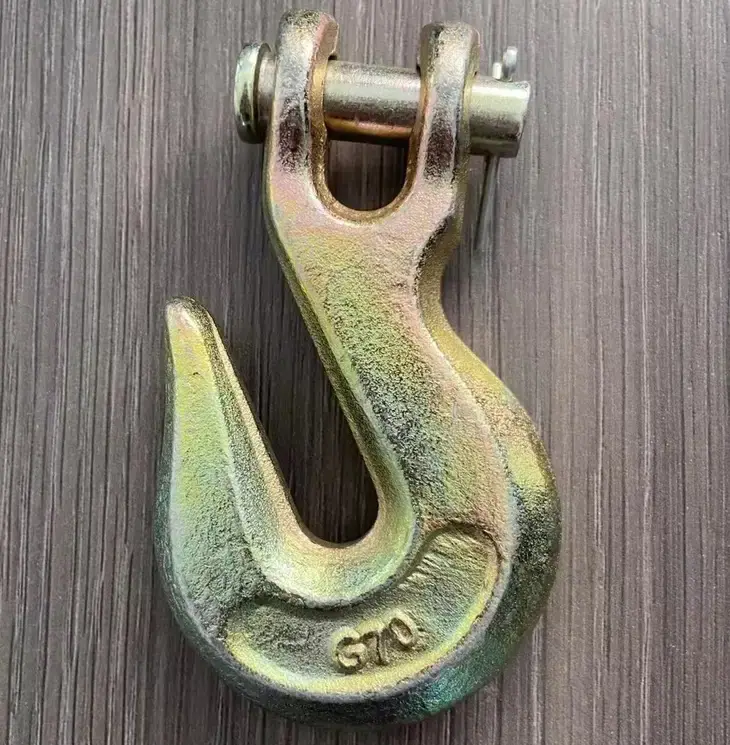
What Grab Hooks and Slip Hooks Actually Are
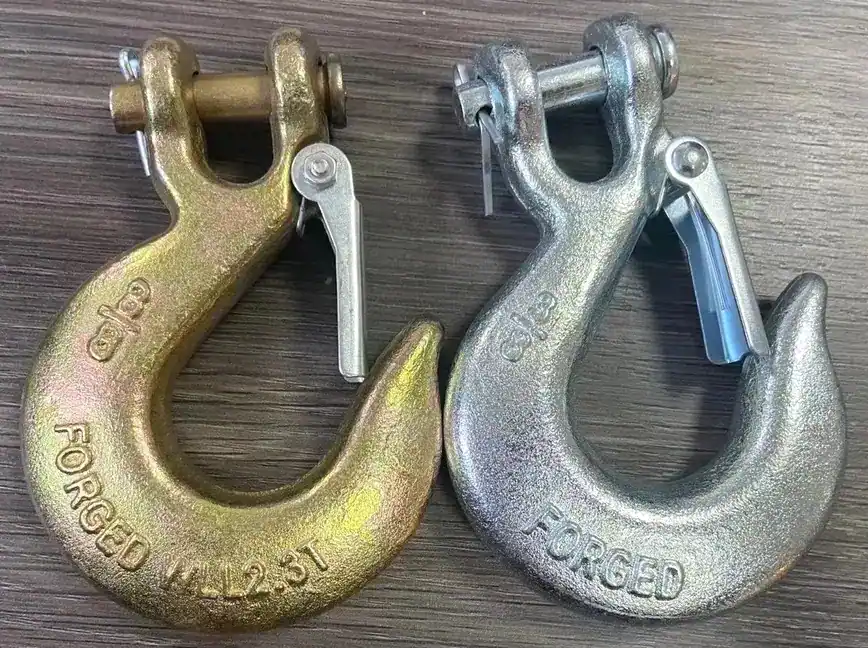
Both grab hooks and slip hooks are forged carbon steel components used to connect chain links or rope eyes in lifting, towing, and cargo securement. A grab hook has a U-shaped body with a narrow throat opening that cradles the chain link or rope eye, allowing quick insertion and removal. It lacks a latch or pin. A slip hook has a similar U-shape but includes a latch or pin that secures the chain or rope in place. The latch prevents accidental disengagement during use. These are not interchangeable parts and must be matched to the application's safety and operational needs.
Where Grab Hooks Belong
Grab hooks are best suited for applications where speed of connection and disconnection is critical, and the load is not subject to dynamic forces or high shock. Typical uses include temporary rigging setups, tool and equipment tie-downs on construction sites, light-duty transport securement, and repetitive handling in workshops. They are commonly used with Grade 43 and Grade 70 chain. Because they do not have a latch, they are not recommended for overhead lifting or high-vibration environments where accidental disengagement could occur. Their simplicity makes them cost-effective for high-turnover, low-risk tasks.
Bolt-On Tow Hook with Safety Latch
Where Slip Hooks Belong
Slip hooks are designed for secure, reliable connections where accidental release must be prevented. They are used in hoisting, towing, recovery operations, and heavy transport where the chain is under constant tension. The latch or pin mechanism holds the chain link firmly in place. Slip hooks are typically used with Grade 70 and Grade 80 chain in transport and industrial applications. They are preferred by fleet operators, towing services, and rigging teams who need a dependable connection that won't come loose under load. Their design is more robust and better suited for repeated use in demanding conditions.
Bolt-On Tow Hook with Safety Latch
The Direct Comparison
On design, grab hooks have a narrow throat with no latch; slip hooks have a U-shape with a latch or pin. On function, grab hooks allow quick insertion and removal; slip hooks provide a secure hold. On typical use, grab hooks suit temporary or low-risk tie-downs; slip hooks suit hoisting, towing and high-tension applications. On chain grade, both are available in Grade 43 and Grade 70. On safety, slip hooks are preferred for load-bearing tasks where disengagement is a risk. On sourcing, both are available from Kailipu in standard and custom configurations. On buyer, grab hooks fit general equipment suppliers and site teams; slip hooks fit transport and recovery specialists.
Grade 70 Bolt-On Grab Hook with Backer Plate
How to Read the Design on Arrival
The presence or absence of a latch or pin is the first visual check. A grab hook will have no latch and a narrow throat opening. A slip hook will have a visible pin or latch that can be opened and closed. The grade stamp (Grade 43 or Grade 70) should be visible on the body. If the part is zinc plated or has a gold chromate finish, that indicates the grade system. Always verify the grade stamp and ask for the Material Test Certificate if the assembly is for a regulated application. Do not rely on finish alone to determine function or safety rating.
Grade 70 Bolt-On Grab Hook with Backer Plate
Matching the Hook to the Chain and Application
A chain assembly is only as strong as its weakest component. Using a grab hook with a Grade 70 chain does not make it a high-strength system. The hook's rating must match the chain grade. Using a Grade 43 grab hook with Grade 70 chain creates a Grade 43 assembly. The same applies to slip hooks. Always confirm the chain grade, hook grade, and application together. When sourcing, request a quotation that includes the chain, hook, and any binders to ensure all parts are from the same grade system and are proof tested as a unit.
Grade 70 Bolt-On Grab Hook with Backer Plate
How to Split the Range as a Distributor
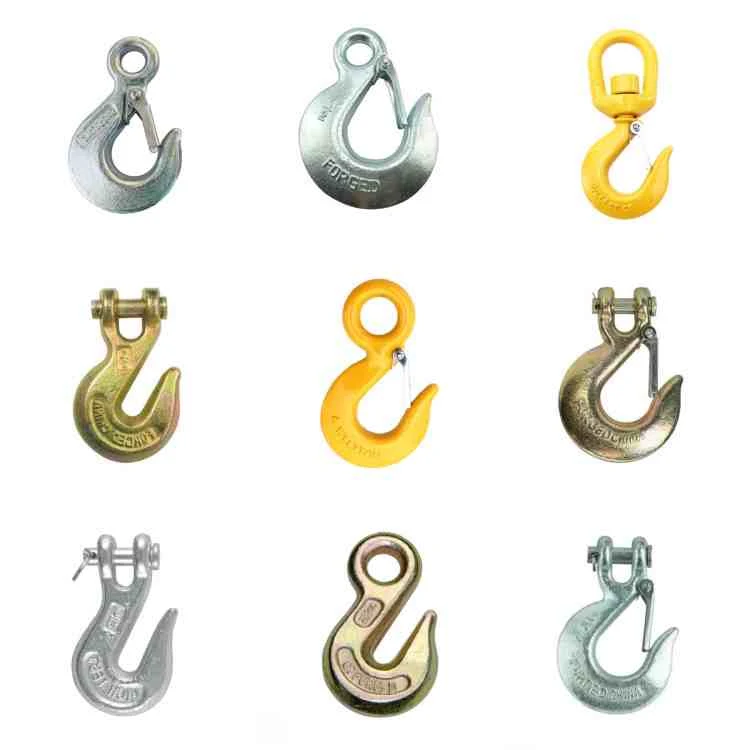
Most rigging distributors carry both types, but weight the stock based on customer demand. Keep grab hooks in smaller sizes (1/4 inch to 3/8 inch) for agricultural, rental, and site use where speed matters. Stock slip hooks in mid to larger sizes (5/16 inch to 1/2 inch) for transport, towing, and industrial customers who need secure connections. Prioritize the clevis grab hook and clevis slip hook patterns in both grades, as they cover the majority of replacement and new build demand. Add eye hooks, swivel hooks, and RJT-hooks only after confirming turnover in your market.
5/16 G70 Mini J Hook | Compact Frame J Hook
What to Ask a Supplier Before You Order
Ask which chain grade the hook is intended for and confirm it matches your chain stock. Ask whether the grade is stamped on the part and what the marking says. Ask for the Material Test Certificate for the batch if your customers require traceability. Ask whether the supplier can quote hooks, chain, and binders together to ensure a matched assembly. Ask about custom tonnage stamping, surface finish options, and packing configurations. Confirm that the hook design is suitable for your intended application-overhead lifting requires Grade 80 or higher, not transport-grade hooks.
5/16 G70 Mini J Hook | Compact Frame J Hook
Ordering note. Grab hooks have a narrow throat with no latch; slip hooks have a latch or pin for secure hold Grab hooks suit rapid connection in low-risk, temporary setups; slip hooks suit hoisting, towing, and high-tension applications Both are available in Grade 43 and Grade 70; the grade must match the chain and application An assembly is rated by its weakest component—ensure hook, chain, and binder are from