
How to Choose the Right Webbing Sling for Your Lifting Needs?
Choosing the right polyester webbing sling starts with understanding the difference between flat eye, endless, and round sling designs, and how each suits a specific lifting task. This guide explains the structural differences, material properties, and application fit for each type, so you can match the sling to the load and avoid under-rating or over-specifying.
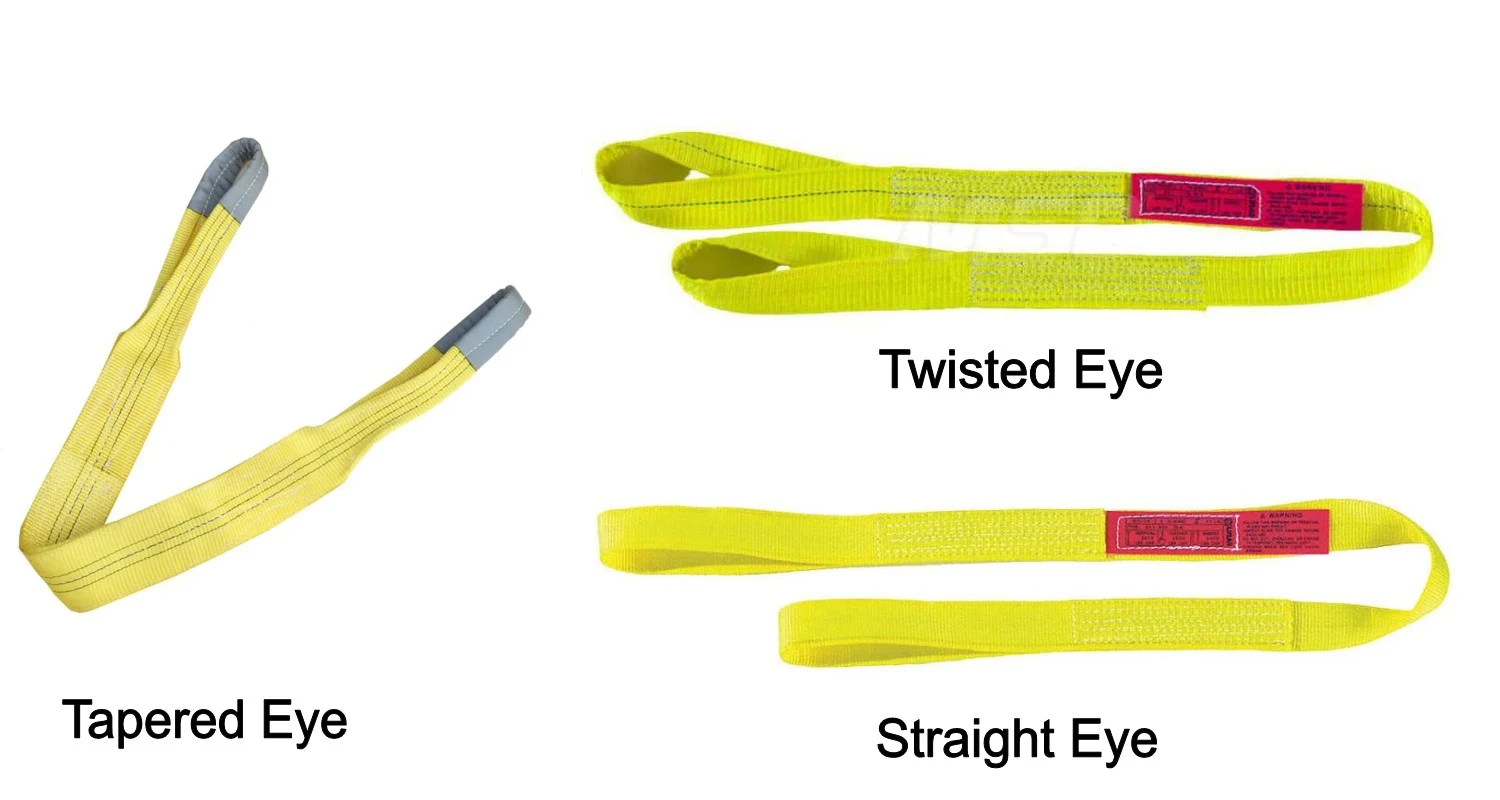
What Flat Eye Webbing Slings Are and When to Use Them
Flat eye webbing slings, also known as flat webbing slings, are constructed with reinforced loops at each end that are flat in cross-section. They are designed for use in vertical, basket, and choker hitches. The flat profile allows for better contact with the load surface and is ideal for lifting objects with flat or irregular shapes. They are commonly used in construction, manufacturing, and logistics for securing and moving heavy materials like steel plates, machinery, and concrete components. Because they can be configured into multiple hitch types, they offer flexibility in rigging setups. The flat eye design is the most widely used in general industrial lifting, especially where the load does not require a high degree of rotation or continuous contact around a curved surface.
What Endless Webbing Slings Are and When to Use Them
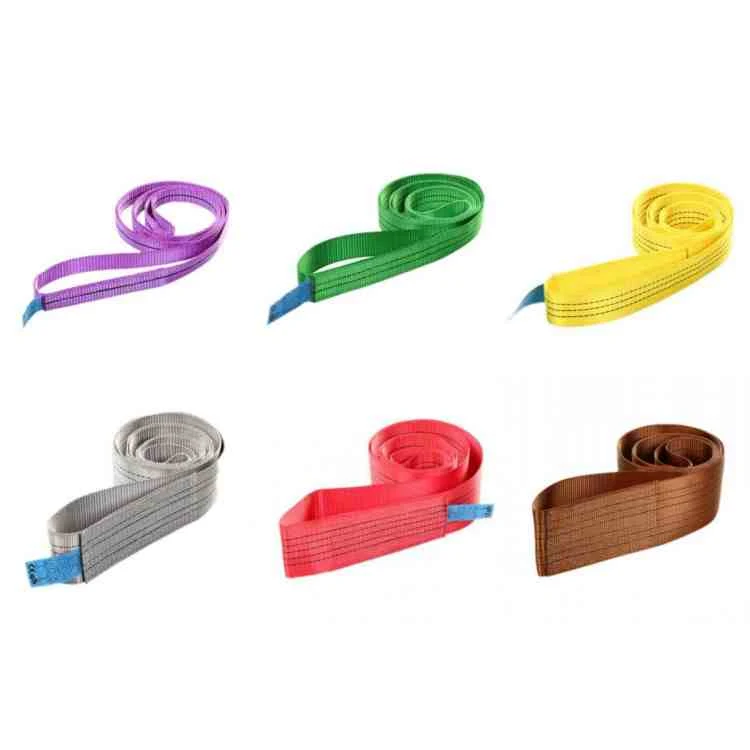
Endless webbing slings, also known as endless loop slings, are continuous loops without any seams or joints. They are typically used in vertical or basket hitches where the sling must distribute the load evenly around the entire circumference. Their seamless construction eliminates weak points from stitching, making them suitable for high-load applications where fatigue resistance is critical. They are commonly used in overhead lifting, crane operations, and in environments where the sling may be exposed to repeated cycles of tension and release. Because they lack end fittings, they are often used with hooks, shackles, or other attachment points that are rated to the same working load limit. The absence of joints also reduces the risk of snagging or catching on sharp edges during lifting.
1T Endless Webbing Sling/Endless Polyester lifting slings
What Round Webbing Slings Are and When to Use Them
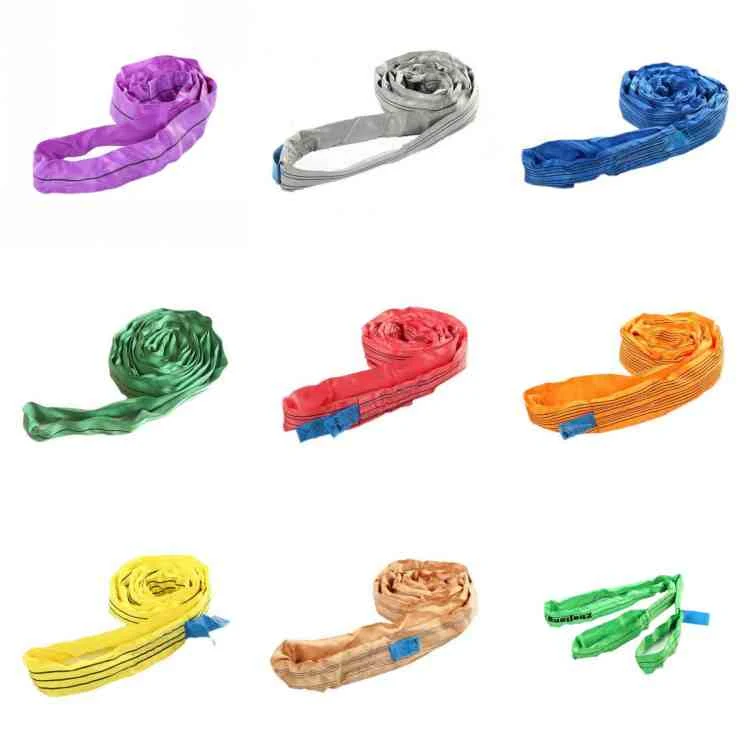
Round webbing slings, also known as round slings or endless round slings, are constructed as a continuous tubular loop with a polyester woven sleeve on the outside and multiple internal fiber strands. This design provides a smooth, circular profile that resists abrasion and allows for even load distribution around the entire sling. They are ideal for lifting cylindrical or round objects such as pipes, drums, and spools, where the sling must wrap securely without slipping. The tubular construction also protects the internal fibers from external damage, making them suitable for use in harsh environments with dust, debris, or sharp edges. They are commonly used in oil and gas, marine, and offshore applications where reliability and durability under continuous stress are essential.
1T Endless Webbing Sling/Endless Polyester lifting slings
Polyester Vs Nylon: Material Properties and Application Fit
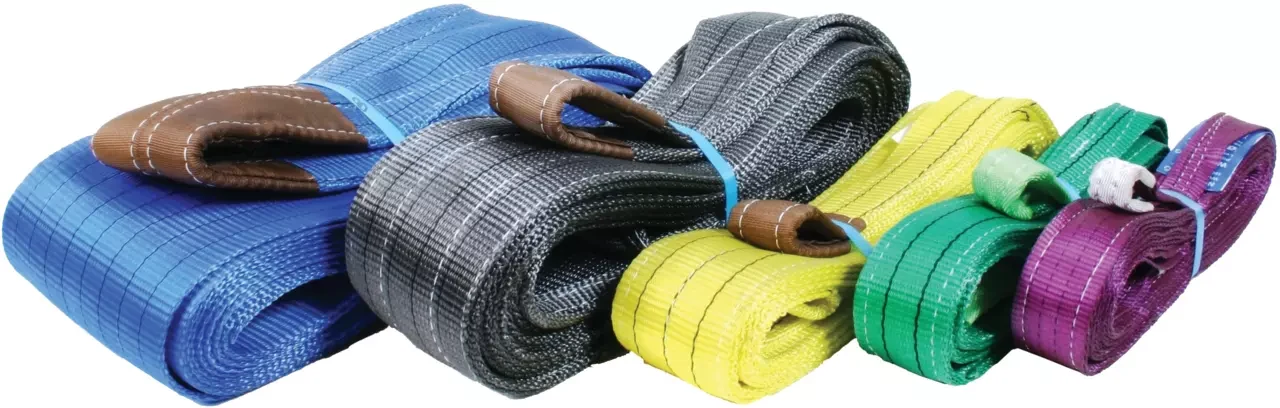
Polyester webbing slings are known for their low stretch, resistance to UV radiation, moisture, mildew, and rot. They perform well in outdoor and high-exposure environments and are less affected by acidic conditions than nylon. This makes them a preferred choice for construction, logistics, and outdoor lifting operations. Nylon webbing slings have higher tensile strength and better resistance to abrasion and chemicals, but they are sensitive to acids and can degrade under prolonged UV exposure. They are often used in industrial settings with high mechanical stress but less environmental exposure. For most lifting tasks involving outdoor use or variable weather, polyester is the more reliable material choice. Always verify the material specification and working load limit on the sling before use.
2T Endless Webbing Sling/Endless Polyester lifting slings
How Sling Design Affects Hitch Type and Load Distribution
The design of the sling directly determines which hitch type it can safely support. Flat eye slings can be used in vertical, basket, or choker hitches, making them versatile for a range of lifting configurations. Endless slings are best suited for vertical or basket hitches where the load is evenly distributed. Round slings are optimized for vertical and basket hitches and are particularly effective when lifting cylindrical loads that require a snug, non-slip grip. Using the wrong hitch with a given sling design can lead to uneven load distribution, increased stress on the sling, and potential failure. Always match the sling type to the hitch configuration and ensure the working load limit is not exceeded under the selected hitch angle.
2T Endless Webbing Sling/Endless Polyester lifting slings
How to Read the Markings and Confirm the Rating
All polyester webbing slings are marked with the working load limit (WLL), the manufacturer's name, the material type, and the grade. The WLL is stamped or sewn onto the sling and must be clearly visible. For sling assemblies, the WLL is based on a 4:1 design factor unless otherwise stated. The marking should also include the sling type (e.g., flat eye, endless, round) and the applicable standard, such as EN 1492-1 or ASME B30.26. If the marking is faded, missing, or unclear, do not use the sling. Always verify the WLL against the load weight and hitch configuration. If in doubt, request a Material Test Certificate or proof load test report from the supplier.
2T Endless Webbing Sling/Endless Polyester lifting slings
How to Avoid Over-Specifying or Under-Specifying the Sling
Over-specifying a sling-choosing a higher strength or more complex design than needed-increases cost and weight without adding safety. Under-specifying-using a sling with a lower WLL or incorrect design-risks failure under load. To avoid both, start by identifying the load weight, shape, surface condition, and lifting method. Then select the sling type that matches the hitch and environment. For example, use a flat eye sling for a flat load in a choker hitch, an endless sling for a heavy overhead lift, or a round sling for a pipe. Confirm the WLL is sufficient for the load and hitch angle, and ensure the material is suitable for the environment. If the application involves chemicals, UV exposure, or abrasion, choose polyester unless the environment specifically requires nylon.
3T Endless Webbing Sling/Endless Polyester lifting slings
Ordering note. Flat eye webbing slings are suitable for vertical, basket, and choker hitches and are ideal for flat or irregular loads Endless webbing slings are seamless and best for vertical or basket hitches where even load distribution and fatigue resistance are critical Round webbing slings are tubular, non-slip, and ideal for lifting cylindrical or round objects like pipes and drums Polyester webbing sling