The six items that let a supplier quote accurately and the one that usually sets the price.
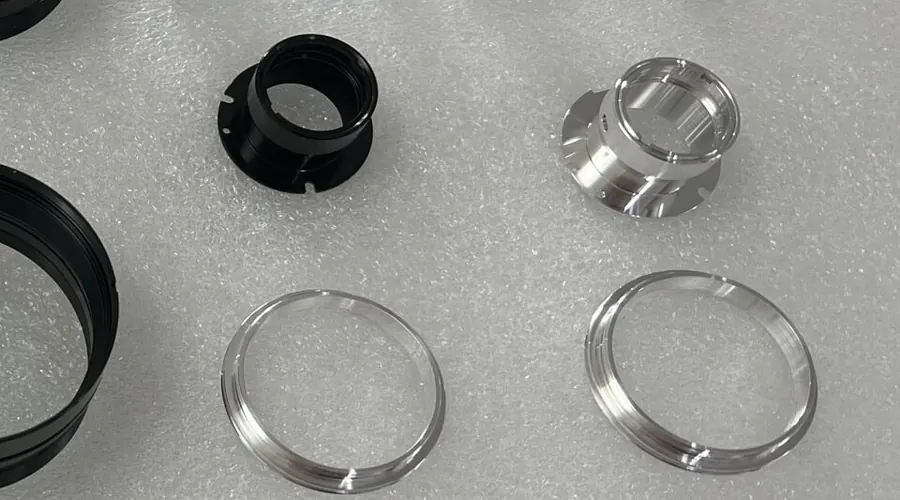
A range of machined parts of the type quoted from customer drawings.
A dimensioned 2D drawing is the minimum, and it has to carry tolerances. A drawing with nominal dimensions and no tolerances cannot be quoted honestly, because the supplier has to assume something, and the assumption is either too tight, which costs you money, or too loose, which costs you parts. A STEP file alongside the 2D print removes ambiguity on complex geometry.
State the material, and where you can, state the duty it was chosen for. If the specified grade is difficult to source, a stated reason allows a sensible equivalent to be offered rather than a silent substitution or a delay.
Give both the immediate quantity and the expected annual usage. They drive different decisions: one batch of ten is machined one way, ten batches of ten across a year may justify a different setup that is cheaper per piece. A supplier who only knows the first number cannot offer you the second price.
Anodising, passivation and plating all change dimensions. If a coated surface is part of a fit, say so, because the part has to be machined undersize by the coating allowance. A finish callout without that context is where coated parts come back tight.
This is the item that sets the price. Most drawings carry at least one tolerance that was inherited from an older part and has nothing to do with the function. Identify which dimensions are functional, and say what they fit against. It is common for the cost of a part to be concentrated in one or two dimensions that could be opened up with no loss at all.
Say when you need the parts and what evidence you need with them. A dimensional report on the critical features is a reasonable request, and it is far cheaper to agree before machining than to arrange afterwards.
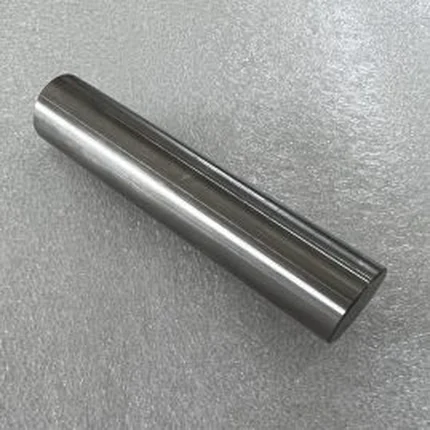
A turned and finished shaft that runs in a bearing or a bushing and holds its diameter along the whole working length.
View The Part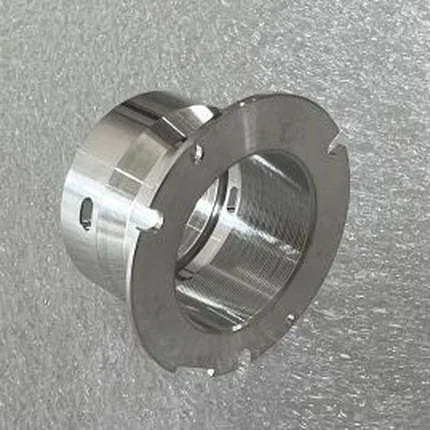
A flanged spigot that plugs into a tube end and gives the assembly a shoulder to register against.
View The PartSend the drawing and the operation it has to survive. It is a shorter conversation than it sounds.
Direct line +86 137 1250 5040 · [email protected]
