Non-standard fixtures jigs and made-to-drawing parts · Yiwu China
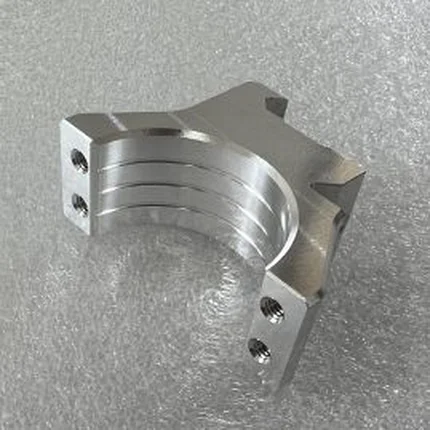
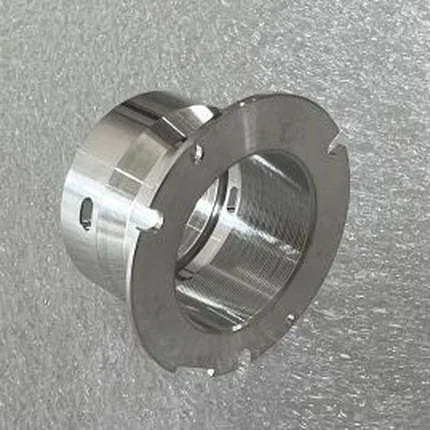
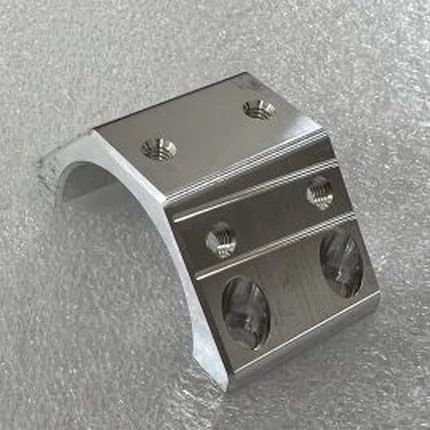
Machined aluminium tube connector with a flanged shoulder stepped spigot and a cross hole

Machined aluminium tube connector with a flanged shoulder stepped spigot and a cross hole.

Aluminium Clamping Components

Aluminium Tube Connector

A flanged spigot that plugs into a tube end and gives the assembly a shoulder to register against.

Aluminium Alloy
Made to your drawing. Every dimension below that depends on your print is marked To drawing rather than given a number that would only be a guess.
Overview

What This Part Does

The connector is turned with a spigot that enters the tube bore and a flange that stops against the tube end face. A cross hole through the spigot takes a roll pin or a fastener so the connector cannot back out or rotate. It turns an open tube end into a defined mechanical interface, which is what you need when the tube has to carry a load rather than just enclose something.

Key Benefits

Why It Is Made This Way

  • A real shoulder to register againstThe flange sets axial position, so the joint repeats every time it is assembled.
  • Cross-pinned against rotationThe cross hole takes a pin, so torque does not work the joint loose.
  • Spigot cut to your tube boreA slip fit or an interference fit, whichever the drawing calls for.
  • Serviceable jointDrive the pin out and the assembly comes apart without damage.
Problems It Solves

What Goes Wrong Without It

  • Open tube ends have no datumWithout a flange, axial position is set by whatever the tube happens to bottom against.
  • Pressed joints work looseAn interference fit alone relaxes under thermal cycling and vibration; a cross pin does not.
  • Glued joints cannot be servicedA pinned connector can be taken apart and put back together.
Application Scenarios

Where It Is Used

  • Closing out a tube end and giving it a mounting face
  • Joining a tube to a machined housing or a cast bracket
  • Transmitting torque from a tube to a shaft through a cross pin
  • Providing a threaded or pinned interface on a tubular frame member
Who It Is For

Who Specifies It

Engineers designing tubular structures and handheld assemblies who need the tube end turned into a defined interface rather than left open.

Related Capability

    Technical Features

    How It Is Made

    • ProcessCNC turning with cross drilling in a second operation
    • GeometryFlanged shoulder, stepped spigot, transverse cross hole, chamfered lead-in
    • MaterialAluminium alloy as shown; stainless steel and engineering plastic to the same print
    • FinishAs-machined; anodising or passivation on request
    Specifications

    Specification Table

    Spigot diameter and fitTo drawing, against your tube bore
    Flange diameter and thicknessTo drawing
    Cross hole diameter and positionTo drawing, matched to your pin
    ToleranceConfirmed per project against your print
    MaterialAluminium alloy, stainless steel or engineering plastic
    Minimum orderConfirmed per project

    Values marked to drawing or confirmed per project are set against your print at quotation. No certification, capacity or tolerance figures are published because none were published by the business.

    Comparison

    How It Compares

    Against welding a plug into the tube, a pinned connector is serviceable and does not distort the tube with heat. Against a plastic push-in plug it carries real load and holds position. Against a grub screw in the tube wall it does not dimple the tube and it locates axially as well as radially.
    Use Guide

    Questions

    Questions About The Aluminium Tube Connector

    Can the spigot be threaded instead of pinned?
    Yes. Thread the spigot, the bore, or both, and the cross hole can be dropped. Put the thread callout on the drawing including the class.
    Slip fit or interference fit?
    Both are machined routinely. State the fit on the print, or state the tube bore and its tolerance and the fit you want, and the spigot will be sized to it.
    Can you supply the cross pin as well?
    Roll pins and dowel pins are a stock item and can be quoted alongside the connector so the pair arrives together.
    Does anodising affect the fit?
    Yes. Anodising grows the surface, so the spigot is machined undersize by the coating allowance when the drawing calls for a coated interference fit.
    Related Products

    Often Quoted Alongside

    Related Reading

    Engineering Notes

    Quote The Aluminium Tube Connector

    Send the drawing with tolerances, the material and the quantity. Say what the part fits against and any tolerance that is doing no work will be flagged before it is priced.

    Direct line +86 137 1250 5040  ·  [email protected]