A practical comparison of the three material families for fixtures jigs and machined parts.
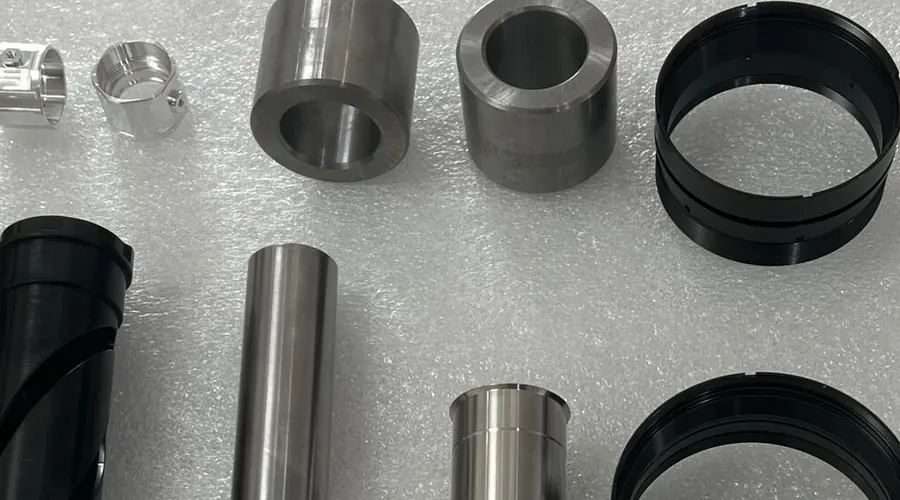
Machined components shown in stainless steel and aluminium alongside each other.
Material selection goes wrong when it starts from habit. Start instead from three questions: what does the part touch, what does it have to carry, and who has to lift it. Those three answers usually pick the material on their own, and they pick it differently for the fixture body than for the locators bolted to it.
Specify stainless when the part carries real load, when it is washed down, or when a plated finish would fail. It holds its dimensions, it takes clamping force without creeping, and it survives cleaning chemicals. The costs are weight, roughly three times aluminium, price, and a tendency to gall when run against itself.
Aluminium is the right default for clamps, connectors and anything an operator handles repeatedly. It machines fast, which is most of why it is cheaper, and the weight saving is real on a fixture that gets lifted onto a bench thirty times a shift. Its weaknesses are soft threads, marking against harder parts, and dimensional growth under anodising.
Plastics get specified for their negatives. They do not mark a painted or anodised surface, they do not need lubrication, and they do not conduct. On a fixture handling finished parts, a plastic contact face frequently pays for itself on the first batch that does not get rejected for witness marks.
The best fixtures are rarely one material. An aluminium body keeps the weight down, steel locators and bushes take the wear, and plastic pads touch the finished surface. Each material does the job it is good at, and the expensive material is used only where the duty demands it.
A drawing that states the material without stating the reason invites silent substitution when that grade is hard to source. A short note saying washdown duty or non-marking contact face means an equivalent can be proposed sensibly instead of guessed at.
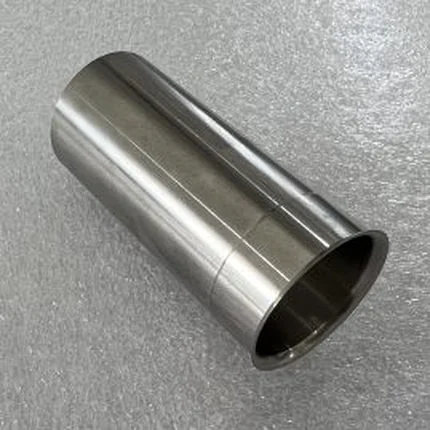
A turned sleeve that carries a shaft, sets the running clearance and takes the wear instead of the housing.
View The Part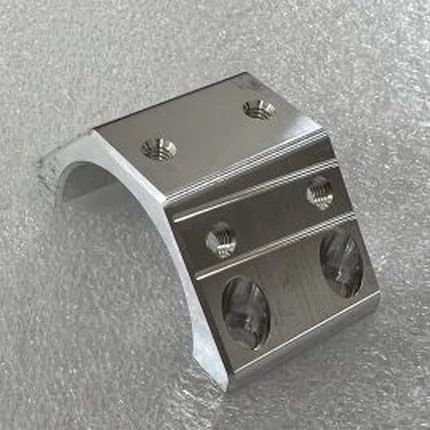
A curved saddle block that clamps a round tube down onto a flat surface with four fasteners.
View The PartSend the drawing and the operation it has to survive. It is a shorter conversation than it sounds.
Direct line +86 137 1250 5040 · [email protected]
