
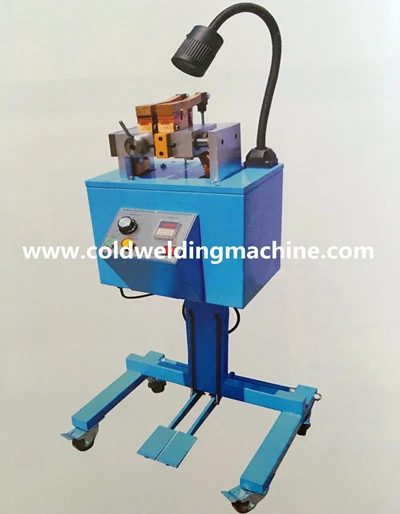
Conductor Butt Welding Machines
HD016 Conductor Butt Welding Machine for 1.0-16.0 mm²
Single phase 220 V chamber welder with 12 gears and a quartz crucible, for bunched copper conductor.
View specifications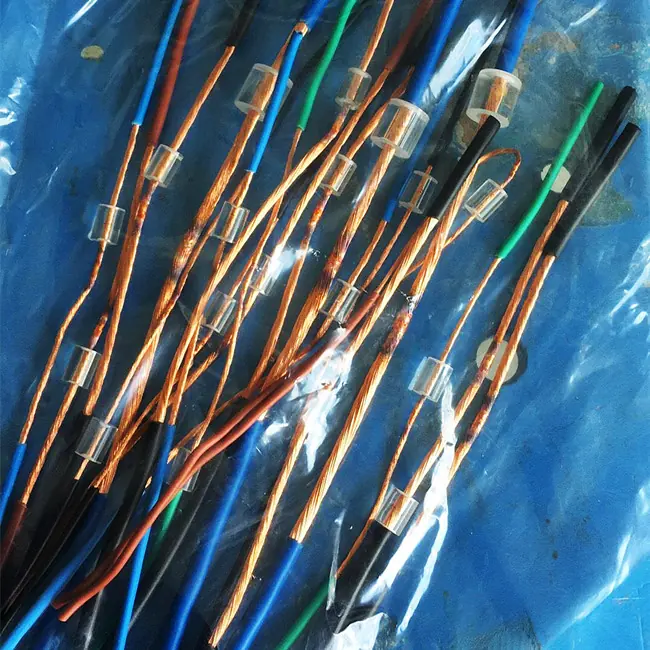
How conductor butt welding produces a homogeneous pore-free and burr-free joint that goes straight into the extruder.
A solid wire can be upset between two die halves. A stranded or bunched conductor cannot — the strands would splay. SGT conductor and cable welding machines are designed for the effective joining of conductors and cables as well as sector-shaped and solid conductors in aluminium and copper, using the chamber welding process. That process creates a homogeneous, pore- and burr-free joint.
The cable or conductor ends are placed in a glass, ceramic or graphite sleeve — the chamber — so that the ends touch. The welding sleeve material depends on either the cable or conductor cross-section or, as may apply, the welding machine output. Once the welding process has started, both ends are melted by a flowing current and welded together under a constant feed rate.
The sleeve is shattered once welding has finished. The surface of the weld is without burring, clean, smooth and hardly any thicker than the conductor. To allow the weld to be drawn into the inlet nozzle of a downstream extruder, only minor post-treatment is required — which is the whole point of the process.
The chamber welding procedure is suitable both for regular conductor structures and for delicate cables. That range is what makes it viable on an automotive harness line and on a power cable line with the same machine family.
The HD016 covers copper bunched wire from 1.0 mm² to 16.0 mm² on a single phase 220 V supply at 3 kVA, clamping and extruding mechanically with 12 gears of adjustment and natural cooling. The HD120 covers 35.0 mm² to 120 mm² on three phase 380 V at up to 50 kVA, with pneumatic clamping and pneumatic extrusion and pushing.
Both machines use a quartz glass tube as the welding crucible. Against ceramic, quartz holds hole diameter to ±0.01 mm rather than ±0.1 mm, has a smooth rather than rough bore, is transparent so the operator can see whether the ends are aligned and fused, and softens at 1300 °C rather than 960 °C.
Single phase 220 V chamber welder with 12 gears and a quartz crucible, for bunched copper conductor.
View specifications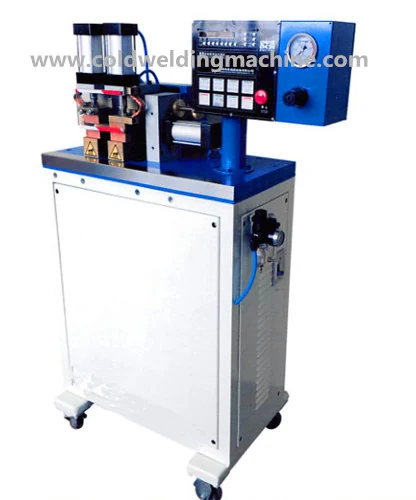
Three phase 380 V 50 kVA chamber welder with pneumatic clamping, for large stranded conductor and cable.
View specifications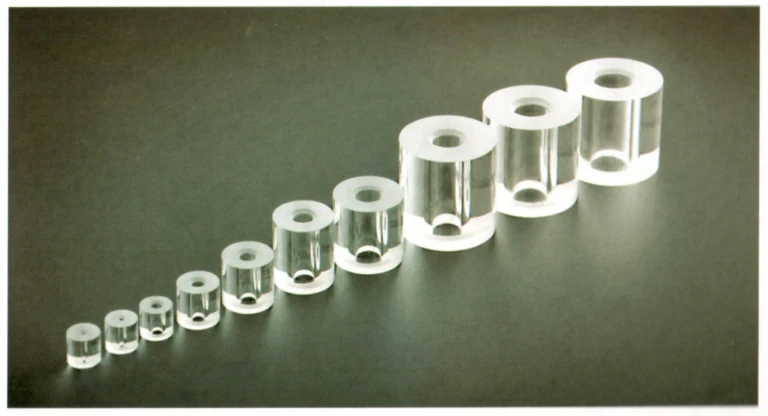
A welding aid for butt welding copper conductor that replaces the ceramic tube completely.
View specificationsYes. Every figure quoted here appears in SGT's published product data, capacity tables or comparison charts for the equipment described.
Engineers and buyers specifying process equipment for wire and cable production, wire drawing or conductor jointing.
Send the wire material, the diameter range, the section shape and your electrical supply. Those four answers are enough to name the machine and the die set.
All 38 products in the SGT catalogue are current production. The product pages carry the published dimensions, weights and capacities for each one.
Send the wire sizes and the machines you already run. The answer names the model, the die set and what to change first.