
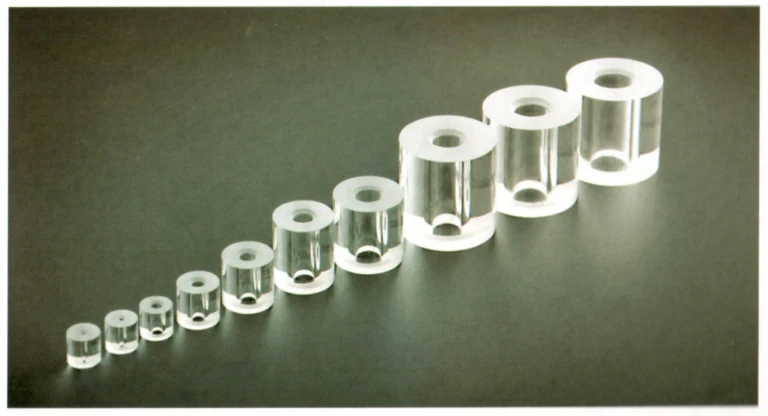
Quartz Glass Tubes
Quartz Glass Tube for Welding Copper Strand Conductor
A welding aid for butt welding copper conductor that replaces the ceramic tube completely.
View specifications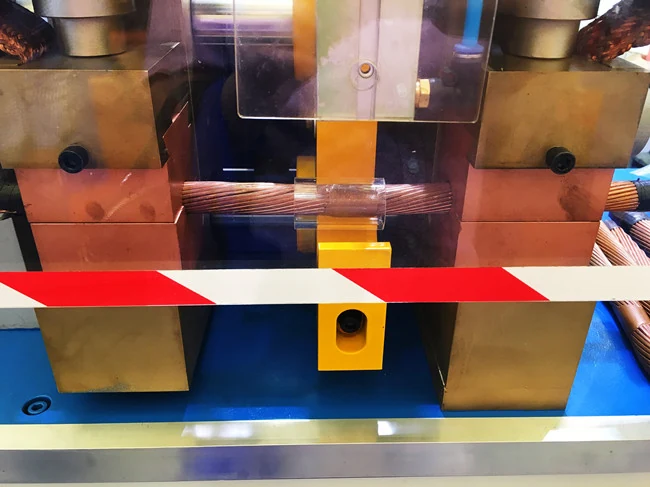
Hole diameter 0.300 mm to 8.200 mm, held to ±0.02 mm standard and ±0.01 mm high precision.
A welding aid for butt welding copper conductor that replaces the ceramic tube completely.
View specifications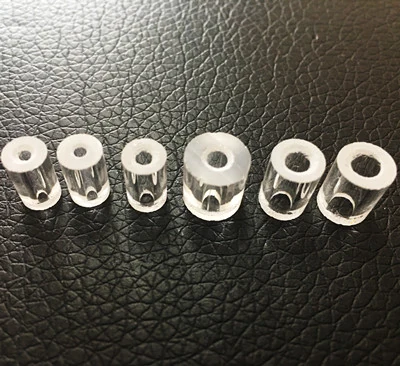
Hole diameter 0.3-8.2 mm, length and outside diameter 6-20 mm, ±0.01 mm on the high precision grade.
View specificationsA ceramic tube has a rough bore, a ±0.1 mm hole tolerance and an opaque wall. The strand catches, the joint is hard to align, and the operator cannot see whether the ends have fused. Every failed joint is an insulation extrusion shutdown and a length of scrap conductor.
Ten times the hole tolerance of ceramic, which decides whether the conductor is guided too tight or too loose.
A smooth bore avoids the cracks a rough ceramic wall causes, and a transparent wall lets the operator confirm the ends are aligned and fused.
Against 960 °C for ceramic, so the crucible survives a sudden hot and cold cycle that cracks ceramic.
Rated the best product by Japanese car cable companies for 3 years, on a documented 28 AWG validation.
A homogeneous pore-free and burr-free joint that goes into the extruder nozzle with only minor dressing.
See the workflowHand-held and bench machines that join non-ferrous wire by pressure alone, from 0.05 mm hair-fine wire up to 4.50 mm copper.
The CHY series covers copper from 1.00 mm to 20.00 mm and aluminium to 25.00 mm, including rectangular strip.
Industry-standard dies for wire from 0.10 mm to 25.0 mm, single or double cavity, round or profile.
Drawing and stranding dies from 0.015 mm to 40.00 mm, chosen by wear rate rather than by price per die.
a
a
a
a
Quotes for quartz glass tubes are built around the wire diameter, the section and the electrical supply where the machine will run.