
Extrusion Dies and Tips
Extrusion Dies for Insulated Wire and Cable
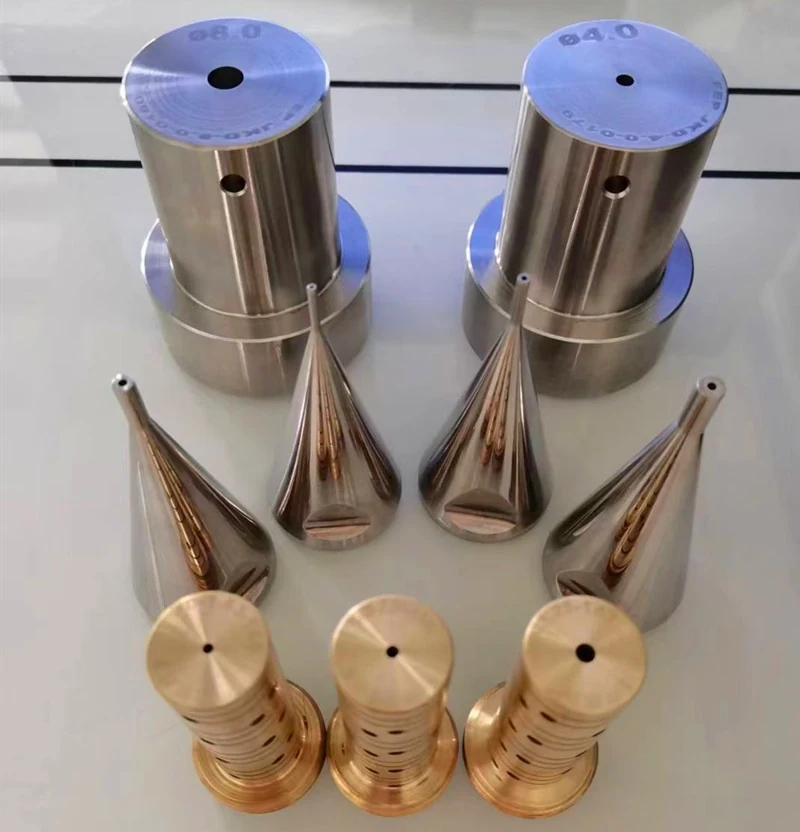
Compression dies engineered for concentricity so the insulation wall can be run thin.
View specifications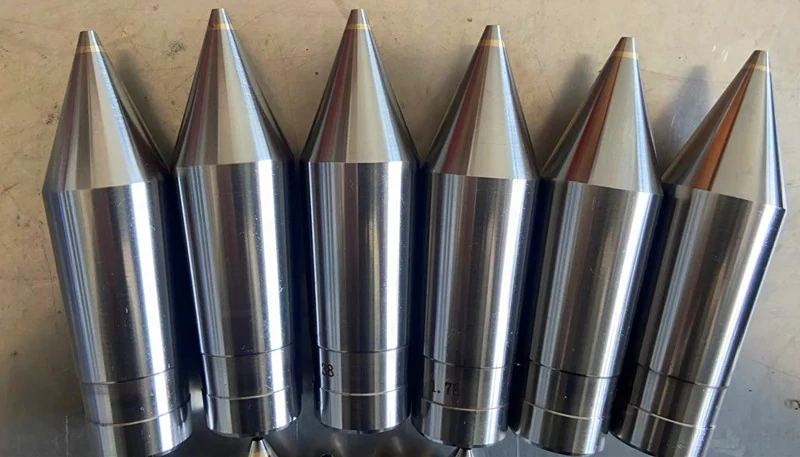
Compression tooling engineered for concentricity, so the insulation wall can be run thin without breaking through.
Compression dies engineered for concentricity so the insulation wall can be run thin.
View specifications
Carbide and diamond insert tips from 0.050 mm to 12.50 mm and stainless tips from 0.50 mm to 25.0 mm.
View specificationsEvery tenth of a millimetre of insulation wall that is there only as a safety margin is compound paid for and extruded for the life of the product. Poor concentricity forces that margin up. Good tooling lets it come down.
Allows a thin insulating layer, which minimises material usage and scrap.
Tungsten carbide or diamond insert with heat treatment, for long service life under harsh conditions.
Each customised extrusion die is engineered around the application to ensure proper wire centering.
Tips with carbide or diamond insert from 0.050 mm to 12.50 mm, stainless steel tips from 0.50 mm to 25.0 mm.
Machines are bought once. Dies are bought every month, and they decide what the machines actually produce.
See the workflowHand-held and bench machines that join non-ferrous wire by pressure alone, from 0.05 mm hair-fine wire up to 4.50 mm copper.
The CHY series covers copper from 1.00 mm to 20.00 mm and aluminium to 25.00 mm, including rectangular strip.
Industry-standard dies for wire from 0.10 mm to 25.0 mm, single or double cavity, round or profile.
Drawing and stranding dies from 0.015 mm to 40.00 mm, chosen by wear rate rather than by price per die.
a
a
a
a
Quotes for extrusion dies and tips are built around the wire diameter, the section and the electrical supply where the machine will run.