
Press Brake and Guillotine Shear Basics for Sheet Metal Shops
A guillotine shear cuts sheet to size and a press brake folds that sheet into the finished part, and the two machines together form the core of almost every sheet metal shop. This guide explains how each process works and what a buyer needs to understand before specifying either machine.
Two Machines One Process Chain
Sheet metal fabrication starts with flat material and ends with a three dimensional part. Between those two states sit two operations. Shearing reduces the sheet to blanks of the right size and shape. Bending folds those blanks along straight lines to create flanges, boxes, channels and profiles. Almost every enclosure, cabinet, bracket, duct and panel in general fabrication is made by doing these two things in sequence.
Because the processes are sequential, errors compound. A blank cut out of square will never fold into a square box, and no amount of skill at the press brake will rescue it. That is why a shop buying both machines should specify the shear at least as carefully as the press brake: the shear determines whether the brake is being fed correct material.
How a Guillotine Shear Cuts
A guillotine shear holds the sheet against a table with hold-down clamps and drives a moving blade past a fixed blade. The cut is not a slice through the full width at once. The moving blade is set at a slight angle, the rake, so that the cut progresses across the sheet from one end to the other. That is what keeps the force requirement manageable on a wide machine.
Two settings control cut quality. Blade clearance is the gap between the upper and lower blades, and it must be set for the material thickness being cut. Too little clearance and the blades rub, edges burr heavily and blade life collapses. Too much and the material tears rather than shears, leaving a rough, rolled edge. Rake angle is the second: more rake reduces the force needed but increases twist in narrow strips.
Understanding this explains the common complaints about shears. Narrow strips that come off curved or twisted are usually a rake angle issue. Heavy burr and rapid blade wear are almost always clearance. Neither is a fault of the machine if the settings have not been matched to the job.
- Set blade clearance for the material thickness on every change
- Expect some twist on narrow strips - reduce rake where the machine allows
- Keep hold-downs working so the sheet cannot lift during the cut
- Rotate and regrind blades on a schedule rather than when edges are bad
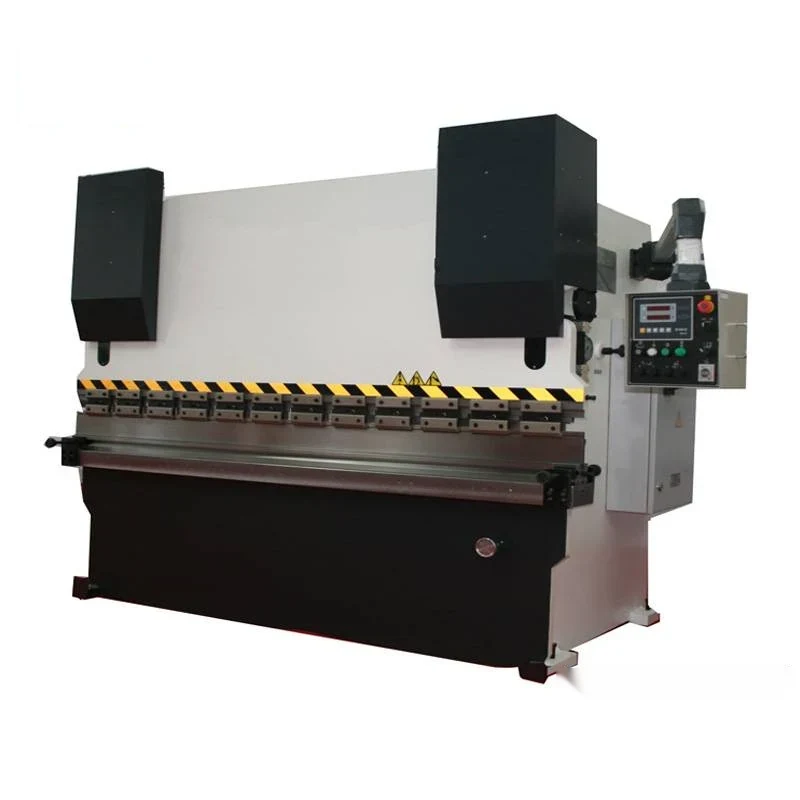
Shear Types and Sizing
Hand operated and foot operated shears cut light gauge material without power and remain useful for small workshops and for trimming. Hydraulic swing beam shears pivot the beam through an arc and are the general purpose workhorse for mild steel fabrication. Guillotine shears with CNC control add a programmable back gauge, so repeat blank sizes are dialled in rather than measured each time.
Sizing comes down to two numbers: the maximum sheet width you will cut, and the maximum thickness in the material you actually use. Thickness ratings are normally given for mild steel at a stated strength, and stainless steel requires considerably more force for the same thickness, so a shop cutting stainless must allow for it explicitly rather than assuming the mild steel figure applies.
The back gauge deserves attention because it determines repeatability. A motorised, programmable back gauge turns the shear into a machine that cuts a hundred identical blanks without re-measuring, which is where most of the productivity gain lies.
How a Press Brake Bends
A press brake drives a punch down into a die with the sheet between them, forming a bend along the die opening. In air bending, the sheet does not touch the bottom of the vee; the punch descends to a set depth and the angle produced is a function of that depth, the vee width and the material. This is the dominant method in general fabrication because a single punch and die set produces a wide range of angles by changing depth alone.
Bottoming and coining press the material fully into the die and give more consistent angles with less springback, but they require far more tonnage and dedicated tooling for each angle. Most shops air bend for everything except where angle consistency justifies the extra force.
Springback is the fact that steel partly returns toward flat when the punch lifts, so the punch has to over-bend to land on the finished angle. The amount depends on the material, its thickness and the vee width, which is why the first part of any new job is a test bend rather than a production piece.
- Air bending - one tool set covers many angles, lower tonnage
- Bottoming and coining - tighter angle control, much higher tonnage
- Always over-bend to allow for springback
- Prove the setup with a test bend before running the batch
Bend Allowance and Flat Pattern Development
The single most common cause of scrapped sheet metal parts is a flat pattern that does not allow for what happens in the bend. When metal is bent the outer surface stretches and the inner surface compresses, so the finished part measures differently from the sum of its leg lengths. The bend allowance or bend deduction accounts for that difference, and it depends on material, thickness, inside radius and the bending method.
The practical approach in a working shop is to establish your own deduction values by bending test pieces on your own machine with your own tooling, and to record them. Published tables are a starting point, not an answer, because they cannot know your tooling or your material supply.
Bend sequence matters too. Once a flange is folded up it can collide with the machine or the tooling on the next bend, so complex parts have to be planned in an order that keeps every bend reachable. This is a design and planning discipline, not something to discover at the machine.
Tonnage Vee Width and Tooling
Bending force depends on material thickness, tensile strength, bend length and the width of the vee opening in the die. A wider vee needs less force but gives a larger inside radius; a narrower vee gives a tighter radius but demands more tonnage and can mark the material. Tonnage charts from the tooling supplier are the reference, and a shop should check its longest, thickest bend against the machine rating rather than the average job.
Do not bend a short part in the centre of a long machine at high tonnage without checking the tooling and machine guidance, since concentrating load in one small area can damage the ram and the tooling.
Tooling is where a press brake becomes versatile. Gooseneck punches clear return flanges, acute angle punches allow over-bending, multi-vee dies give several openings in one block, and hemming tools close a flat fold. Specify a tooling package with the machine that covers your normal thickness range and your deepest box, because a brake with only one tool set is limited to simple work.
- Check tonnage against your longest and thickest bend, not the average
- Select vee width for the inside radius you need
- Gooseneck punches clear previously formed flanges
- Specify tooling with the machine rather than after delivery
Back Gauge Control and Repeatability
On both machines the back gauge is what turns a skilled one-off operation into repeatable production. A manual brake with a hand-set stop will make good parts in the hands of a careful operator, but every setup is re-measured. A CNC press brake stores the bend sequence, the back gauge positions and the ram depths, so the second batch of the same part is set up in minutes rather than re-developed.
For a shop with a stable product range, programmable control repays itself in setup time. For a jobbing shop with constantly changing work, the value is in consistency between operators rather than in stored programmes, which is still a real gain. XAIMC supplies manual bending machines, electric folding machines, hydraulic press brakes and CNC hydraulic press brakes, so the level of control can be matched to the work.
Safety and Operating Practice
Both machines are among the highest risk in a fabrication shop because the operator's hands are close to the point of operation. Guarding, light curtains where fitted, two-hand controls and foot pedals with proper covers all exist for the same reason, and none of them should be defeated to speed a job.
On a press brake the specific hazards are the pinch point between punch and die and the whip of the sheet as it rises during the bend. Large panels need a support arrangement or a second operator, not a single person trying to hold the weight. On a shear the hazards are the blade, the hold-downs and the offcut falling at the back of the machine, which is why the rear area must be enclosed or kept clear.
Train operators on setup as well as on running. Most injuries and most damaged tooling happen during setup and adjustment rather than during production.
- Keep guards, light curtains and hold-downs in working order
- Support large panels so the sheet does not whip up during the bend
- Keep the rear of a shear enclosed or clear of people
- Train operators on setup, not only on running the machine
Related Machines From XAIMC
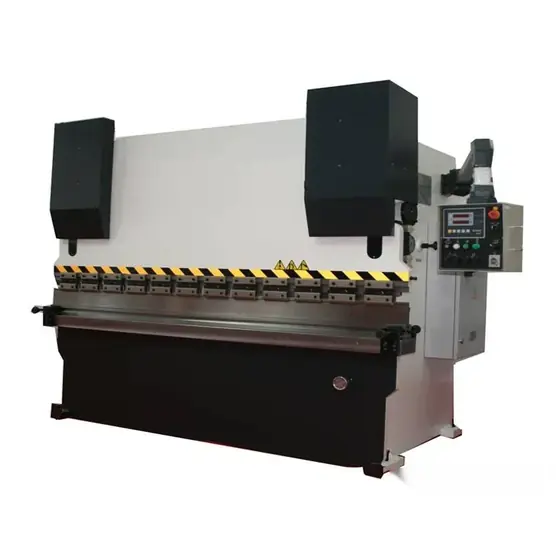
WC67Y Hydraulic Press Brake Machine
View Machine →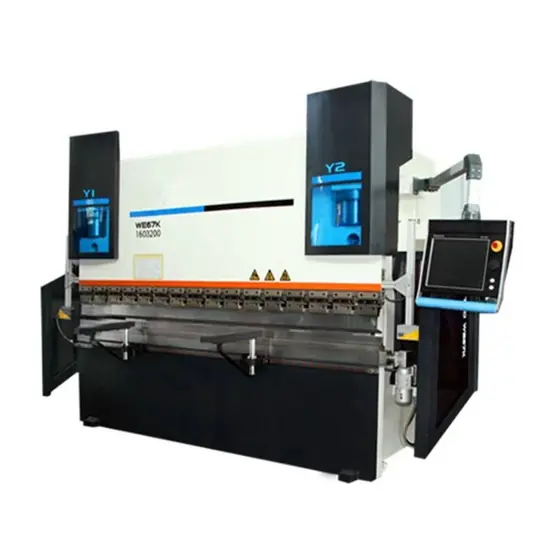
WC67K CNC Hydraulic Press Brake Machine
View Machine →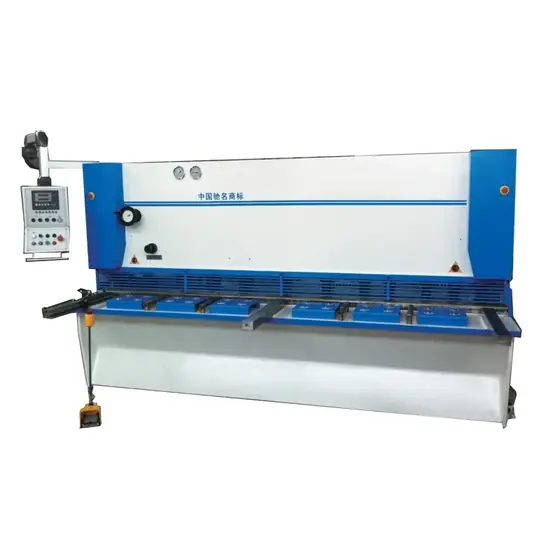
QC11K Series CNC Hydraulic Guillotine Shear
View Machine →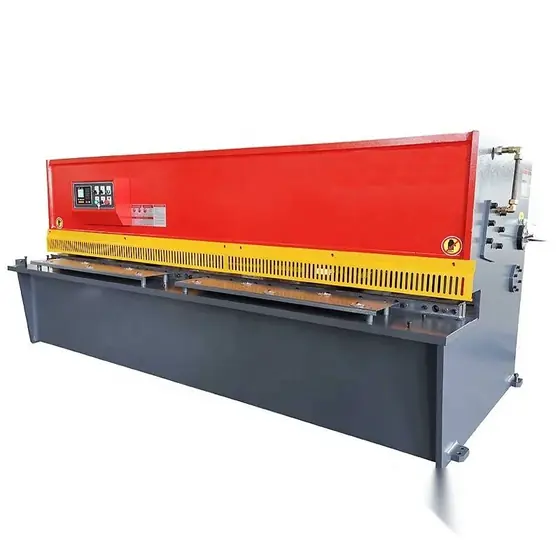
QC12Y Large Hydraulic Swing Beam Shear
View Machine →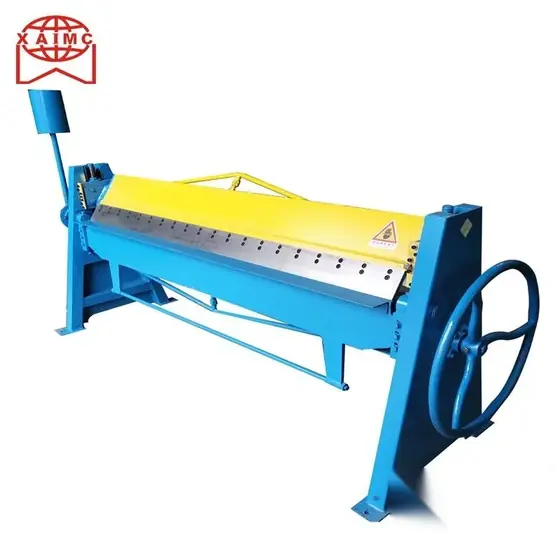
WS Series Manual Sheet Metal Bending Machine
View Machine →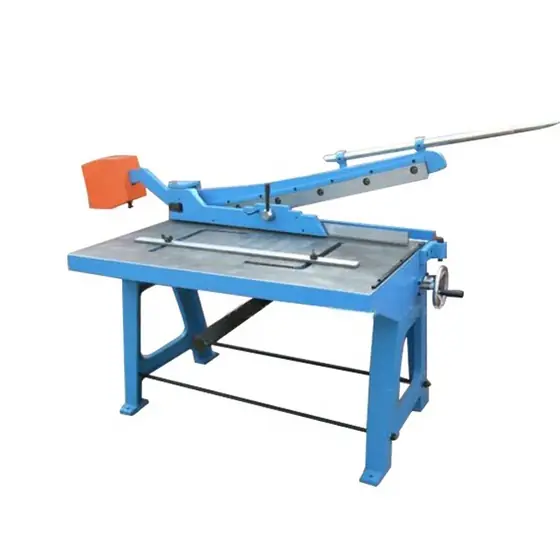
Hand Guillotine Shear Machine GS-1000
View Machine →Related Categories
Questions on This Topic
What size press brake and shear should I buy together
Match them to the same maximum sheet width so the shear can cut what the brake can fold, and rate both against the thickest material you actually use in the material you use most. Send XAIMC your maximum sheet width, thickness range and materials so the pair can be sized as a set.
Why do my blanks come off the shear with a twist
Narrow strips twist because the rake angle of the moving blade progresses the cut across the sheet. Reducing rake where the machine allows, and supporting the offcut, reduces it. Heavy burr on the edge is a different problem and usually means blade clearance is set wrong for the thickness.
What is springback and how do I allow for it
Springback is the partial return of the material toward flat when the punch lifts, so the punch must over-bend to reach the finished angle. The amount varies with material, thickness and vee width, so establish it with a test bend at the start of each new job.
Do I need a CNC press brake
If you run repeat parts, stored bend sequences and back gauge positions cut setup time substantially. For varied one-off work the benefit is mainly consistency between operators. XAIMC supplies manual, electric folding and both hydraulic and CNC hydraulic press brakes so the control level can match your job mix.
Can I shear stainless steel on a machine rated for mild steel
Not at the same thickness. Stainless requires more force than mild steel for the same thickness, so the mild steel rating does not carry over. Tell us the proportion of stainless in your work at enquiry stage so the machine is rated against it.
What tooling should I order with a press brake
A punch and die set covering your normal thickness and radius range, a multi-vee die if your thickness range is wide, and a gooseneck punch if your parts have return flanges. Specify the deepest box or channel you need to form, since that determines punch height.
Apply This to Your Own Workshop
Send us your parts, your volumes and your site conditions and we will answer for your case rather than the general one.