
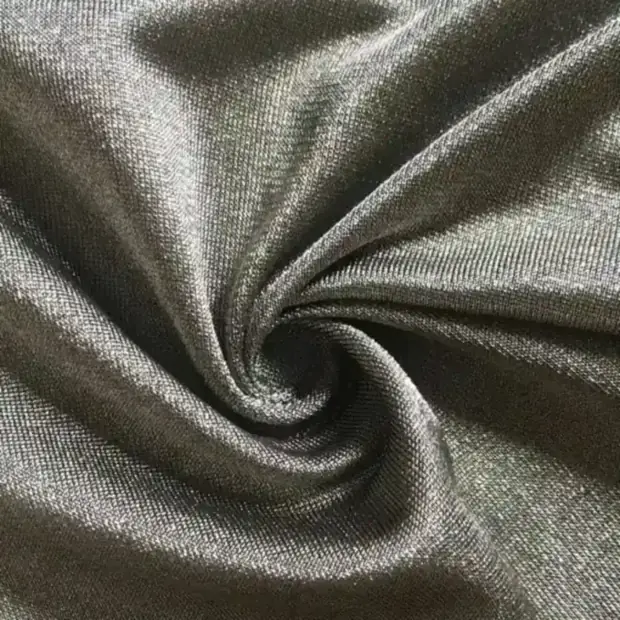
Tinsel Wire
Conductive Textile Wire
A soft textile fiber core at the centre, so the conductor handles like yarn.
View specifications
Conductors that can be sewn, woven and worn, for smart clothing, heated apparel and technical textiles.
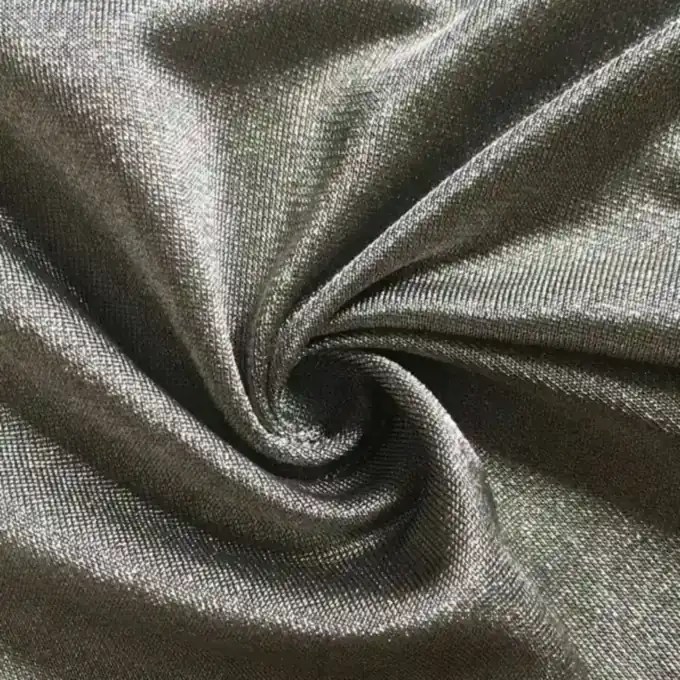
Textile wires are one of the main applications for our conductors, and textiles is one of the fields where we help customers build products their competitors cannot copy easily. The reason tinsel wire fits is structural rather than incidental: there is already a soft textile fiber at the centre of the conductor, so it bends and drapes far closer to yarn than a solid wire of the same conductivity ever will, while the foil on its surface does the electrical work. Add the high-resistance versions used in heating wires and the same construction covers both the signal and the heating side of a garment.
Tinsel Wire
A soft textile fiber core at the centre, so the conductor handles like yarn.
View specifications
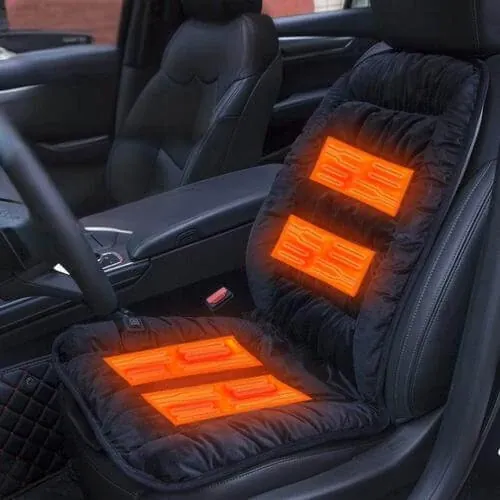
Heater Wire
High resistance in a conductor that is still flexible enough to sew, wind or route.
View specifications
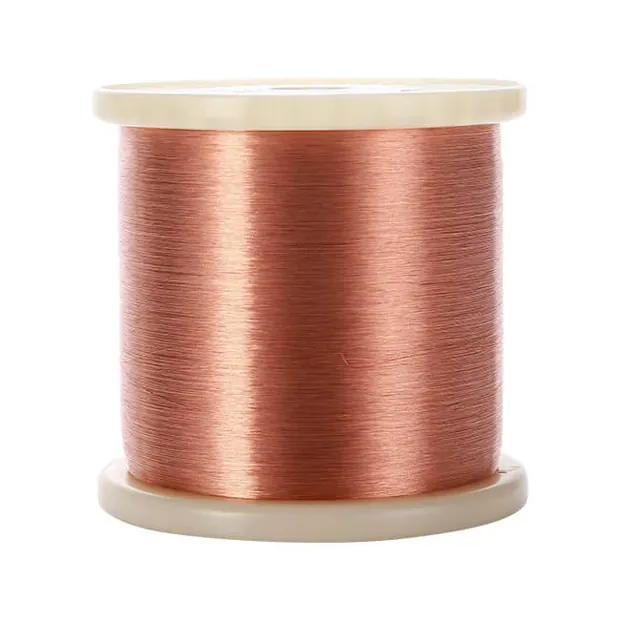
Tinsel Wire
Highest conductivity per unit of foil in the range, with no plating layer in the current path.
View specifications
Precision Copper Foil
Shielding and mechanical protection without stiffening the cable.
View specifications
You send the conductor resistance, outer diameter, tensile strength, swing life and soldering method. All five are treated as one problem.
Foil and base metal chosen from bare copper, oxygen-free copper and the tin-copper, iron-copper, silver-copper, nickel-chromium, nickel-iron and copper-nickel alloys.
Fiber core picked for working temperature and abrasion; tin, silver or nickel plating specified at 0.3 um to 2 um.
We build and test a sample. No minimum order quantity applies to conventional or customized sampling.
Resistance, tensile strength and elongation are measured on our own equipment, with salt spray where corrosion matters.
Two shifts keep delivery on schedule, and a comprehensive loading report goes out with every shipment.
material guide
What each fiber core actually gives a tinsel wire, and which service conditions should point you at which one.
Read the guide
technical guide
The construction, the materials and the reason a foil-over-fiber conductor beats a solid wire of the same size on flex life.
Read the guide
Aramid gives good abrasion resistance, high strength and a melting point above 500 degrees Celsius. Liquid crystal polymer adds wear, bending and fatigue resistance with excellent chemical resistance and low moisture absorption.
The same tinsel wire construction covers both. High resistance requirements are one of its characteristics, which is why it is widely used in heating wires as well as in signal conductors.
Send the performance targets your conductor has to meet. We will propose a construction and sample it with no minimum order quantity.