
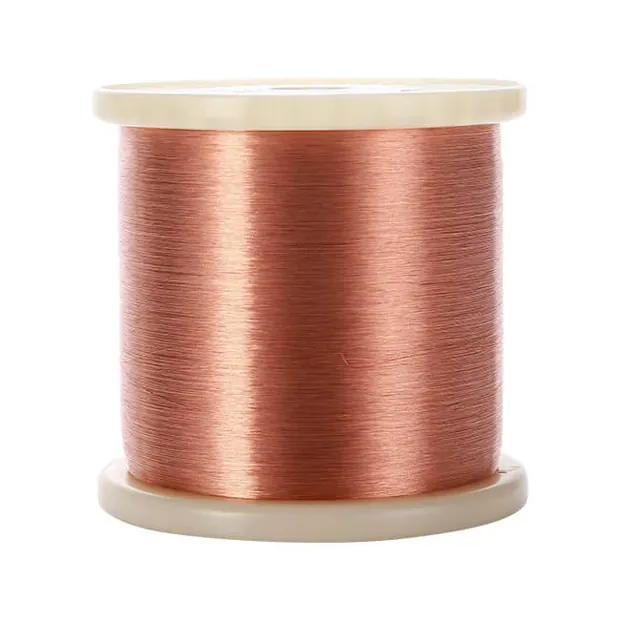
Tinsel Wire
Bare Copper Tinsel Wire
Highest conductivity per unit of foil in the range, with no plating layer in the current path.
View specifications
The construction, the materials and the reason a foil-over-fiber conductor beats a solid wire of the same size on flex life.
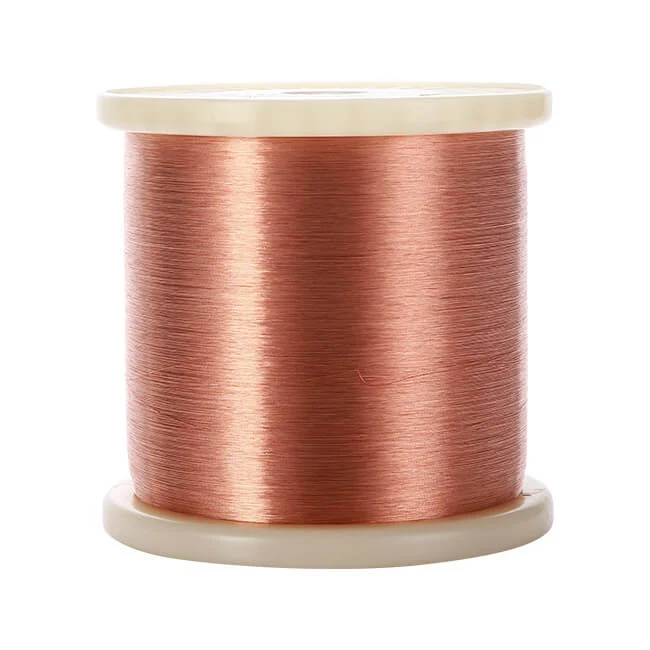
Tinsel wire is a conductor made by winding a layer of ultra-thin metal foil, or several layers of it, around a soft textile fiber core. That single structural choice is where every one of its properties comes from.
The specifications produced are very fine and flexible with a low specific gravity. Compared with traditional solid wires, bending strength and tensile strength are both greatly improved, oxidation resistance is better, and the conductor is easier to weld. With imported raw materials and a special process, the product holds a long service life with good wear resistance and corrosion resistance under high temperature and high pressure.
The multi-layer copper foil design and the multi-strand twisted design significantly reduce conductor resistance, while breaking load and swing performance are greatly improved at the same time. That is the reason a designer can meet a resistance target and an outer diameter ceiling together, which a solid wire of the same gauge cannot do.
Tinsel wire is composed of two materials, with a metal foil surface and a fiber core inside. Common metal foil materials include bare copper foil, tin-plated copper foil, nickel-plated copper foil, silver-plated copper foil, tin-copper alloy foil, iron-copper alloy foil and silver-copper alloy foil. Common fiber materials include nylon, polyester, aramid, liquid crystal fiber, heat-resistant cotton yarn and glass fiber.
The outer diameter of a single tinsel wire can be as small as 0.04 mm and runs up to 0.40 mm, with either a single-layer or a multi-layer copper foil structure. It can be twisted into tinsel wire strands, or mixed with copper wires, mainly to increase the bending strength of the conductor.
Tinsel Wire
Highest conductivity per unit of foil in the range, with no plating layer in the current path.
View specifications
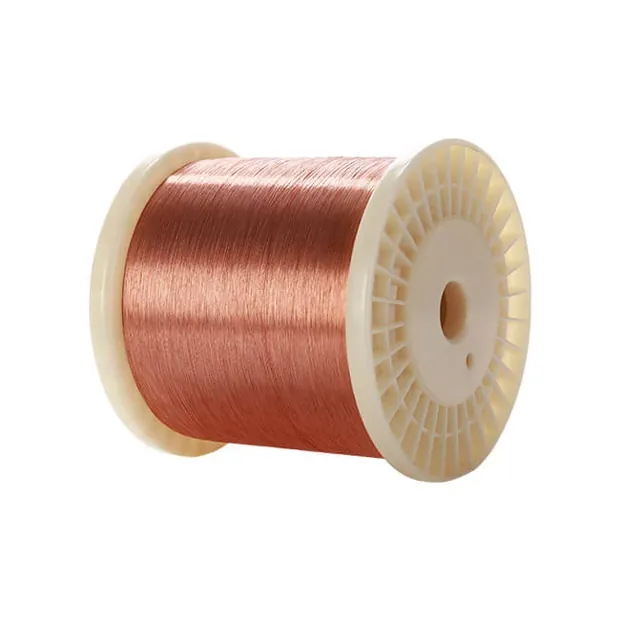
Speaker Lead Wire
Built for swing performance, which is the actual failure mode in a driver lead.
View specifications
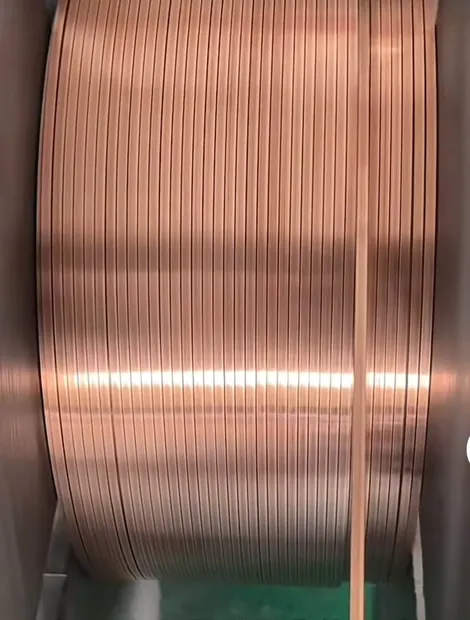
Precision Copper Foil
Extremely fine gauges produced for winding at 0.04 mm to 0.40 mm conductor diameters.
View specifications
No. It is used in medical wires, robot wires, aerospace cables, military special equipment cables, charging pile cables, automotive circuit electronic cables, drag chain cables, consumer electronics cables and textile wires, as well as in speakers.
Yes. Heating products with high resistance requirements are one of the characteristics of our tinsel wire, which is widely used in heating wires.
Technical staff are available 24/7 for immediate support and engineering advice on your product.