
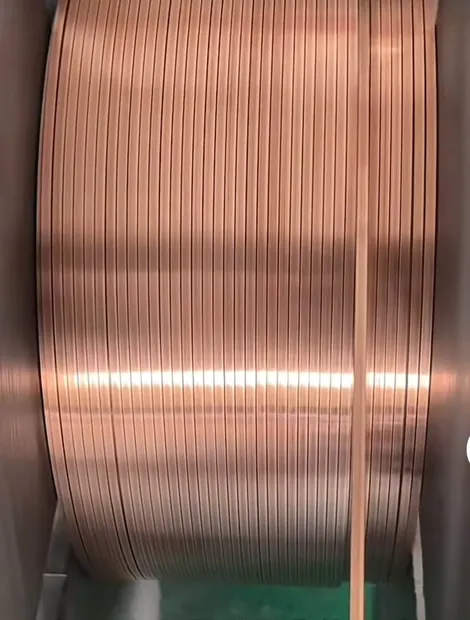
Precision Copper Foil
Precision Copper Foil
Extremely fine gauges produced for winding at 0.04 mm to 0.40 mm conductor diameters.
View specifications
Choosing the base metal and the coating so the conductor meets its electrical target and survives its environment.
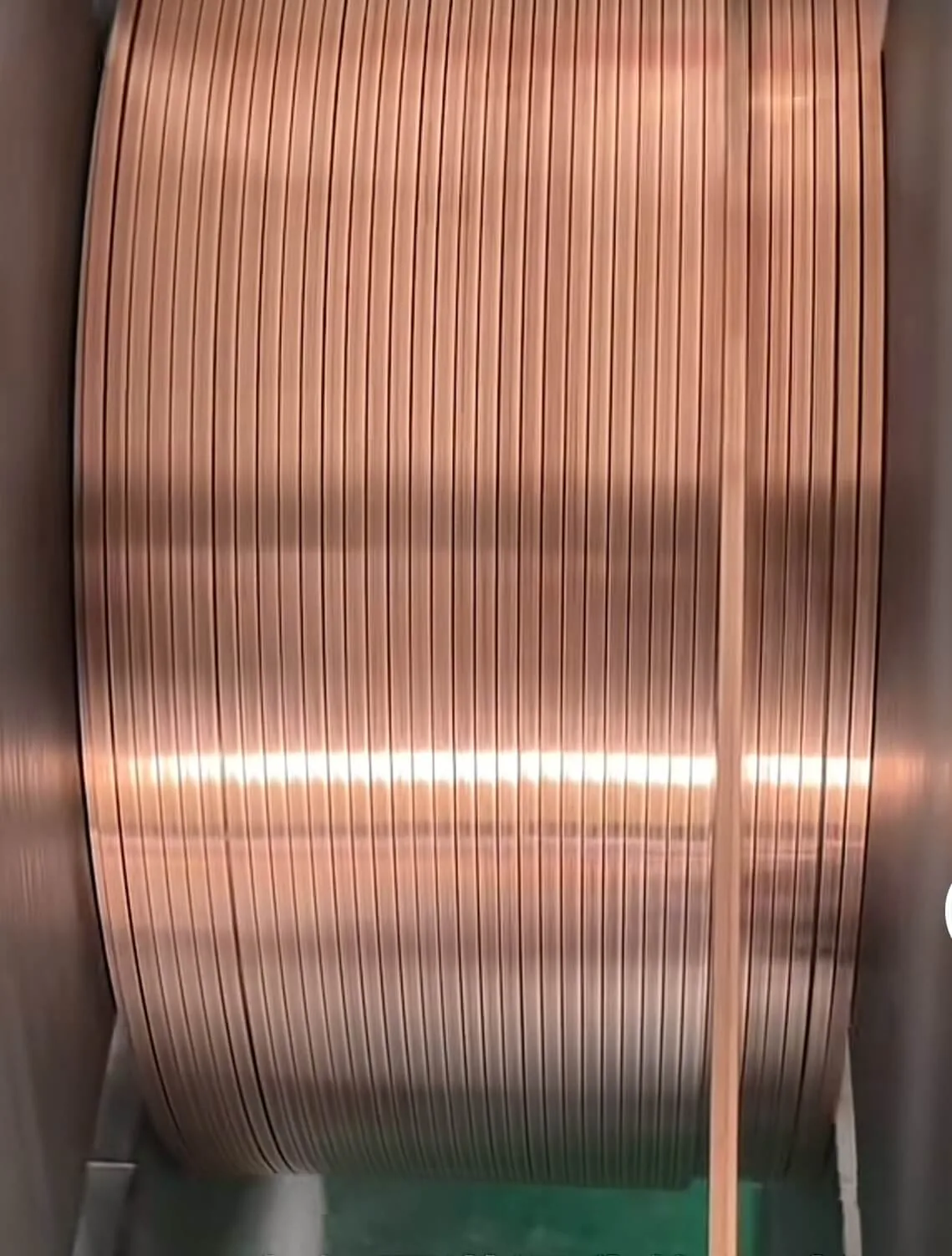
Most conductor problems that show up in the field are material choices made too early. A base metal fixes the ceiling on conductivity and strength; a plating decides what happens at the surface, which is where soldering, corrosion and contact resistance live. We work across a wide standard range of metals and three plating options, and the coating thickness is set by the performance required rather than by what is convenient, anywhere from 0.3 um to 2 um.
The problem: Pure copper reaches a mechanical limit that a stronger conductor has to pass.
How we handle it: Bare copper and oxygen-free copper for conductivity; tin-copper, iron-copper and silver-copper alloys where strength governs; nickel-chromium, nickel-iron and copper-nickel (constantan) where resistance is the target.
The problem: The same copper can be too stiff or too soft depending on what the cable has to do.
How we handle it: Soft annealed copper wire where the conductor flexes, hard copper wire where it has to hold form.
The problem: Some applications need properties outside the standard metal range entirely.
How we handle it: Graphene copper wire, graphene aluminum wire, single crystal copper wire, pure silver wire and enameled copper or alloy wire can all be supplied.
The problem: The surface, not the core, decides whether the conductor solders and whether it corrodes.
How we handle it: Tin for storage and everyday soldering, silver for demanding contact and long service life, nickel where the surface faces harder conditions.
The problem: A fixed plating thickness is either wasteful or inadequate depending on the application.
How we handle it: Coating thickness is customized to the performance requirement in a range of roughly 0.3 um to 2 um.
The problem: An uneven coating puts defects along the entire length of a wound conductor.
How we handle it: The coating is uniform with good continuity and strong adhesion, and the surface is smooth without discoloration and free of harmful defects such as particles and mechanical damage.
Precision Copper Foil
Extremely fine gauges produced for winding at 0.04 mm to 0.40 mm conductor diameters.
View specifications
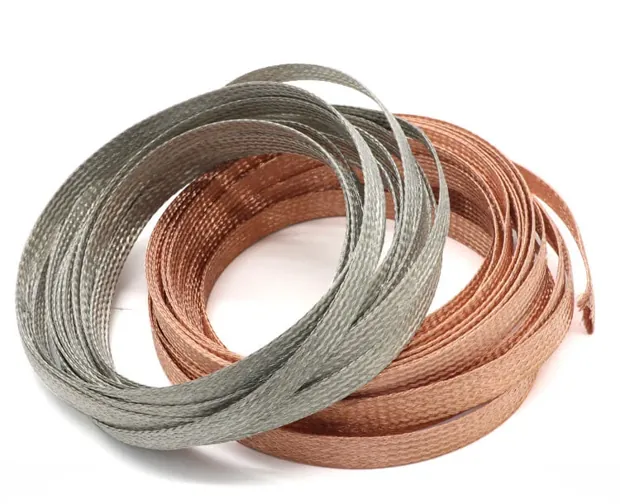
Copper Stranded Wire
Flexibility at full cross-section, instead of trading one for the other.
View specifications
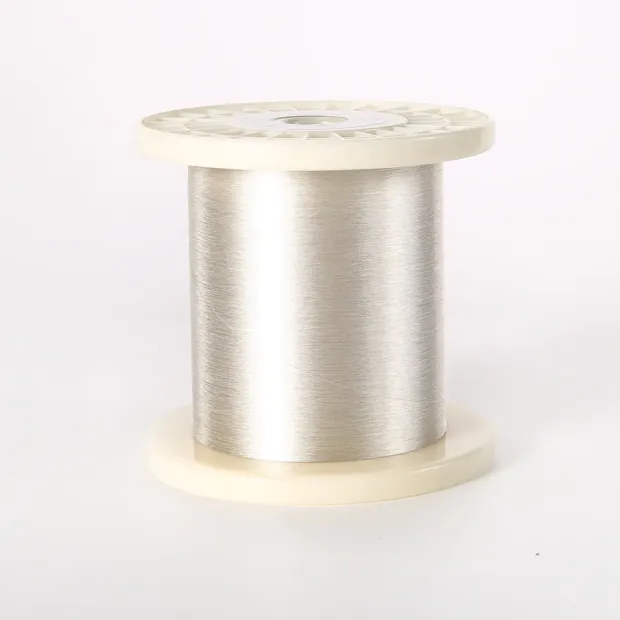
Copper Stranded Wire
Silver surface for stable contact and termination resistance over a long service life.
View specifications
Tin covers storage and ordinary soldering. Silver is for conductors that run warm, need a long service life, or have contact and termination resistance specified as tightly as conductor resistance.
Roughly 0.3 um to 2 um, customized according to the performance requirement rather than fixed.
Enameled copper wire and enameled alloy copper wire are both within the material range we can supply.
Sampling is available on conventional and customized products without a minimum order quantity, and the test data comes back with the sample.