
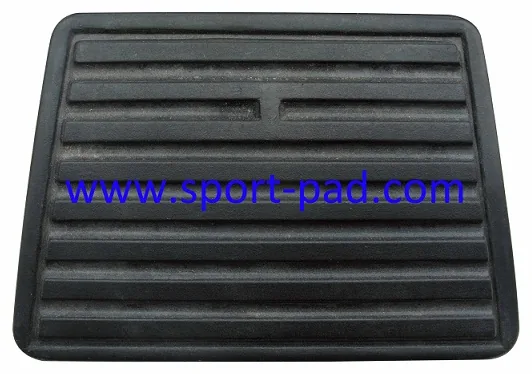
Rubber Pad 9
A domed section makes the pad feel thicker than it measures, which is how a pedal is made to feel more solid without adding compound cost.
Specification
| Part family | Moulded rubber part |
|---|---|
| Construction | Single-compound moulding, no metal insert |
| Face detail | Rectangular pad, fine longitudinal ribs, domed profile. |
| Moulding compounds | EPDM, SBR, TPE, TPE-SEBS, PVC or PP, to drawing |
| Tooling | Designed and built in house |
| Prototype parts | 4 weeks from prototype tool |
| PPAP | Typically 8 weeks, to ISO/TS 16949 or VDA |
| Dimensions | Built to customer drawing or to a supplied sample |
| Moulded from | Beijing rubber plant (rubber) / Shanghai plant (plastics) |
The face on this part
Rectangular pad, fine longitudinal ribs, domed profile. It sits in the Standard Rubber & Plastic Pads group, and the photograph above is of the part itself rather than a rendering — what you see is the tread, the outline and the finish as they leave the tool.
One compound, one tool, one shot
The tread, the retaining geometry and any mounting holes or locating tabs are all formed in the tool rather than added afterwards. That is why the tool drawing and the part drawing are effectively the same document, and why a change to the face means a change to the tool.
Compound and hardness
We run EPDM, SBR, TPE, TPE-SEBS, PVC and PP with or without glass reinforcement. Oil or fuel contact rules EPDM out; weather and ozone rule SBR out. Shore A hardness decides how the part feels in use and belongs on the drawing, not in an email.
With no metal face, the compound is the part
There is nothing to hide behind. A pad that is too hard makes its tread pattern useless; one that is too soft wears through at the rib tips. Send the service conditions and our designers will propose a grade rather than asking you to guess one.
Other parts in Standard Rubber & Plastic Pads
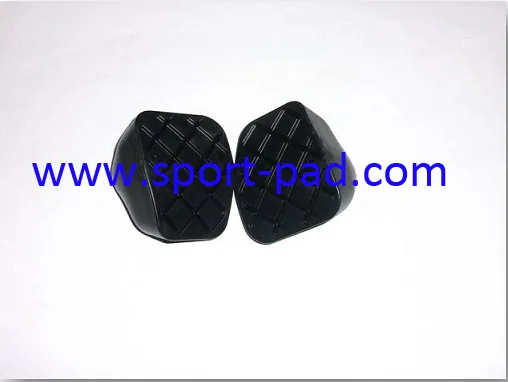
VW Pad 01
Standard Rubber & Plastic Pads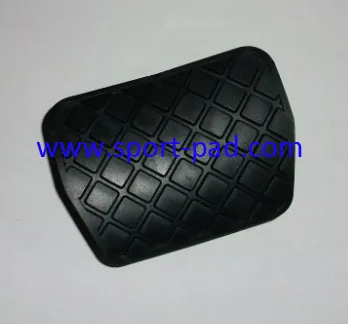
VW Pad 02
Standard Rubber & Plastic Pads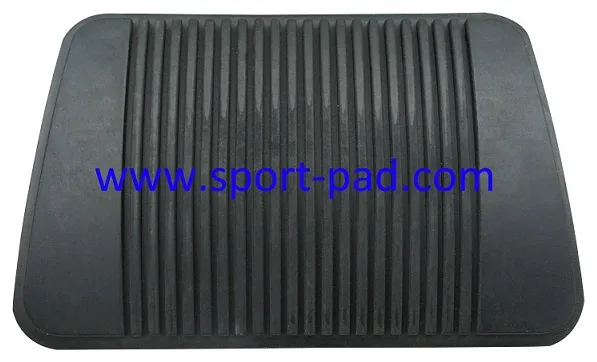
Rubber Pad 1
Standard Rubber & Plastic Pads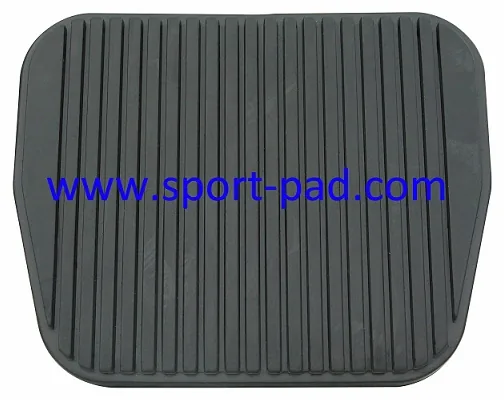
Rubber Pad 2
Standard Rubber & Plastic Pads
Rubber Pad 3
Standard Rubber & Plastic Pads
Rubber Pad 4
Standard Rubber & Plastic Pads
Rubber Pad 5
Standard Rubber & Plastic Pads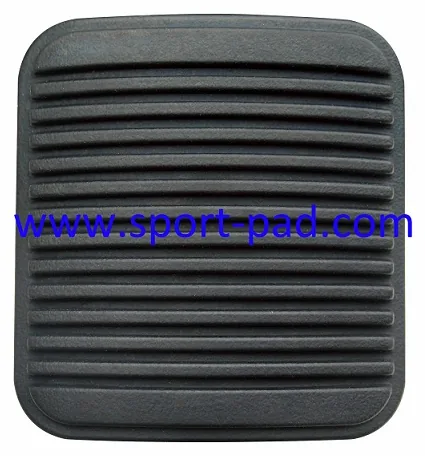
Rubber Pad 6
Standard Rubber & Plastic PadsBackground reading
Choosing a Pedal Pad Compound: EPDM, SBR, TPE and When Each One Fails
Service conditions, not price, should pick the compound. Here is how we narrow it down and what we test to prove the choice.
Ribs, Lattices, Studs and Slots: What Each Pedal Tread Is For
Four tread families appear across this catalogue. Each one is a different answer to the same question about grip and wear.
How to Get a Pedal Pad Quoted: Send a Drawing, or Send the Part
What we need to price a part, what we can work out ourselves, and what genuinely cannot be guessed.
Questions buyers ask
Which compound will this part be moulded in?
Whichever the drawing calls for. We run EPDM, SBR, TPE, TPE-SEBS, PVC and PP with or without glass reinforcement; if you have not fixed a compound yet, send the service conditions and we will propose one.
How long before I see a real Rubber Pad 9 sample?
Four weeks from a prototype tool. The tool shop is in the same buildings as the moulding lines in Shanghai and Beijing, so prototype work does not queue behind a subcontractor.
What do you need from us to quote it?
A drawing or sample plus the annual volume. Say at that point whether PPAP is required and to which standard — ISO/TS 16949 or VDA — so it is planned in rather than added later.
How is the material verified?
In our Beijing facility, next to the production line: Shore A hardness, density, ozone, ageing, tensile strength, elongation to fracture, vulcanization and insulation resistivity, oil resistance and Mooney viscosity.
Quote the Rubber Pad 9
Send the annual volume and, if you have one, the drawing. Prototype parts follow 4 weeks after a prototype tool.