
Brushed, Sand Blasted or Polished: Picking a Pedal Face Finish
The three finishes buyers actually ask for, what each one hides, and why a finish change is not a tooling change.
The three that matter
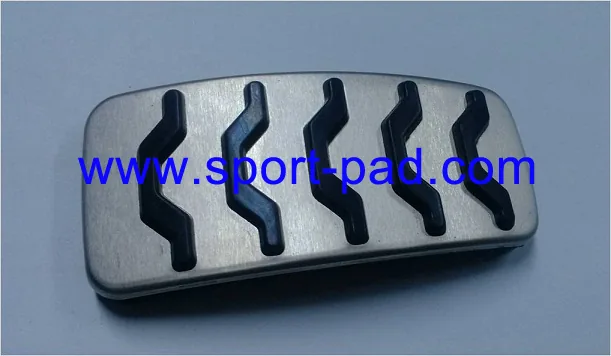
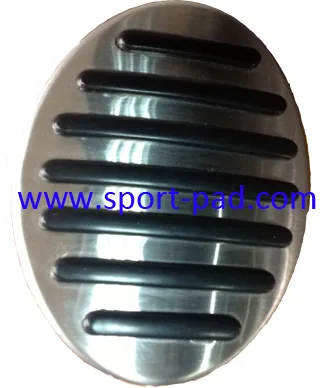
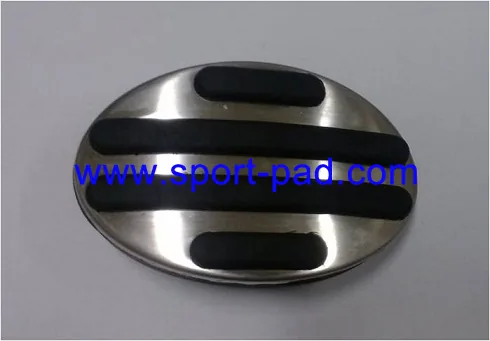
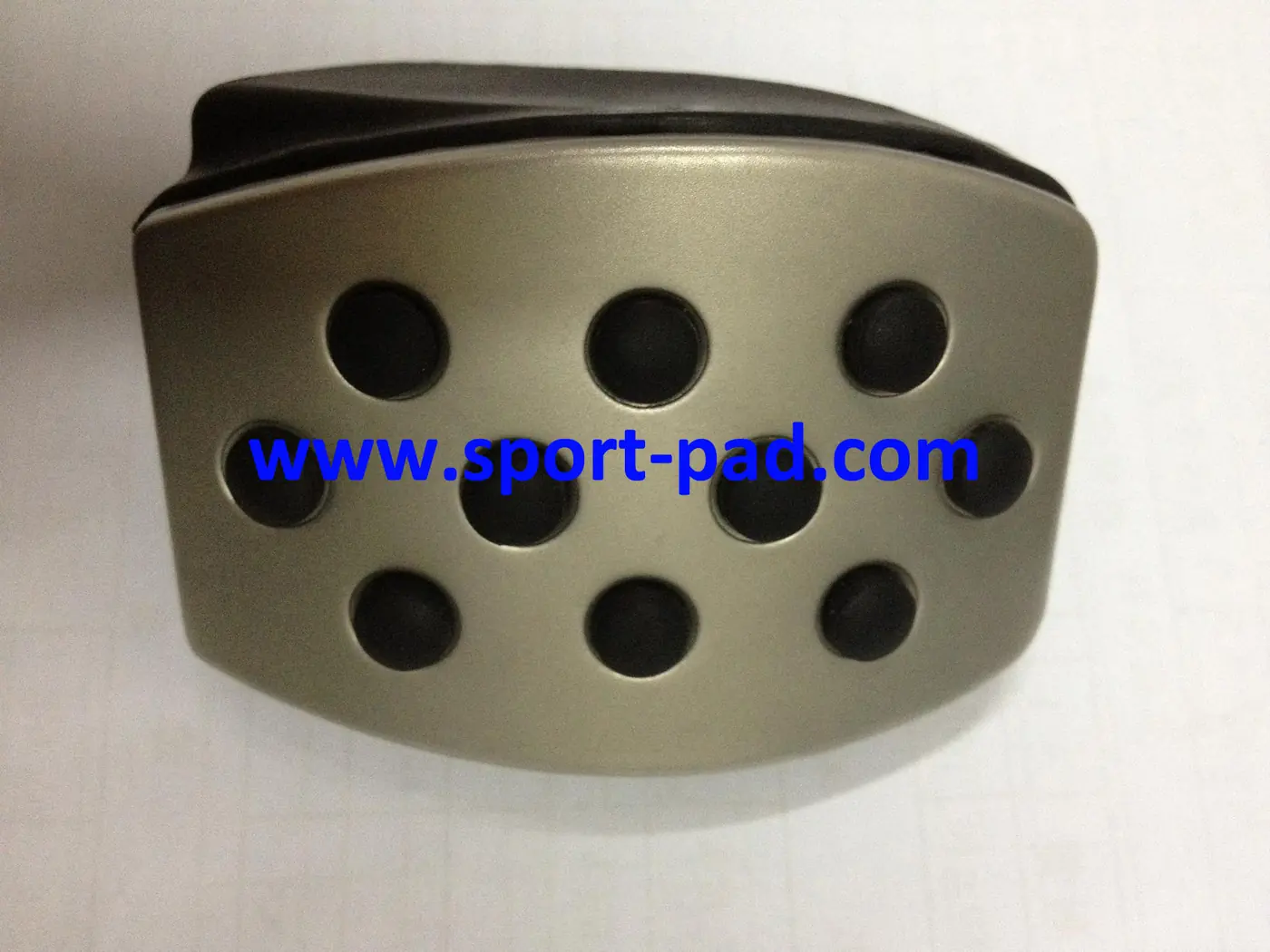
Brushed aluminium, sand blasted stainless steel and polished stainless steel are the most popular choices. Everything else is a variation on those.
What each one hides
Brushing hides handling marks along the grain and is the most forgiving in service. Sand blasting gives a uniform matte that hides nothing but shows nothing either — it ages evenly. Polishing shows everything, which is why it belongs on a show surface rather than a pedal that meets a boot.
It is not a tooling change
All three run off the same blank. On an overmoulded part the rubber tool is untouched by a finish decision, so a customer can carry two finishes through one programme without a second insert tool.
Adding a logo
Many customers require an aesthetic logo on the part. On steel components we laser etch it; on plastic components the equivalent is colour printing. Both are applied after the finish, not before.
Read next
Sport Pad or Rubber Pad? The Difference That Decides Your…
A sport pad has a metal face; a rubber pad does not. That single difference drives tooling count, unit price and how the part is validated.
Choosing a Pedal Pad Compound: EPDM, SBR, TPE and When Each…
Service conditions, not price, should pick the compound. Here is how we narrow it down and what we test to prove the choice.
Reading a Compound Code: What EP70, NBR70 and CI60 Tell You
The codes marked on our YAMAHA parts are a compact statement of family and hardness. Here is how to read one.
Still deciding?
Send the service conditions and the annual volume. Our designers will propose a compound and a construction rather than asking you to pick one.