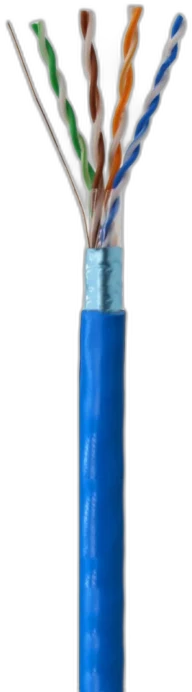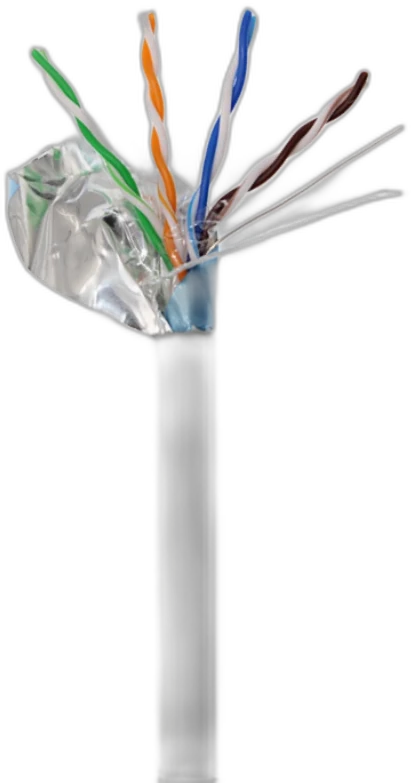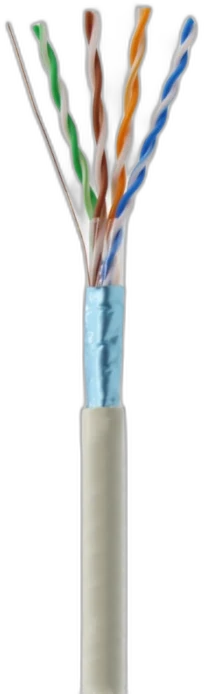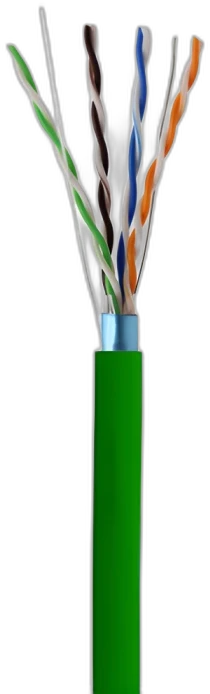
The Three Constructions
Naming varies between suppliers and markets — STP, S/FTP and F/UTP all appear in datasheets. What matters is the physical construction, so confirm whether the foil is per pair, overall, or both.
| Build | Screen | Typical use |
|---|---|---|
| UTP | None | Conventional offices, schools, retail |
| FTP | Overall aluminium foil with drain wire | Runs parallel to power, light industrial |
| SFTP | Foil per pair plus overall tinned copper braid | Plant rooms, imaging, broadcast |
What The Screen Protects Against
Twisting the pairs already rejects most common-mode interference. A screen adds protection against higher-frequency coupling that the twist alone does not handle, and against alien crosstalk between adjacent cables in a dense bundle.
That second effect is why CAT6A and CAT7 are screened. At 10 Gb the interference from the cable next to you becomes the limiting factor, not the noise from the building.
The Installation Cost Of A Screen
A half-implemented shielded system is worse than a properly installed UTP one: you pay for the cable and the hardware, and an unbonded screen can act as an antenna rather than a barrier.
- Shielded patch panels, keystones and cords are required throughout
- The screen must be bonded to a defined earth path, normally at one end only
- Screened cable is stiffer, with a larger bend radius
- Termination takes longer and is less forgiving of rushed work
A Practical Rule
Use UTP unless you can name the interference source. If the answer is a specific run alongside a busbar, a plant room with variable speed drives, or an installation standard that mandates it, screen that run. Screening an entire office because it sounds safer is a cost with no return.
Applying this to a live project? Send the specification and we will tell you how it lands for your case — utp ftp and sftp shielding explained is exactly the kind of question we answer whether or not there is an order attached.