
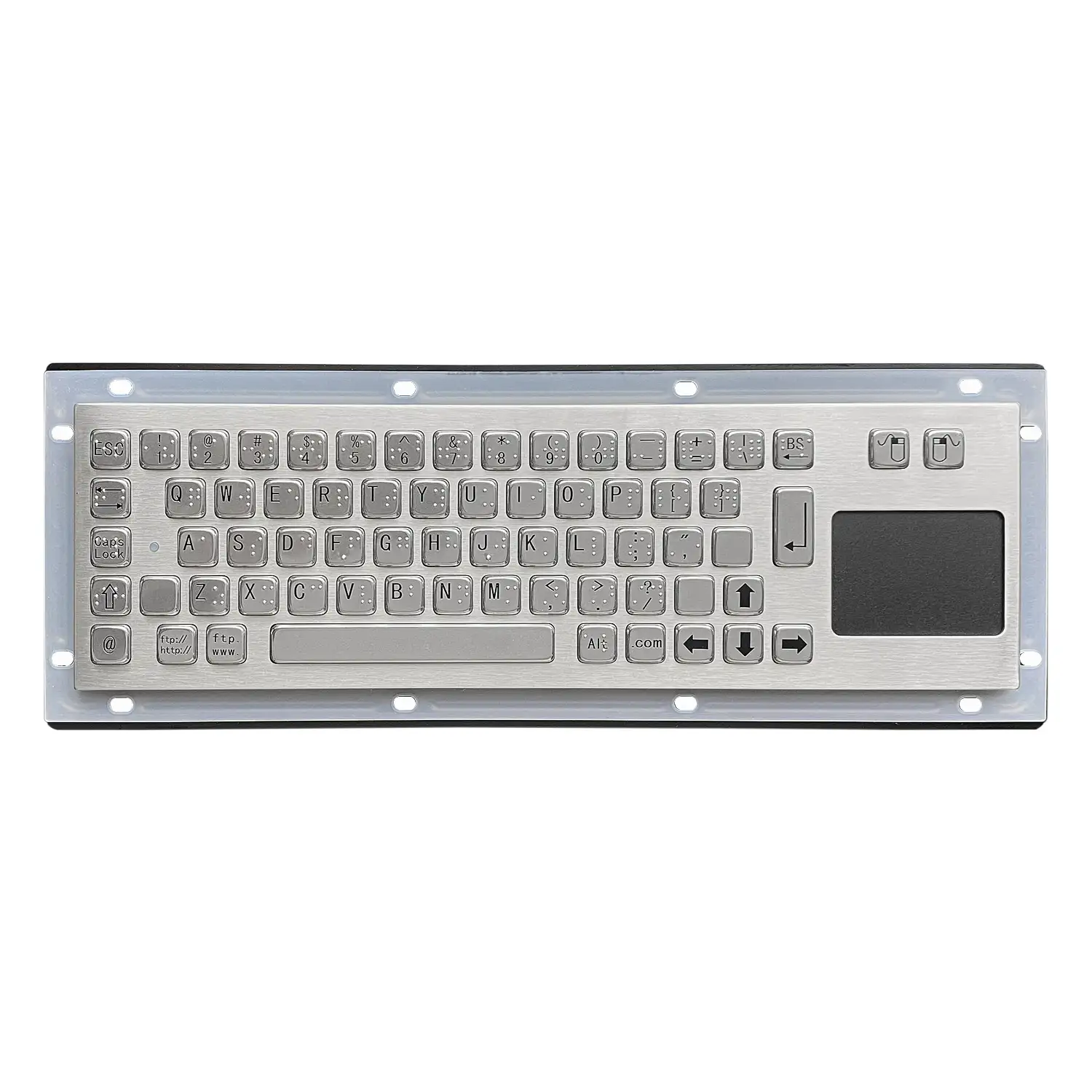
Industrial Keyboard Features and Types Explained
Where Industrial Keyboards Are Used
Industrial keyboards appear wherever an operator has to enter data in a place a desktop keyboard would not survive. Typical sectors include industrial control, petrochemical plants, transport, electric power, defence and military programmes, aerospace, coal mine drilling, agriculture, machinery manufacturing, automation control, medical and pharmaceutical facilities, communications, measuring instruments, rail transit and self-service terminals. The common thread is not the industry label but the exposure. In each of these settings the keyboard faces something a normal office unit does not, whether that is airborne dust, liquid, vibration, temperature extremes or simply far more operating hours than a desk keyboard ever sees. Identify the exposure before the sector and the specification follows naturally.
Protection Requirements Differ by Environment
There is no single industrial specification, because the threats are not the same. An underground coal mine is both very humid and a place where flammable and explosive gases are present, so the keyboard must be waterproof, dustproof and explosion proof at once. A food factory is dominated by airborne dust and washdown, so dust sealing and a cleanable surface come first. Outdoor portable and ruggedised equipment adds another list again: waterproofing, dust sealing, antibacterial surfaces, tolerance of a wide high and low temperature band, and resistance to electromagnetic interference. Write down which of these actually apply to your installation. Over-specifying wastes budget on protection you will never use, and under-specifying one item is usually what causes the early failure.
The Main Construction Types
Industrial keyboards divide into recognisable construction families, and the name normally tells you the material or the mounting. Membrane keyboards use flexible layers with no moving parts. Silicone keyboards use moulded rubber. Metal and stainless steel keyboards use a formed steel panel. Beyond material there are explosion-proof keyboards, mine keyboards, ruggedised keyboards, rack-mount industrial keyboards, medical keyboards, embedded keyboards, military keyboards, waterproof keyboards for industrial control, backlit ruggedised keyboards and desktop ruggedised keyboards. These categories overlap, and most real orders combine two or three attributes, such as a backlit stainless steel panel-mount unit. Use the type names as a starting vocabulary with your supplier rather than as a fixed catalogue.
Industrial Keyboard Compared With a PC Metal Keyboard
A PC metal keyboard is one member of the industrial keyboard family, usually intended for industrial computers. The distinction is in how far the protection is taken. Full industrial keyboards are built around waterproofing, dust sealing and, where required, explosion protection, which is why they can be deployed across military, financial, railway, communications, coal mining, medical, maritime and self-service equipment. A PC metal keyboard is generally used with industrial PCs and machine controllers. It will work on a personal computer, but it is not designed around the everyday desk experience, so the typing feel is a compromise. If the machine sits in a clean control cabinet, a PC metal keyboard may be sufficient; if it faces the plant floor, it usually is not.
Customisation Scope Is the Practical Difference
The other separation between a general PC metal keyboard and a purpose-built industrial keyboard is how much of it you can change. Industrial keyboards are specified around the host equipment: the layout, the key legends and language, the front panel, the connector, the mounting cutout and any integrated pointing device. KEYU holds over 1,000 sets of moulds and runs CNC and sheet metal equipment in its own 4,500 square metre factory, which is what makes OEM and ODM changes practical rather than theoretical. For an integrator, this matters more than any single feature on a datasheet, because the keyboard has to fit an existing panel and an existing control software layout, not the other way round.
Choosing a Type for Your Application
Work through four questions in order. What can reach the keyboard, meaning water, dust, chemicals or gas? How is it mounted, on a desk, in a rack or through a panel? Who operates it, and are they wearing gloves or working in poor light? What does the host accept, USB or PS/2? The answers point directly at a construction type and a protection package. A washdown food line points to a sealed stainless steel panel-mount unit. A dark control room points to a backlit ruggedised model. An unattended outdoor terminal points to a vandal resistant metal keyboard with an integrated pointing device so there is no separate mouse to protect.
Products Mentioned
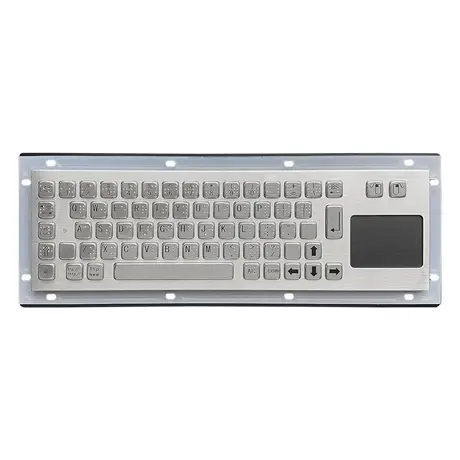
67 Key Metallic Keyboard With Braille KY-PC-NT3 BR
View Specification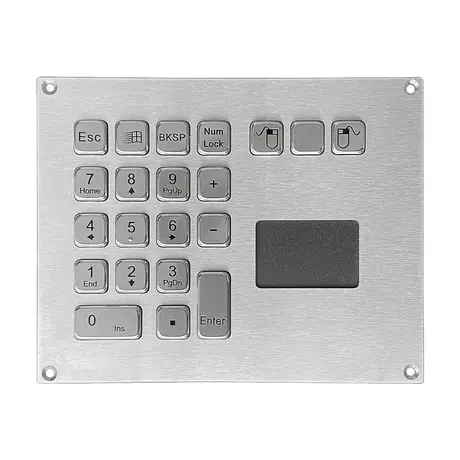
IP65 Mini Keyboard With Trackpad KY-PC-VG160T
View Specification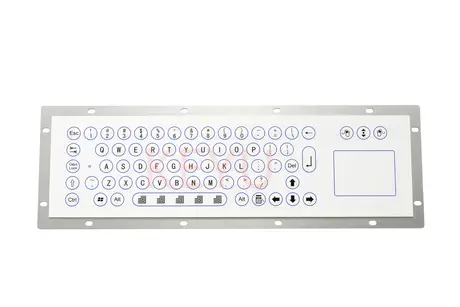
KY-UT385 Medical Membrane Keyboard With Touchpad
View Specification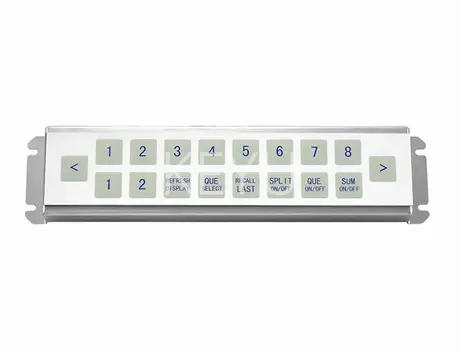
KY2060B Thin Panel Metal Membrane Keypad
View Specification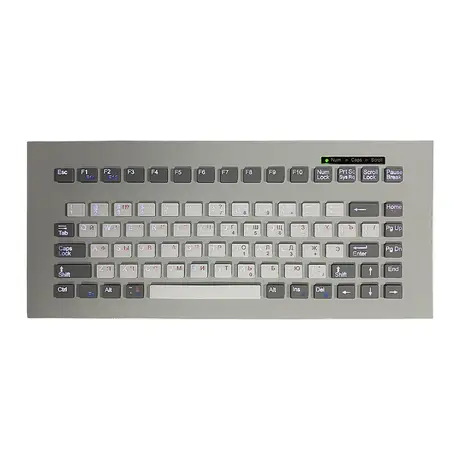
IP65 Waterproof Silicone Keyboard KY-GJ305
View Specification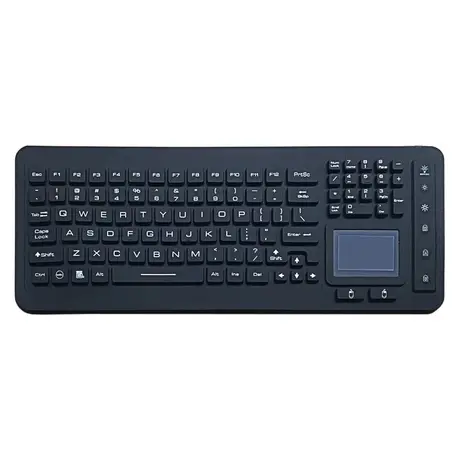
KY-GJ-98-BL Washable Silicone Keyboard With 98 Keys and Backlight
View SpecificationRelated Ranges
Questions On This Topic
Is a PC metal keyboard the same as an industrial keyboard?
What protection does a coal mine keyboard need?
Which keyboard type suits a food factory?
Can the key layout and legends be changed?
Put This Into A Specification
Send us the application and we will tell you which of these choices actually matter for your terminal.