
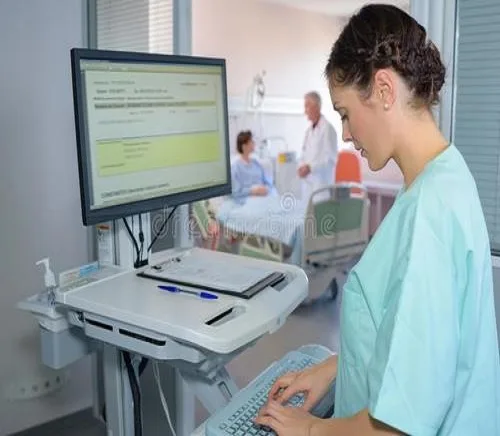
Cleanable Keyboards and Keypads for Medical Equipment
Clinical staff touch the same keyboard between patients, wearing gloves, often with wet hands, which turns the input device into part of the infection control chain.
What Goes Wrong On Site
- Gaps between conventional keycaps trap fluid and debris that no wipe-down can reach
- Disinfection routines that soak or flush the surface destroy any keyboard not sealed for it
- Gloved and wet hands slip on standard key surfaces, and mistyped entries in a patient record cost time to correct
- A dark keyboard hides contamination, so staff cannot see when the device actually needs attention
- Cleaning a keyboard while it is still connected risks stray keystrokes reaching the clinical application
What Buyers In This Sector Need
- A one-piece sealed surface with no cracks, so the device can be flushed and wiped with medicinal alcohol or hospital-grade disinfectant
- Operation with medical gloves and wet hands, with tactile or audible feedback to confirm each entry
- A light surface finish that makes soil visible, supporting the cleaning routine rather than hiding it
- A lock or key-disable function so the unit can be cleaned without being unplugged from the workstation
Typical Installations
- Ward and clinic workstations where records are entered between patients throughout a shift
- Mobile medical carts, where a compact keyboard has to travel from room to room and be cleaned at each stop
- Diagnostic and imaging equipment consoles built into a panel, using an embedded installation rather than a desktop unit
- Laboratory benches where the keyboard meets reagents and needs a resistant, washable surface
- Low-light environments such as imaging suites and night wards, where a backlit option keeps keys visible
- Equipment destined for several markets, where the key legends have to change language without changing the housing
How A Project Runs
Step
Tell us the device or workstation, the cleaning regime it must survive and whether the keyboard is desktop or panel-embedded
Step
We recommend a material, silicone, glass, membrane or metal, based on that regime and on the feel your users need
Step
Layout, language, touchpad or backlight options and the interface, USB or PS2, are fixed in a drawing for your approval
Step
A sample is built for your clinical and engineering review, including a trial of the actual disinfectant you use
Step
Production follows approval, with metal work carried out under our ISO 9001:2015 quality management system
Step
Layout files are held so later language variants reuse the same tooling and housing
Products Used In This Sector
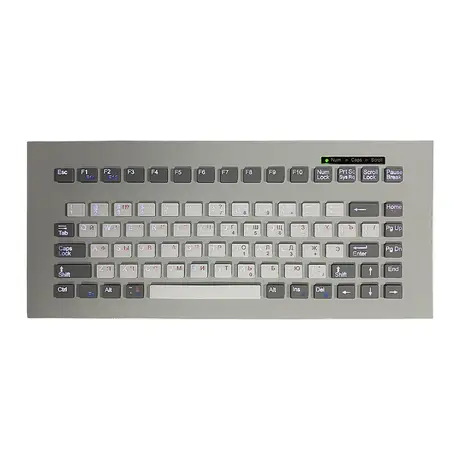
IP65 Waterproof Silicone Keyboard KY-GJ305
View Specification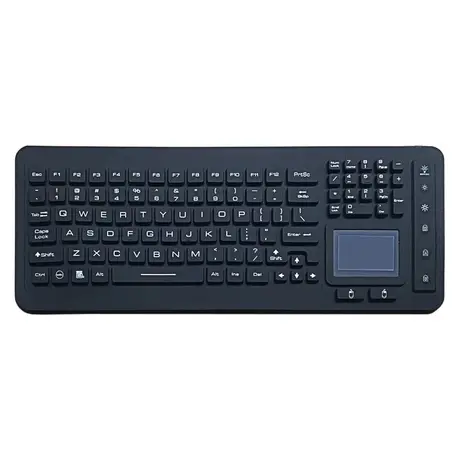
KY-GJ-98-BL Washable Silicone Keyboard With 98 Keys and Backlight
View Specification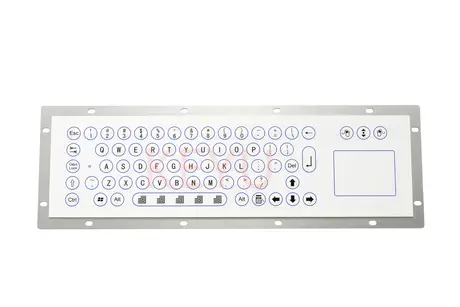
KY-UT385 Medical Membrane Keyboard With Touchpad
View Specification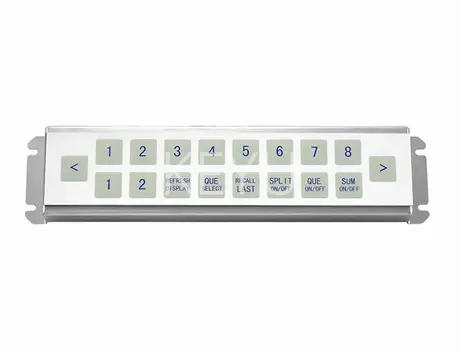
KY2060B Thin Panel Metal Membrane Keypad
View Specification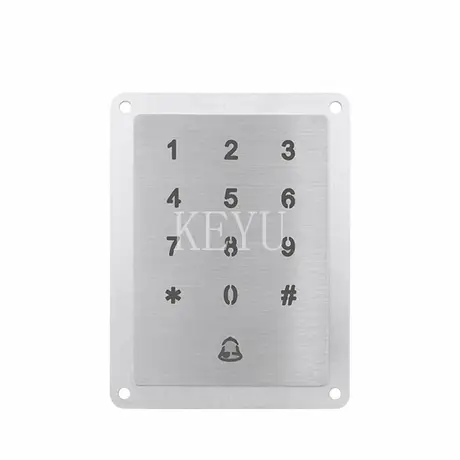
KY-2065A Infrared Touch Stainless Steel Keyboard With Backlight
View Specification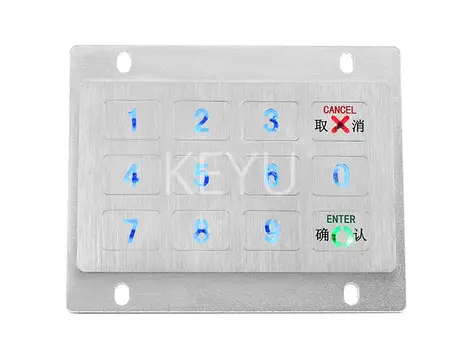
KY-2120GK Waterproof Touch Keyboard
View Specification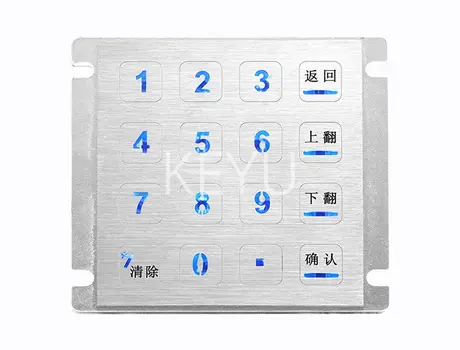
KY-3088GK Waterproof Touch Keypad
View Specification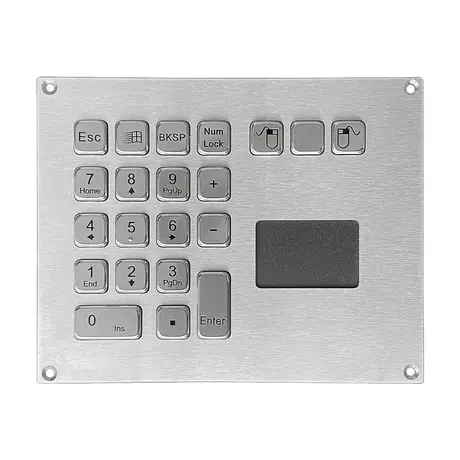
IP65 Mini Keyboard With Trackpad KY-PC-VG160T
View SpecificationProduct Ranges
What We Deliver
- Protection options on this range extend to IP68 washable and IP67 sealed surfaces, confirmed per model
- Silicone carbon or scissor switch technology, white or black housings, and desktop or embedded installation
- Plug and play USB or PS2 connection with optional touchpad and backlight, and language layouts customised on request
- OEM and ODM supply to medical equipment builders across our export markets
Medical Equipment Questions
Can the keyboard be disinfected without disconnecting it?
Which material should we choose, silicone or glass?
Will the keyboard work with gloves on?
What protection ratings are available for washable use?
Can we get the keyboard in our own language layout?
Specifying Input Devices For Medical Equipment
Send the panel cutout, the interface your controller expects and the environment the terminal sits in.