
Custom Keyboard Development for OEM and ODM Programmes
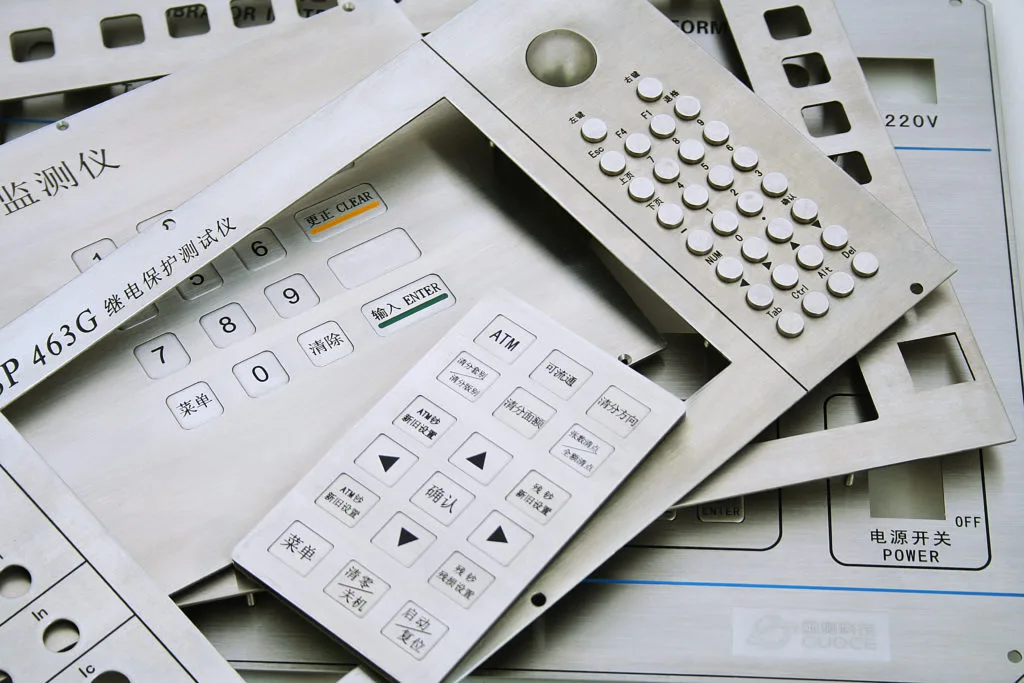
Most input-device programmes stall because the keyboard is treated as a catalogue part late in the machine design, then has to be forced into a panel cut-out that was fixed months earlier.
What This Covers
- Development and production from customer-supplied drawings, or full design from an agreed requirement brief
- Interface options covering USB HID, RS232, TTL, PS/2, RS485, IIC and matrix scanning ports
- Key counts including 12, 16, 20 and 24 key numeric layouts and 61, 83, 87, 104 and 107 key PC layouts, with other counts customised
- Construction choice between metal contact switch, membrane, conductive rubber and contactless electrostatic capacitance designs
- Function options for backlight, Braille legends, combination and specific function keys and explosion-proof design
- Desktop, embedded and panel-mounted stainless steel installation formats
Who This Is For
- OEM machine builders integrating an input device into a fixed panel cut-out
- Self-service terminal and kiosk developers needing a keypad matched to their enclosure
- System integrators replacing an obsolete keyboard on installed equipment
- Purchasing engineers sourcing a drawing-controlled part with a stable repeat supply
Stage By Stage
Each stage lists the problem it exists to prevent and how we handle it.
Enquiry and Communication of Needs
An enquiry that only says custom metal keyboard cannot be costed or scheduled, so the first reply is a list of questions and a week is lost.
Our first step is communication of needs against a fixed checklist: key count such as 16, 20 or 24, interface from USB, PS/2, RS232, RS485 or matrix, cable length, overall keyboard size, mounting as embedded or desktop, colour in stainless steel natural finish or black, whether backlight is needed and in which colour, whether key legends require Braille, and key format as flat or high. Answering that checklist once gives us enough to respond with a concrete direction rather than more questions.
Requirement Review
Buyers often specify a bespoke part when an existing product would fit, which adds development time and cost for no functional gain.
Before we quote development we review your answers against products we already build. Where a regular product meets the requirement we say so, because choosing one shortens delivery and saves cost. Customisation is proposed only where the interface, key layout, panel geometry or environmental duty genuinely rules the standard range out, and we state which of the two routes each requirement drives.
Design and Drawing
Panel cut-outs, fixing centres and cable exits are usually frozen in the host equipment before the keyboard exists, so a late dimensional mismatch means reworking the machine.
We work from drawings you supply, or we produce the design from the agreed requirement and issue it for your sign-off. Electrical scope is settled at the same time: USB HID, RS232, TTL, PS/2, RS485, IIC or matrix scanning output, plus combination keys and specific function keys. Working principle is chosen deliberately, since a metal contact switch, a membrane construction, conductive rubber contacts and a contactless electrostatic capacitance design behave differently on wear, noise and sealing.
Tooling and Moulds
A shape that exists only on a drawing can prove impractical or needlessly expensive to form once real tooling is costed.
KEYU holds over one thousand sets of moulds and runs CNC and sheet-metal equipment inside a wholly owned 4,500 square metre factory. Existing tooling is checked against your geometry first, and new tooling is raised only for features nothing on the shelf covers. Because forming happens in house rather than at a subcontractor, a tooling change found during development is handled by the same team that made the part.
Sampling
Approving a keyboard from renderings and a datasheet leaves key feel, legend legibility and panel fit unverified until production parts land.
Once requirements are confirmed and sample payment is arranged, we build samples to the agreed specification. Samples are produced and tested before despatch, so what reaches you has already run against the interface and function defined in the drawing package.
Sample Confirmation and Approval
Change requests raised informally after a sample arrives get lost, and the next sample repeats the same fault.
You receive the sample, test it in your own equipment and confirm it or raise a change request. Where changes are requested we repeat production and testing until the sample meets your requirement, and the confirmed sample becomes the reference for everything built afterwards.
Mass Production
Production units that drift from the approved sample force incoming inspection to argue about which unit is correct.
Mass production is released against the confirmed sample. Colour options such as stainless steel natural finish, black, gold plating and banknote spray, along with backlight, Braille and explosion-proof design features, are locked at that point so later batches repeat the approved build rather than a reinterpretation of it.
Quality Control and Certification
An input device that cannot show the approvals your market demands blocks the whole machine at import or at customer audit.
Products are built against the approvals named for our range: CE, RoHS, FCC, EMC, IP65, IP66 and IP67, IK07 and BIS. Sheet-metal processing runs under an ISO 9001:2015 quality management system. Tell us the destination market during requirement review and we will confirm which approvals apply to the configuration you are specifying.
Packing Shipping and After Sales
A keyboard that survives the factory but not the freight, or a repeat order that arrives different from the first, undoes the development work.
We ship to customers in China, South America, North America, Europe, Southeast Asia, Africa and the Middle East, and your drawings, tooling and approved sample stay on file with us for repeat orders and spares. Engineering contact after delivery goes to [email protected] or WhatsApp +86 15999525857.
Products This Applies To
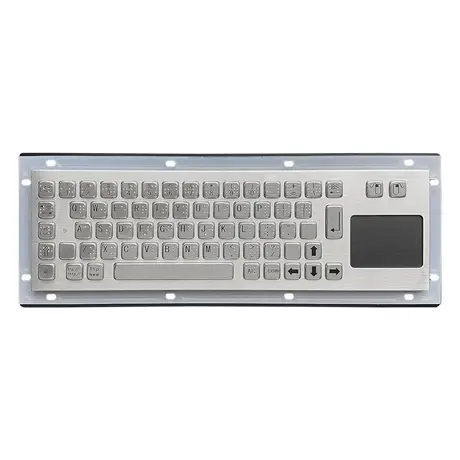
67 Key Metallic Keyboard With Braille KY-PC-NT3 BR
View Specification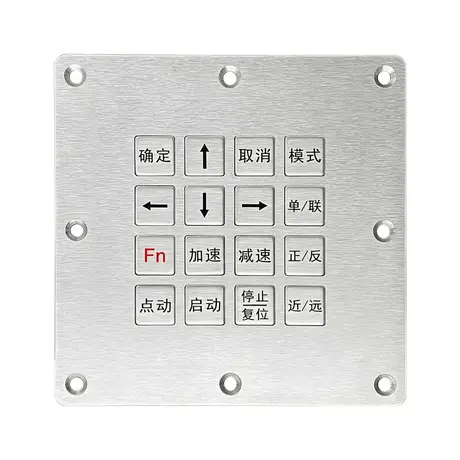
Industrial RS485 Keyboard With 16 Stainless Steel Keys
View Specification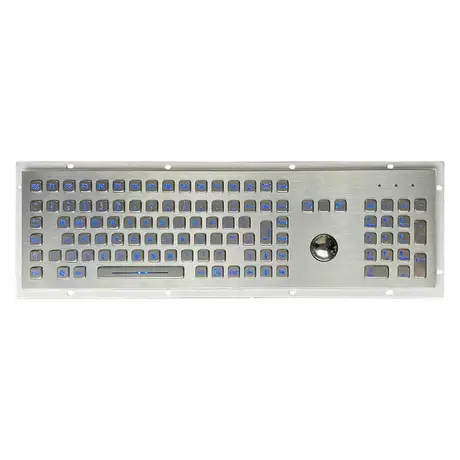
Metal Blue LED Backlit Keyboard With Trackball KY-PC-F3-LED
View Specification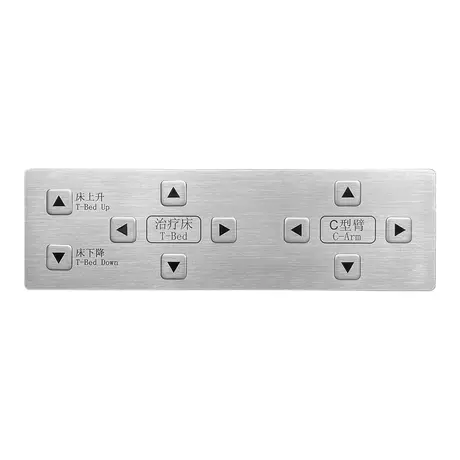
Custom Medical OEM Stainless Steel Keypad KY-2123
View Specification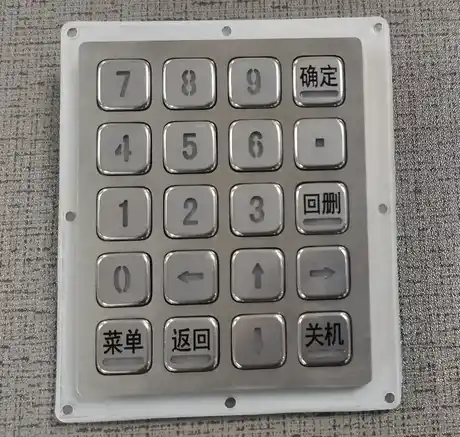
KY-55A02 20 Key Stainless Steel Side Keypad
View Specification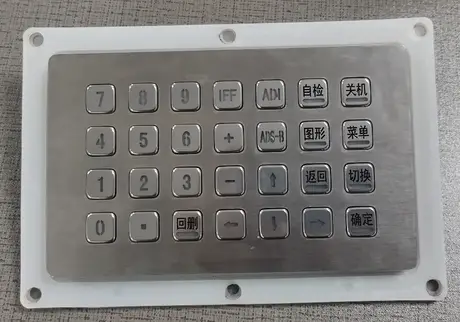
KY-55A01 28 Key Stainless Steel Side Keypad
View Specification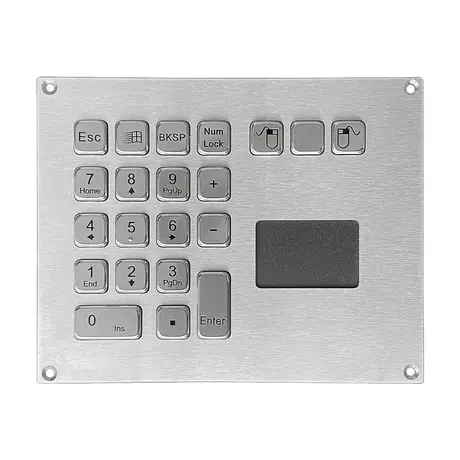
IP65 Mini Keyboard With Trackpad KY-PC-VG160T
View SpecificationCustom Keyboard Development Questions
Do you work from our drawings or do we have to use your designs?
What information do you need before you can respond to a custom enquiry?
Should we customise or choose a regular product?
What happens if the first sample is not right?
Which key counts can you build?
Custom Keyboard Development Starts With A Conversation
Send what you have — a sketch, a competitor part number, or just the key count and interface.