
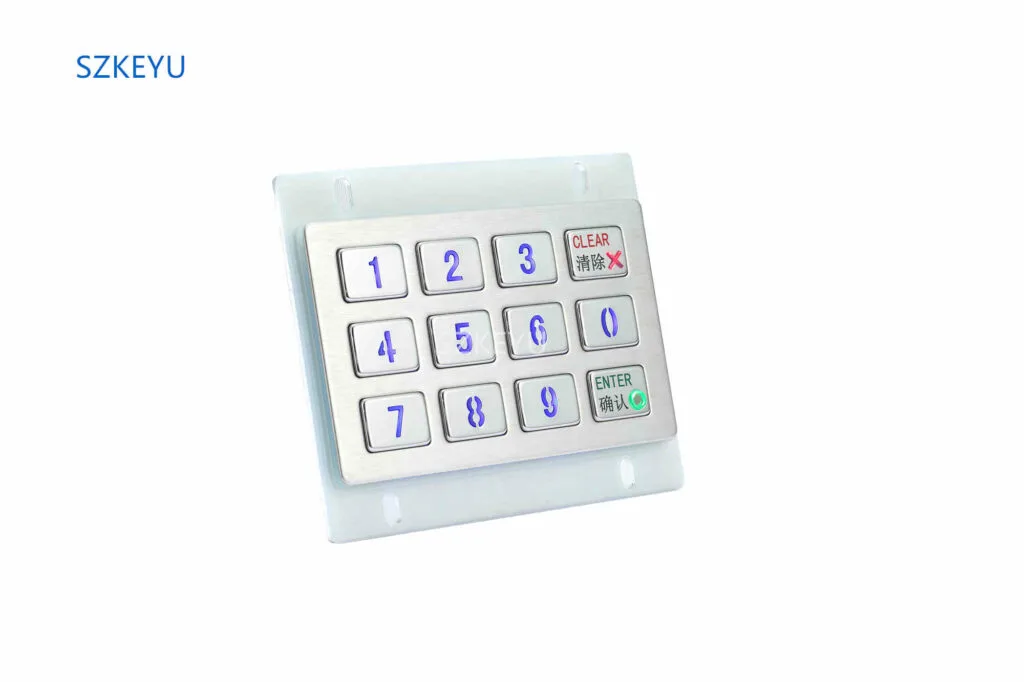
Encrypted Keypads for Payment and Access Control
Where a PIN is entered, the keypad is the point at which plain text exists and therefore the point an attacker goes for.
What This Covers
- Metal keypads and pin pads built for payment terminals and access-control equipment
- PIN entry layouts with encryption applied to the entered code inside the device
- Scrambled key arrangement options where sequence memorisation is part of the threat model
- Strong metal housings formed in house to resist physical attack at the fascia
- Custom key counts layouts legends and mounting formats matched to your terminal
- Construction suited to wide temperature and humidity ranges in unheated and outdoor sites
Who This Is For
- ATM CDM and ADM manufacturers and cash-handling equipment builders
- Self-service payment ticketing and parcel collection terminal developers
- Access-control integrators securing doors labs and data centres with PIN entry
- Public telephone and self-service information terminal suppliers
Stage By Stage
Each stage lists the problem it exists to prevent and how we handle it.
Enquiry and Security Requirement
Security requirements arrive as a single word like encrypted, which hides whether the issue is data protection in transit, resistance to physical tampering, or a scheme rule the acquirer imposes.
The opening discussion separates those threads. We establish what is being protected, which host system the keypad reports to, whether entry is PIN-based or card and fob based, and what the certification expectation is for the market the terminal will be deployed into, alongside the usual key count, interface, size and mounting questions.
Requirement Review and Keypad Type
Choosing a keypad type by habit rather than by risk means either paying for protection the site does not need or deploying a unit that is too weak for it.
We match the device type to the exposure. A PIN-based keypad encrypts the entered number and passes it to the access-control or payment system for verification, which suits ATMs and controlled doors. Where shoulder surfing and sequence memorisation are the risk, a scrambled arrangement that changes key positions between uses addresses it. We also tell you plainly where a requirement sits outside what we build, so you can place that scope correctly.
Design and Drawing
A secure keypad designed without reference to the terminal fascia creates gaps at the bezel that are exactly where a skimming overlay is fitted.
Keypad geometry, panel interface and mounting are drawn against your terminal fascia so the unit sits tight in its aperture. Interface, key layout, key format and legend method are fixed at the same point and issued for your approval as a single drawing package.
Tooling and Moulds
A housing that flexes or a fixing that can be levered undermines every logical protection behind it.
Housings are formed on in-house CNC and sheet-metal equipment from the mould library held at the Shenzhen factory, so a strong metal construction is produced rather than assembled from bought-in shells. Tooling stays under our control for the life of the part.
Sampling and Approval
Integration faults between a keypad and a payment controller surface at the worst possible time, during a scheme test with a deadline attached.
Samples are built and tested before despatch, then integrated and tested by your team against the actual host and the actual environment. Change requests are resolved with repeat samples until you confirm, and that confirmed unit defines the production build.
Mass Production
Silent changes to a security-relevant component invalidate approvals that were granted against a specific configuration.
Production follows the confirmed sample with construction and configuration held fixed, so units shipped later in a programme are the same device your approval evidence was generated against.
Quality Control and Environmental Verification
Payment terminals sit in drive-through lanes unheated lobbies and outdoor walls, where a keypad that only works at room temperature is no use.
Environmental duty is stated as part of the specification, and encrypted metal keypads of this class are built for wide operating and storage temperature ranges and high non-condensing humidity. Sealing and impact needs are met from the same range that carries CE, RoHS, FCC, EMC, IP65, IP66, IP67, IK07 and BIS approvals, with sheet-metal processing under ISO 9001:2015.
Packing Shipping and After Sales
A deployed fleet of terminals needs identical spares for years, not a similar part with a different footprint.
The approved sample, drawings and tooling remain on record so spares and follow-on batches reproduce the deployed configuration. Programme contact is [email protected] and Tel +86-755-26068009.
Products This Applies To
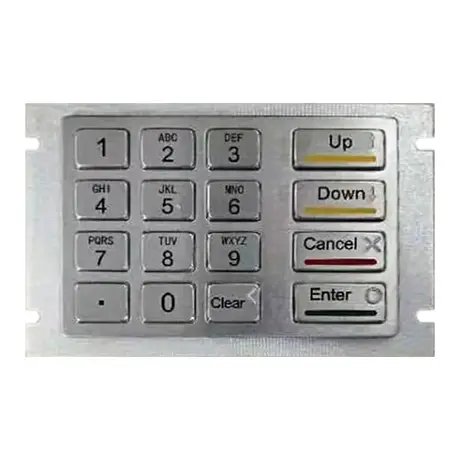
KY2145A IP65 Metal Encrypting PIN Pad
View Specification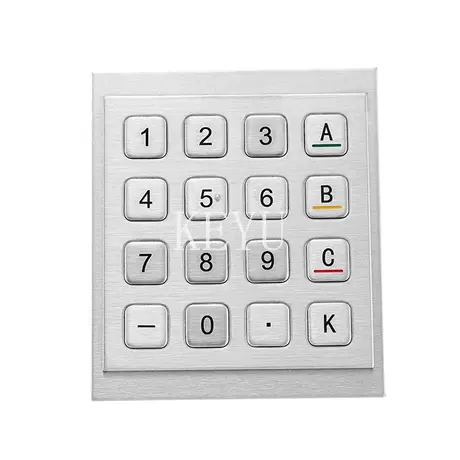
KY3088C 16 Keys Encrypting Metal Keypad
View Specification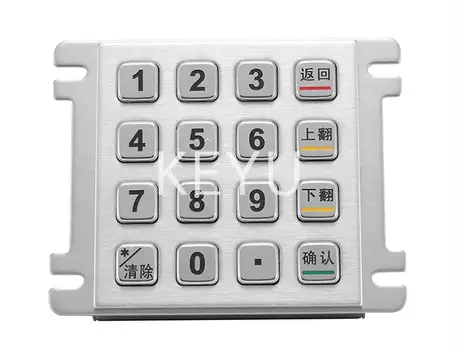
KY3088X Encrypting Pin Pad With Raised 1.5 mm Keys
View Specification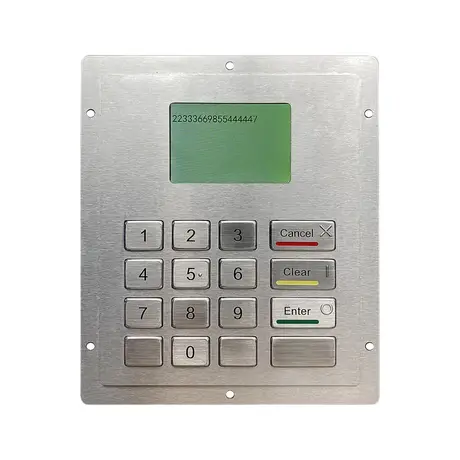
16 Key Industrial Locker Keypad With TFT Screen KY3688LP-F2
View Specification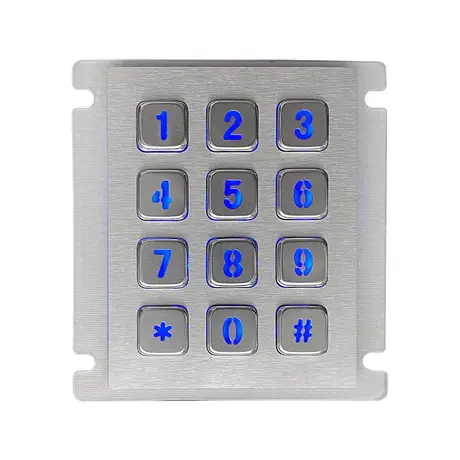
12 Key Industrial Backlight USB Keypad KY2068A-LED
View Specification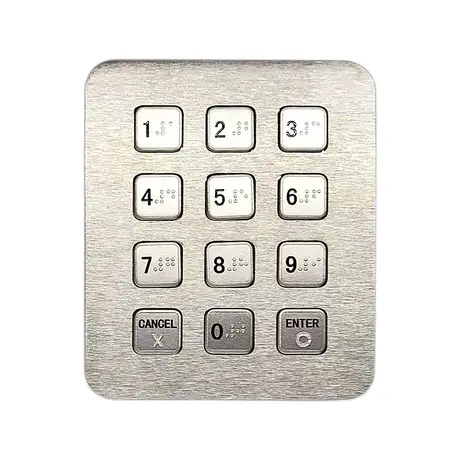
12 Key Industrial Numeric USB Keypad KY2073C-USB
View Specification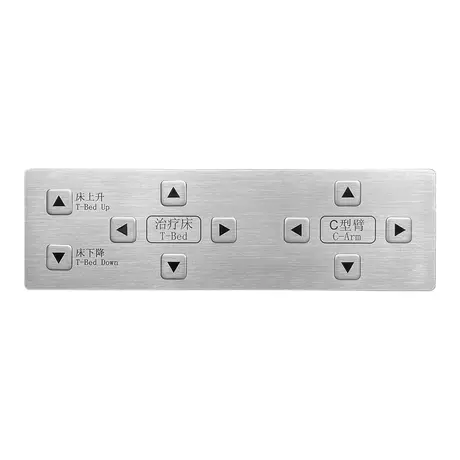
Custom Medical OEM Stainless Steel Keypad KY-2123
View Specification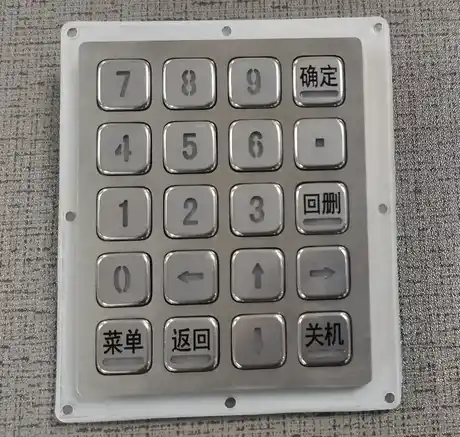
KY-55A02 20 Key Stainless Steel Side Keypad
View SpecificationSecure Payment and Encryption Questions
What is an encrypted keypad?
Why does the housing matter if the protection is logical?
What is a scrambled keypad and when would we need one?
Where are encrypted keypads typically deployed?
Can the layout and key count be changed for our terminal?
Secure Payment and Encryption Starts With A Conversation
Send what you have — a sketch, a competitor part number, or just the key count and interface.