Installation Guide
How to Wrap a Pallet With Ventilated Stretch Film
A repeatable wrapping sequence for hand rolls and turntable wrappers
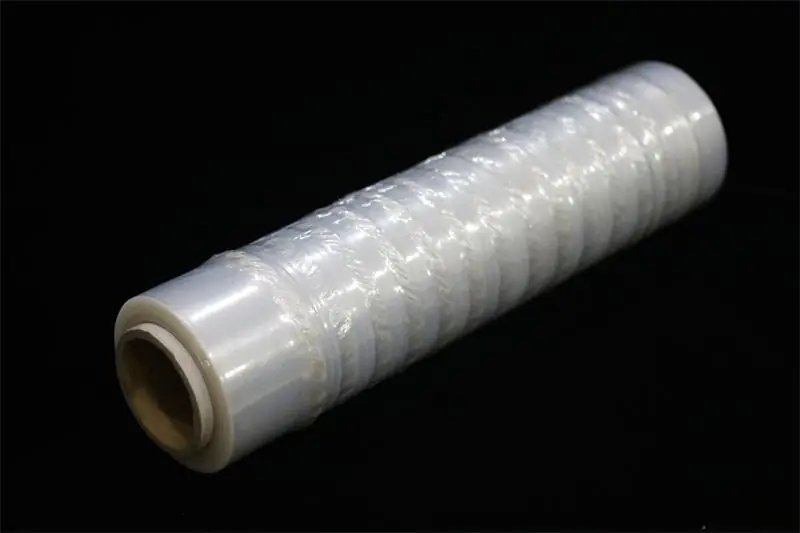
A repeatable wrapping sequence for hand rolls and turntable wrappers
Ventilated film is applied the same way as any stretch film. What changes is that you are setting tension on a web that also carries thirteen perforations per row, so the corner behaviour is worth watching more closely than usual.
Start below the film capability and raise the setting in steps, wrapping a pallet at each one. Watch the corners. When the web starts to neck in sharply or break at a corner you have passed what the load geometry allows, and the correct setting is one step back from there.
For JMSH01 the prestretch is up to 230 percent and elongation at break is 250 percent. The gap between those two numbers is your working margin, and it should not be spent.
JMSH02 arrives already elongated at 50 percent with an elongation at break of 55 percent. There is very little left to pull, so the wrapper should apply with light, steady tension. If the load will not hold at that tension, it needs a heavier grade or netting rather than more force on an 8 micron web.
Use a manual roll. At 440 m and 1.37 kg the prestretched grade is light enough to control through a shift. Keep the roll at a constant height as you walk, lean back slightly to hold tension, and do not try to generate tension by pulling with your arms, which produces uneven wraps.
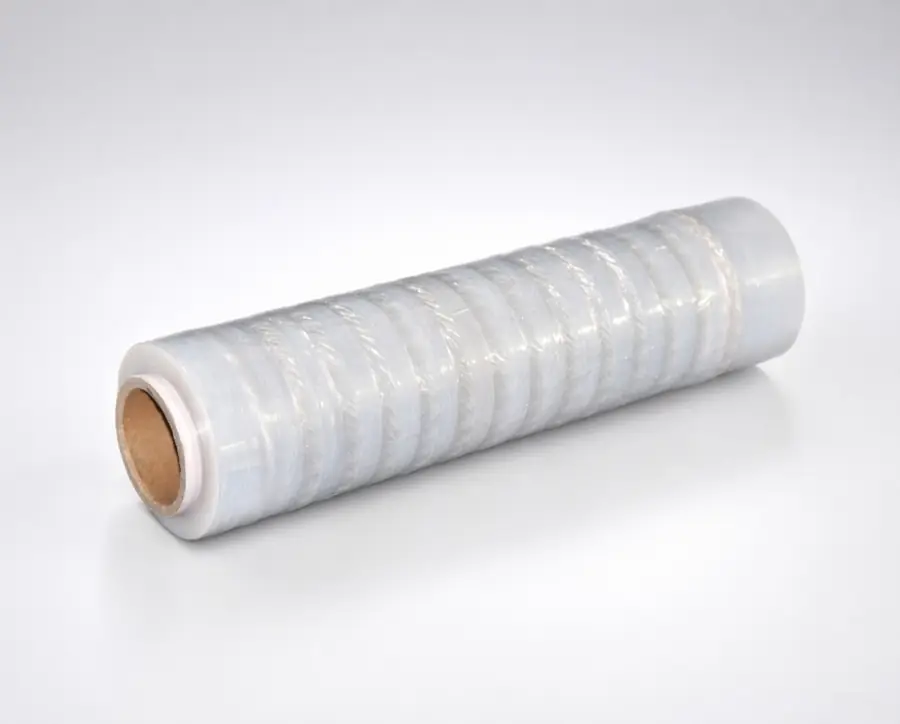
25 micron prestretchable perforated film for machine wrapping with 230 percent prestretch and high load holding force
View Product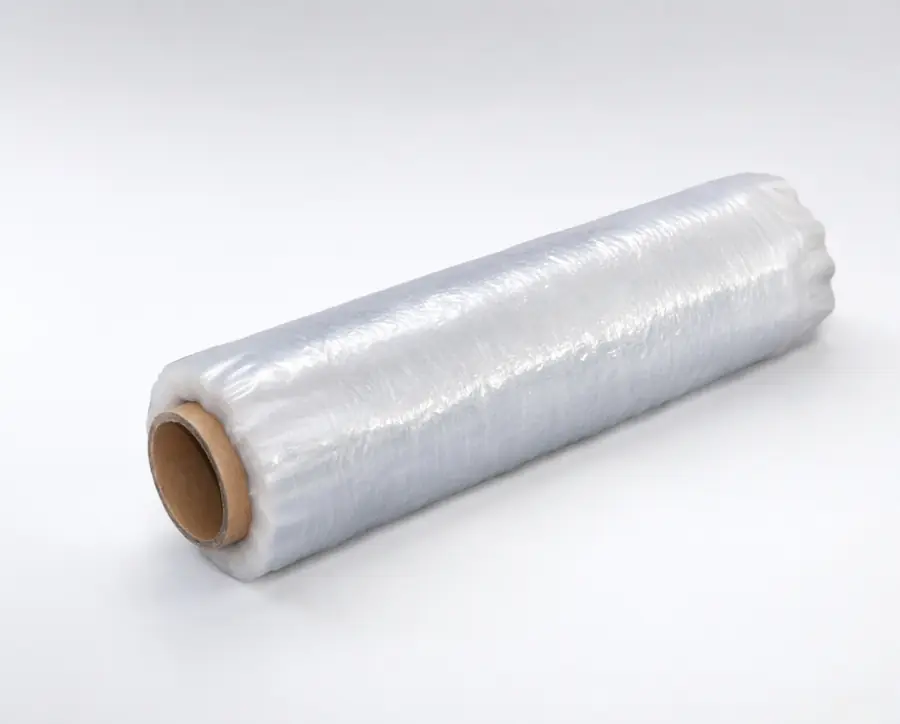
8 micron already prestretched perforated film for machine and hand wrapping with the lowest film weight per pallet
View Product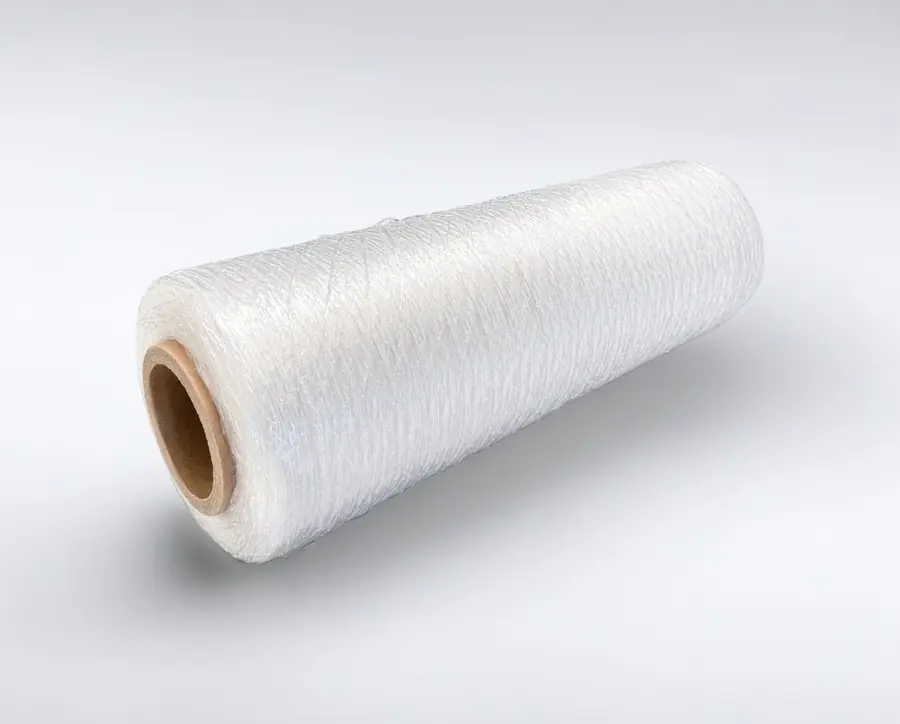
100 percent virgin HDPE knitted pallet net for open air containment of irregular and warm loads
View ProductIt depends on the load weight, load geometry and the film grade. Start with two base wraps, a climb and a return, then add passes only if a fork lift turn shows movement.
Corners. They apply the highest local strain, so a tension problem shows there first while the flat faces still look fine.
Load the roll so the web runs from the top of the roll and the perforation rows sit horizontally across the pallet face, which is how the film is wound.
A cut tail left loose will catch on conveyor rollers and pull the top wraps open. Tuck it into a lower layer instead.
Send the load details and a photo. We would rather look at your actual pallet than guess from a description.