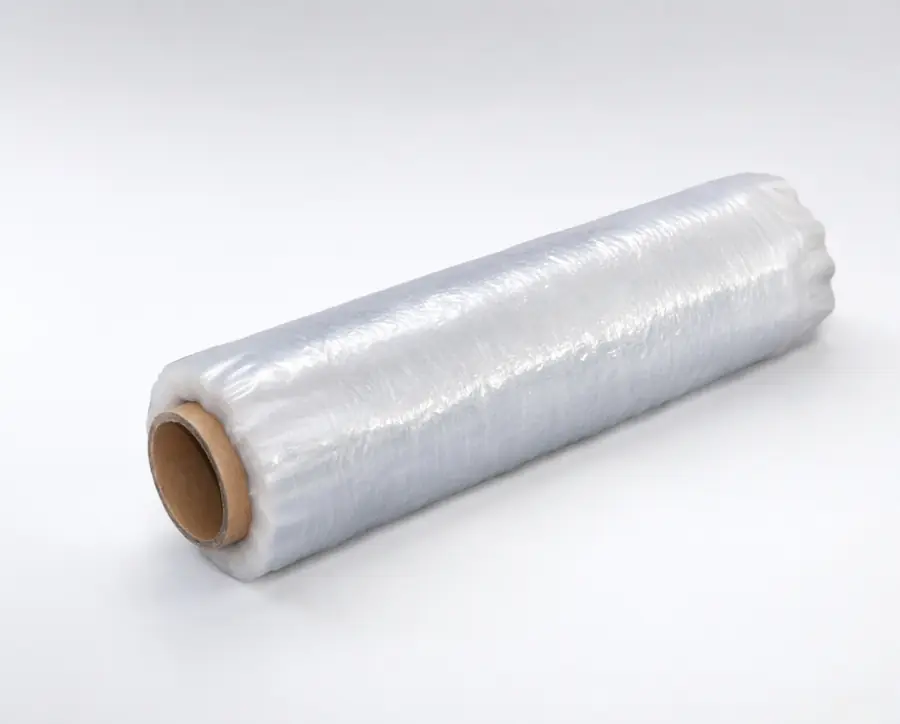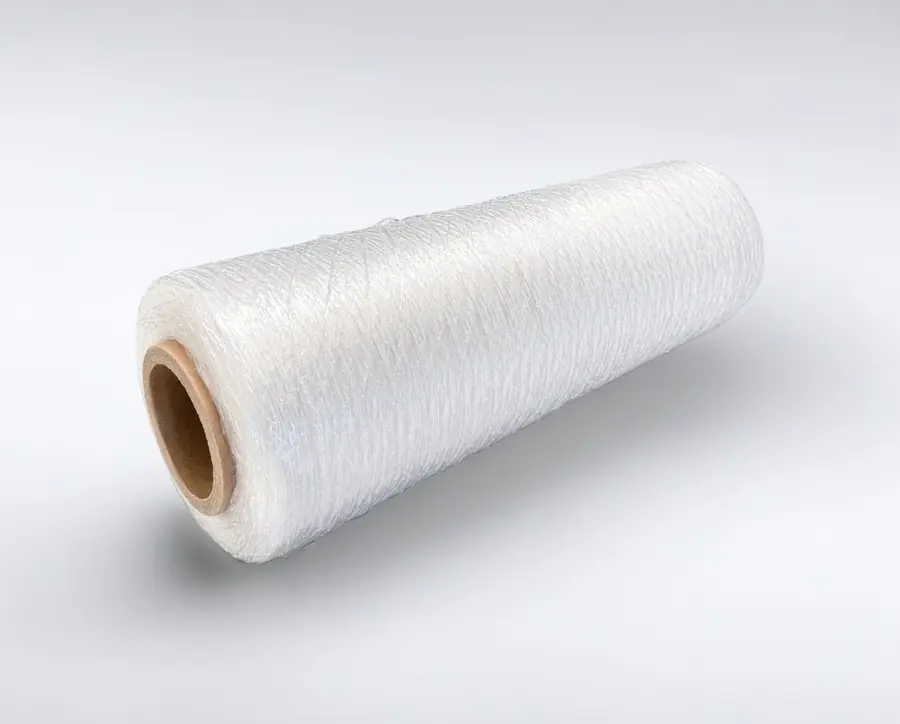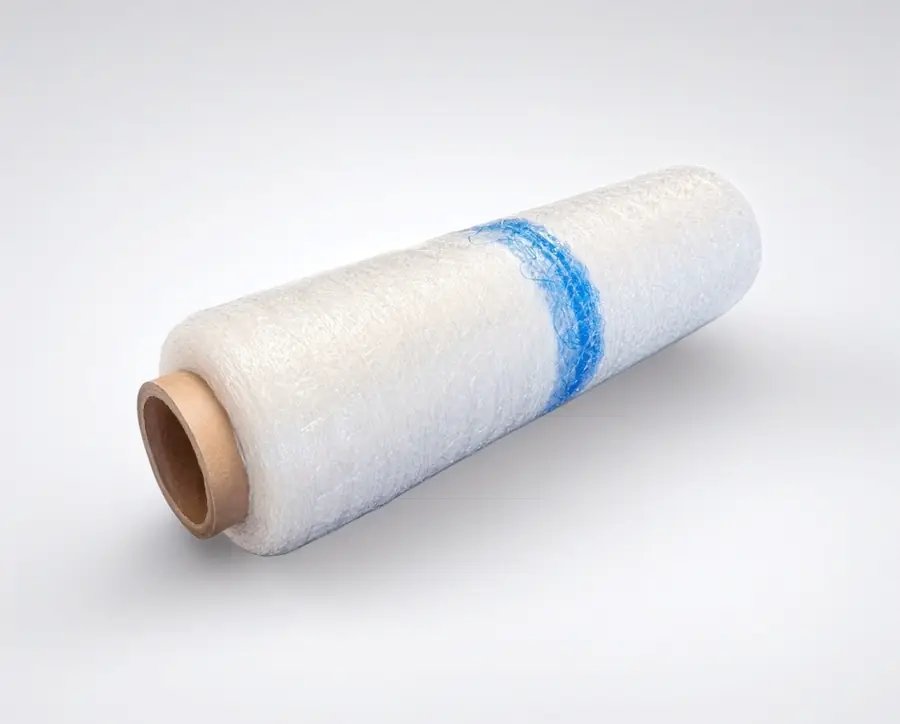
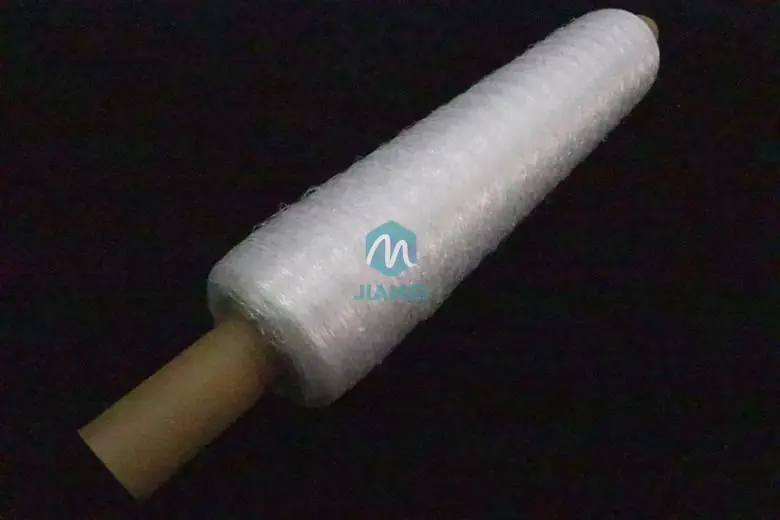
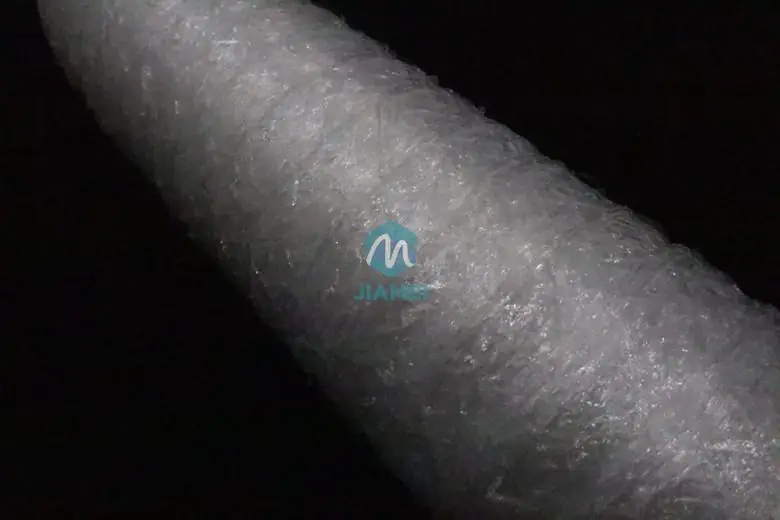
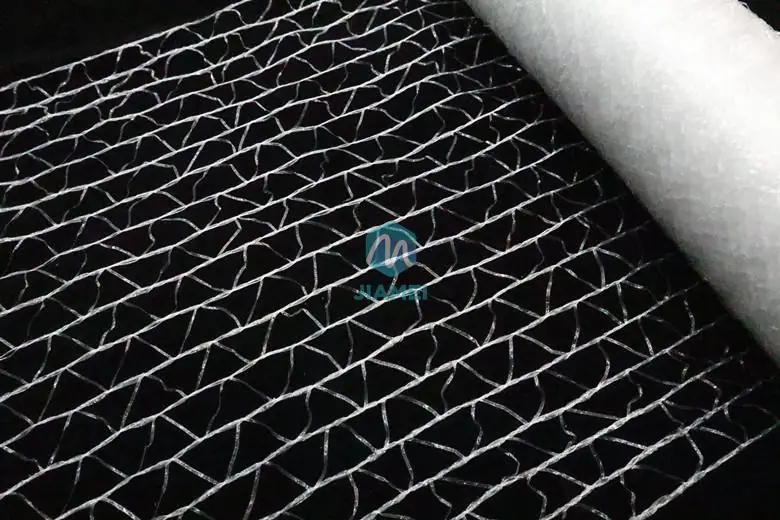
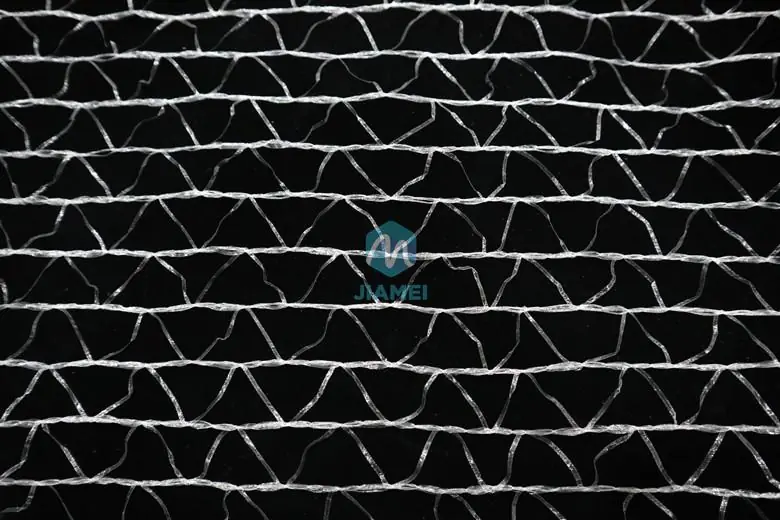


A stretchable knitted net in 100 percent virgin MPE with a stretch rate of 15 to 50 percent depending on load weight. It opens over the load, then pulls back in and keeps pulling as the pallet settles in transit.
Send your pallet size load weight and wrapper model and we will confirm the roll format that fits your line.
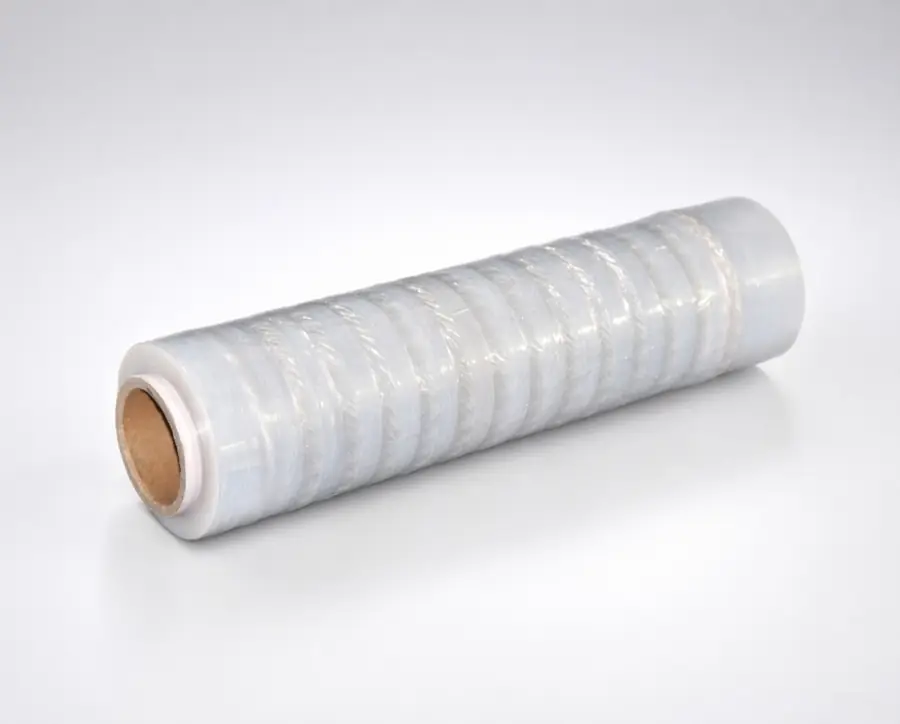
Elastic pallet netting is knitted from 100 percent virgin MPE and stretches 15 to 50 percent, with the actual figure determined by the weight of the load. That is the important part of the specification. A light load does not draw the net out far, so the net stays near its resting size. A heavy load pulls it further, and the recovery force goes up with it.
The practical effect is a wrap that keeps working. A rigid net is set at the tension you applied and stays there, so when the load settles a few millimetres the net goes slack. An elastic net follows the load down and stays in contact, which is what keeps irregular stacks from opening up over a long road or sea leg.
Manual and automatic use are both available. Manual rolls run 500 m to 1000 m and automatic rolls run 3000 m to 4000 m, in widths of 30, 50 and 76 cm, on a 3 inch or 2 inch inner core to your request.
Stretch of 15 to 50 percent means the net keeps pulling in when the pallet compresses in transit, instead of going slack the way a rigid net does.
Stretch rate is determined by weight, so a heavier load draws the net further and gets more holding force from the same product.
The mesh conforms around uneven case edges and stepped layers rather than bridging across them.
Like the standard grade, most of the covered surface is open mesh, so cooling and drying continue after wrapping.
30, 50 and 76 cm, manual rolls of 500 to 1000 m and automatic rolls of 3000 to 4000 m.
3 inch or 2 inch inner core diameter supplied to your request.
Elastic MPE netting is for loads that are not uniform, or that change shape between the wrapper and the delivery bay.
These are the failures an elastic net is bought to fix.
Different case sizes in one stack, where the net has to grip each step rather than bridge across the tallest carton.
Weeks of vibration settle a load. An elastic net follows it down and keeps contact.
Soft packs and sacks that lose height under their own weight, leaving a rigid wrap slack.
Uneven heights across the layer, with air and light still needed through the mesh.
Where containment must not come at the cost of the airflow the cooling process depends on.
Automatic rolls of 3000 m to 4000 m for lines that cannot stop for frequent changes.
The stretch rate is the specification that separates this net from the standard grade, and it is worth reading carefully.
| Material | 100% virgin MPE |
|---|---|
| Stretch rate | 15% to 50%, determined by weight |
| Roll widths | 30 cm / 50 cm / 76 cm |
| Inner core diameter | 3 inch or 2 inch to your request |
| Manual rolls | 500 m to 1000 m |
| Automatic rolls | 3000 m to 4000 m |
| Application | Manual and automatic wrapping are both available |
| Customisation | Netting can be customised to your request |
Pallet nets can be customised to your request. Manual and automatic use are both available. Stretch rate of 15 to 50 percent is determined by the weight of the load.
Elastic pallet netting is knitted from 100 percent virgin MPE. Metallocene polyethylene is chosen for its recovery behaviour, which is what allows the net to be drawn out over a load and then pull back around it.
The comparison to make is with the standard HDPE grade. HDPE stays where you put it, MPE keeps pulling. If your loads are uniform and stable, HDPE is usually enough. If they are mixed, compressible or travelling a long way, the elastic grade is what stops the wrap going slack.
Pallet netting is knitted rather than extruded as a sheet. Filaments are drawn from the resin and knitted into a mesh with a repeating diamond structure, which is what allows the net to open under tension and close around a load without tearing from a single point.
The knitted web is then wound to the metre length ordered onto a 3 inch or 2 inch core, labelled and packed for export from our factory in Ruian, close to Wenzhou airport and Ningbo port.
Netting is checked on the machine and on the roll. Knitting is inspected for dropped or broken filaments across the web, edge selvedges are checked so the net does not unravel when it is cut, and finished rolls are checked for winding tension and metre length before they are labelled.
On arrival, unwind about a metre and pull the mesh across the width by hand. The net should open evenly with no ladder running from a single broken filament. Confirm the core diameter matches your wrapper mandrel before the roll goes on the machine.
Jiamei has not published certificate scans on this website, so nothing is claimed here that we cannot show you. Before you place an order tell us the destination market and the goods the pallet carries, and our sales team will send the documentation that applies to that shipment, together with the material declaration for the resin used in your production run.
If your quality system needs a specific document to open a supplier file, ask for it during sampling rather than after shipment so the paperwork travels with the first order.
Pallet netting can be customised to your request. Width, roll length and core diameter are the three specifications that need to match your wrapper and your load.
Tell us the wrapper model and the pallet dimensions and we will confirm the format that runs on your line.
| Elastic MPE against standard HDPE | MPE stretches 15 to 50 percent depending on load weight and recovers around the goods. HDPE holds its shape at the tension applied. Choose MPE for irregular or settling loads, HDPE for regular loads. |
|---|---|
| Elastic netting against ventilated film | Netting gives a continuous open mesh and grips irregular case edges. Film gives a smoother surface, more dust protection and a tighter wrap on uniform cases. |
| Elastic netting against extra film passes | Adding passes of film to hold an irregular load uses more material for a wrap that still bridges across the steps. An elastic net conforms instead. |
| Manual rolls against automatic rolls | Manual rolls run 500 m to 1000 m, automatic rolls run 3000 m to 4000 m. Both are available in 30, 50 and 76 cm. |
Comparison based on the published specification for each Jiamei grade. Ask for samples of both nets to test on your own loads.
An elastic net wants to be applied with steady tension and allowed to recover, not pulled to its limit.
If the load is tall and light, add a rope band across the top corners rather than adding more full width passes. It uses less net for the same corner hold.
Because the stretch rate is determined by weight, a light pallet will not draw the net out as far as a heavy one. If a light load looks under wrapped, add a pass rather than pulling harder. If a heavy load is drawing the net close to its limit, move up a width so the same force is spread over more mesh.
Questions buyers ask before ordering Pallet Netting Elastic.
It is a range rather than a single figure because the stretch is determined by the weight of the load. A light pallet draws the net out toward the low end of the range and a heavy pallet toward the high end.
MPE is metallocene polyethylene. It is used for the elastic grade because it recovers after being drawn out, which is what lets the net pull back in around the load and stay in contact as the pallet settles.
Choose elastic for mixed case sizes, compressible goods, tall or irregular stacks, and long transport legs where the load settles. Choose standard HDPE for uniform, stable loads where you simply want the wrap to stay where you set it.
Widths of 30, 50 and 76 cm. Manual rolls of 500 m to 1000 m and automatic rolls of 3000 m to 4000 m. Manual and automatic use are both available.
3 inch or 2 inch inner core diameter, to your request. Tell us your wrapper mandrel and we will match it.
Yes. It is a knitted open mesh, so most of the covered surface is open. Airflow through the pallet is very close to the standard grade.
Yes. Manual and automatic use are both available, with automatic rolls running 3000 m to 4000 m.
Yes. Pallet nets can be customised to your request, including width, roll length and core diameter.

25 micron prestretchable perforated film for machine wrapping with 230 percent prestretch and high load holding force
View Product
8 micron already prestretched perforated film for machine and hand wrapping with the lowest film weight per pallet
View Product
100 percent virgin HDPE knitted pallet net for open air containment of irregular and warm loads
View ProductIrregular stacks are easier to solve when we can see them. Send a photo of the pallet on WhatsApp with the load weight and transport route and we will tell you which net and which width to try.