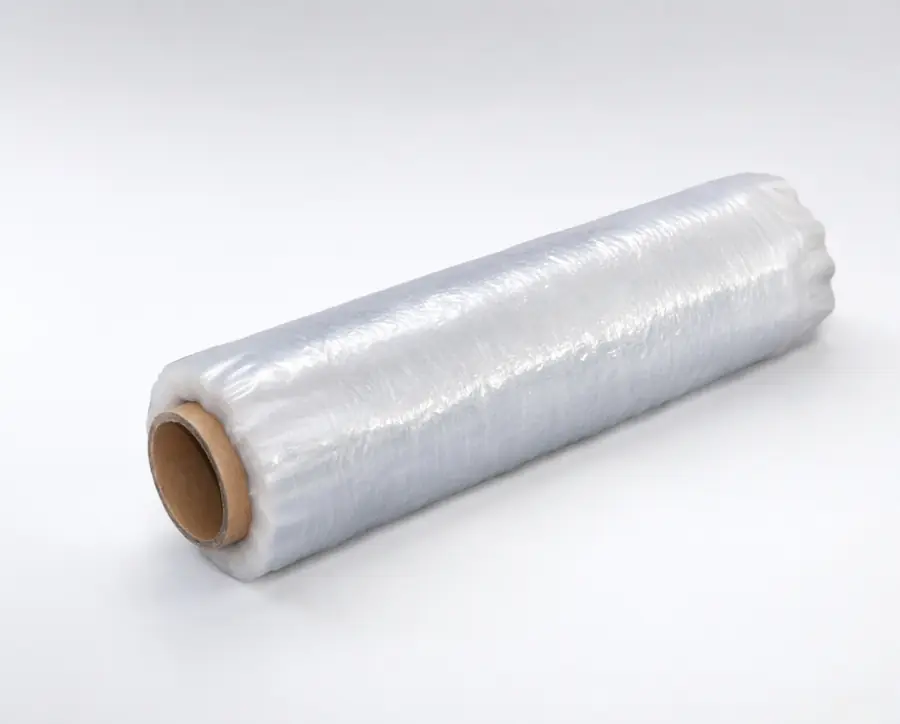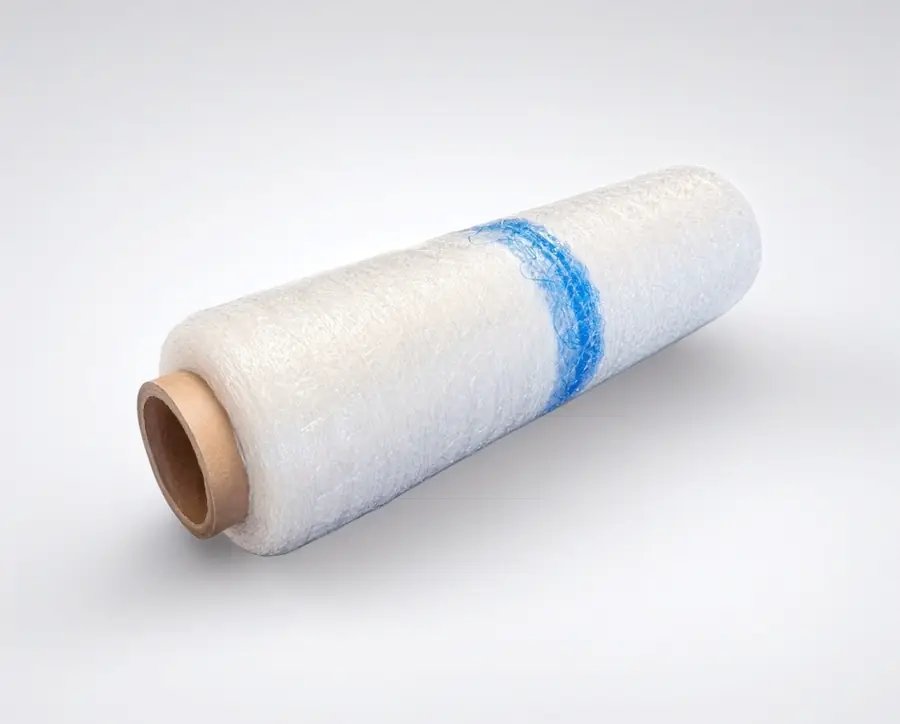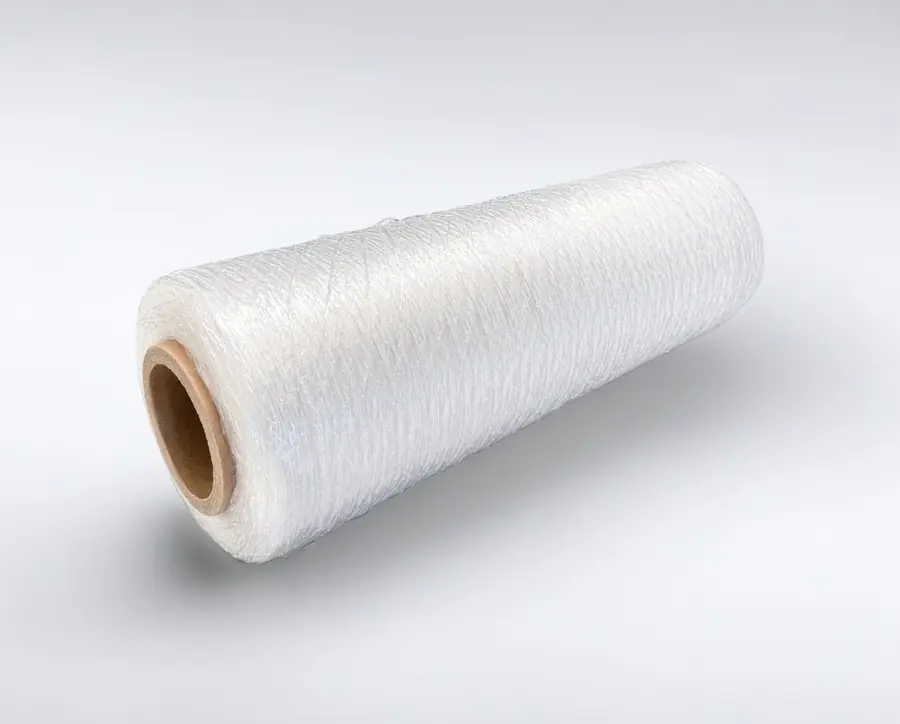
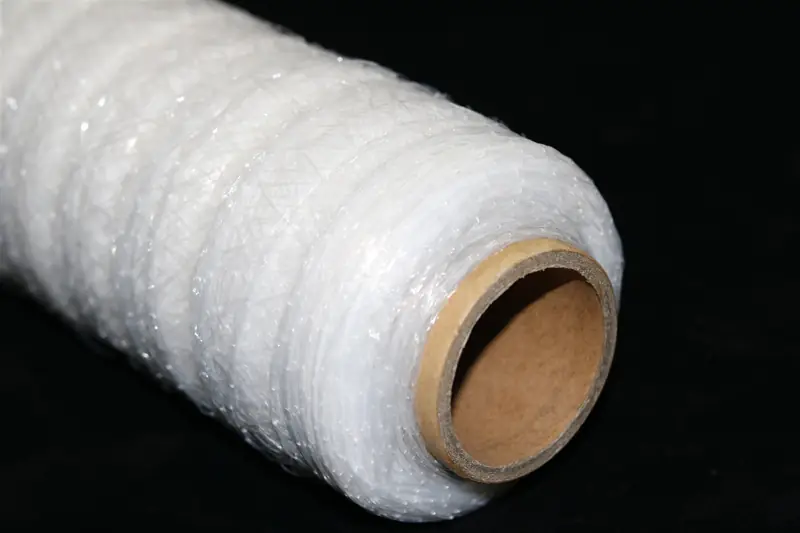
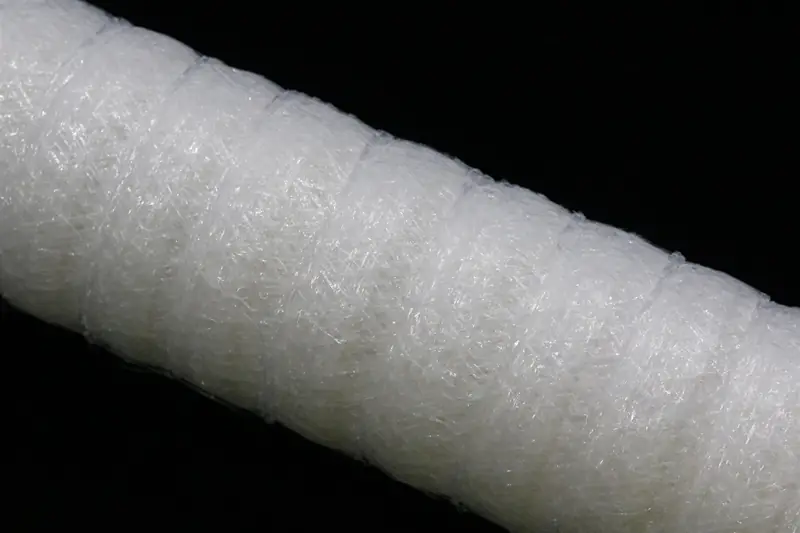
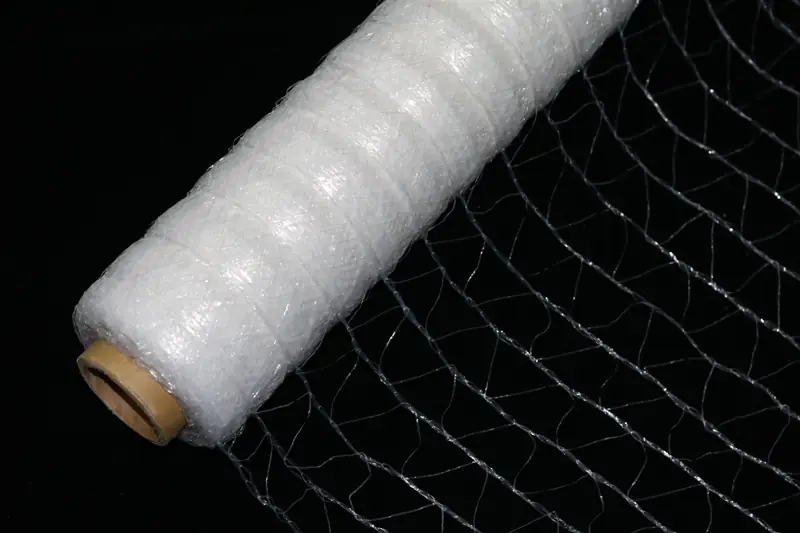
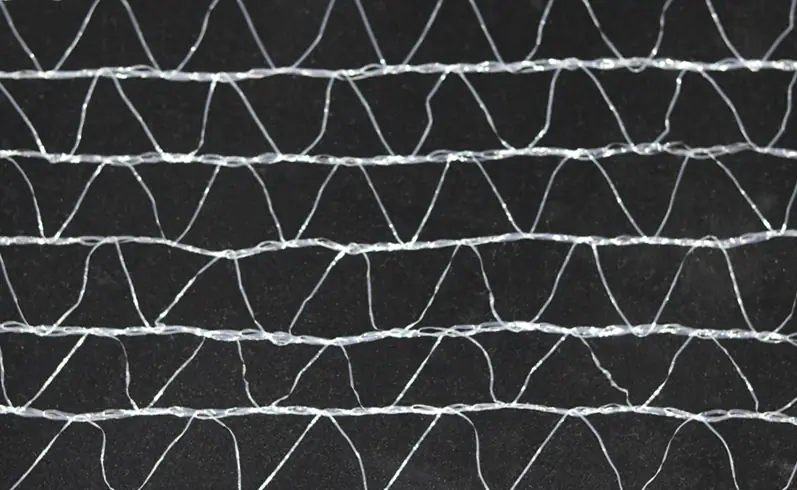


A knitted net in 100 percent virgin HDPE for loads that need containment and air at the same time. Supplied in 30, 50 and 76 cm widths on 2 or 3 inch cores, with manual rolls from 500 m and automatic rolls up to 4000 m.
Send your pallet size load weight and wrapper model and we will confirm the roll format that fits your line.
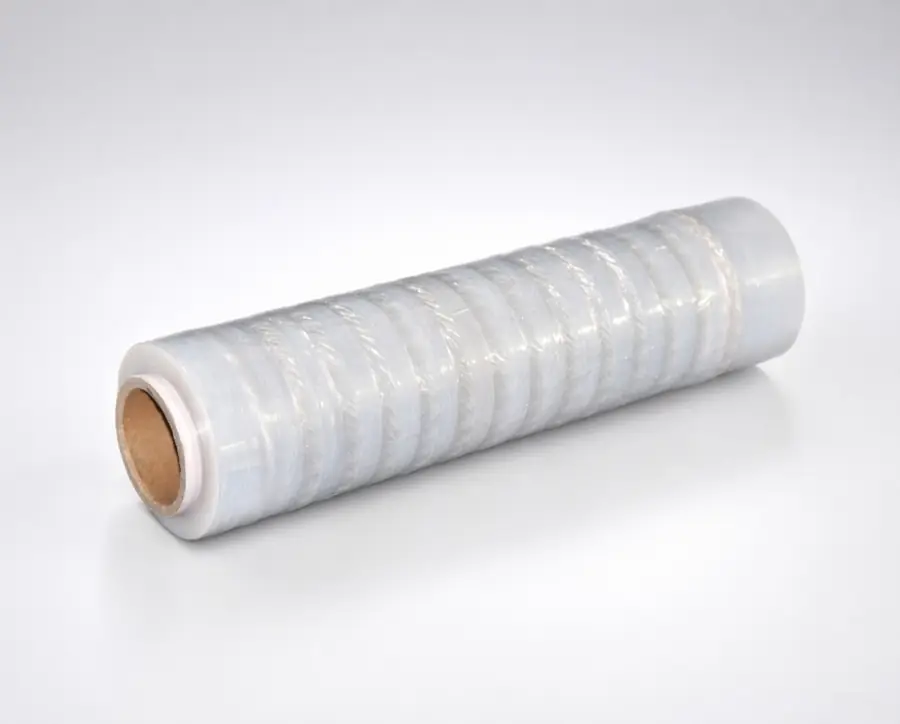
Pallet netting is knitted rather than cast as a sheet, so most of what covers the pallet is open space. That is the whole reason to use it. Where a perforated film gives you thirteen holes in a row, a net gives you a continuous open mesh, and air moves through the load almost as if it were not wrapped at all.
The standard grade is made from 100 percent virgin HDPE. HDPE holds its shape under tension rather than springing back, so the net stays where you put it and resists cutting into corners. It is the grade to use when the job is to contain a load and keep it ventilated, rather than to squeeze it.
Manual and automatic use are both available. Manual rolls run 500 m to 1000 m and automatic rolls run 3000 m to 4000 m, in widths of 30, 50 and 76 cm, on a 3 inch or 2 inch inner core to your request.
An open knitted mesh leaves far more of the load exposed to moving air than any perforated film can, which matters most on warm or wet goods.
HDPE does not recover the way an elastic net does. Once the net is applied it stays at the tension you set, which suits regular loads and stacked crates.
30 cm for banding and top holds, 50 cm for general containment, 76 cm for covering a tall load in fewer passes.
Rolls of 3000 m to 4000 m for machine application mean the wrapper runs a long time between changes.
3 inch or 2 inch inner core diameter to your request, so the roll goes on your existing mandrel.
A net puts a fraction of the material on the pallet that a solid film does, because most of the covered area is nothing at all.
Standard HDPE netting suits loads where the priority is airflow and containment rather than a sealed surface.
Netting is usually specified after a film wrap has failed at one of these points.
Produce wrapped before or during cooling, where the net barely interferes with the airflow the cooler is designed around.
Plants that need air and light in transit and cannot be enclosed in a sealed film for a multi day journey.
Stacked crates that need to be held together but would be crushed by a tightly applied film.
Beverage and food packs that leave the line above ambient and need to shed heat on the pallet.
Where a receiving warehouse needs to count or inspect the load without cutting the wrap open.
Manual rolls of 500 m to 1000 m for pallets wrapped away from the machine.
Netting is specified by material, width, core and roll length. Those four numbers decide whether it runs on your line and holds your load.
| Material | 100% virgin HDPE |
|---|---|
| Roll widths | 30 cm / 50 cm / 76 cm |
| Inner core diameter | 3 inch or 2 inch to your request |
| Manual rolls | 500 m to 1000 m |
| Automatic rolls | 3000 m to 4000 m |
| Application | Manual and automatic wrapping are both available |
| Customisation | Netting can be customised to your request |
Pallet nets can be customised to your request. Manual and automatic use are both available.
Standard pallet netting is knitted from 100 percent virgin HDPE. High density polyethylene is stiffer than the MPE used in the elastic grade, so it holds tension rather than springing back around the load.
Use HDPE when the load is reasonably regular and you want it held in place. Use the elastic MPE grade when the load is irregular, when it settles in transit, or when you want the net to keep pulling in as the pallet moves.
Pallet netting is knitted rather than extruded as a sheet. Filaments are drawn from the resin and knitted into a mesh with a repeating diamond structure, which is what allows the net to open under tension and close around a load without tearing from a single point.
The knitted web is then wound to the metre length ordered onto a 3 inch or 2 inch core, labelled and packed for export from our factory in Ruian, close to Wenzhou airport and Ningbo port.
Netting is checked on the machine and on the roll. Knitting is inspected for dropped or broken filaments across the web, edge selvedges are checked so the net does not unravel when it is cut, and finished rolls are checked for winding tension and metre length before they are labelled.
On arrival, unwind about a metre and pull the mesh across the width by hand. The net should open evenly with no ladder running from a single broken filament. Confirm the core diameter matches your wrapper mandrel before the roll goes on the machine.
Jiamei has not published certificate scans on this website, so nothing is claimed here that we cannot show you. Before you place an order tell us the destination market and the goods the pallet carries, and our sales team will send the documentation that applies to that shipment, together with the material declaration for the resin used in your production run.
If your quality system needs a specific document to open a supplier file, ask for it during sampling rather than after shipment so the paperwork travels with the first order.
Pallet netting can be customised to your request. Width, roll length and core diameter are the three specifications that need to match your wrapper and your load.
Tell us the wrapper model and the pallet dimensions and we will confirm the format that runs on your line.
| Standard HDPE against elastic MPE | HDPE holds its shape and stays at the tension you apply. MPE stretches 15 to 50 percent depending on weight and recovers around the load. Choose HDPE for regular loads, MPE for irregular or settling loads. |
|---|---|
| Netting against ventilated stretch film | Netting has far more open area and is better on very warm, wet or irregular loads. Film gives a smoother surface, more protection from dust and handling, and a tighter wrap on regular case loads. |
| Netting against solid stretch film | A solid film seals the pallet completely. Netting is the opposite approach, containment with almost no barrier, for goods that must not be sealed. |
| Manual rolls against automatic rolls | Manual rolls run 500 m to 1000 m for hand application. Automatic rolls run 3000 m to 4000 m for machine application. Both are available in all three widths. |
Comparison based on the published specification for each Jiamei grade. Ask for samples of both nets if you want to test them on your own load.
Netting is applied differently from film, because the mesh has to sit flat to do its job.
If the load is tall and light, add a rope band across the top corners rather than adding more full width passes. It uses less net for the same corner hold.
If you are switching from film to net, expect to use a different number of passes. A net at 76 cm covers a tall load in fewer wraps than a 500 mm film web, so start with fewer passes and add one at a time until the load holds through a fork lift turn.
Questions buyers ask before ordering Pallet Netting Standard.
100 percent virgin HDPE. Virgin resin is specified because knit consistency and filament strength across a long roll are what keep the net from laddering under tension.
30 cm, 50 cm and 76 cm. Narrow widths suit banding and top holds, the widest covers a tall load in fewer passes.
3 inch or 2 inch inner core diameter, supplied to your request. Confirm your wrapper mandrel and we will match it.
Manual rolls run 500 m to 1000 m and automatic rolls run 3000 m to 4000 m. Manual and automatic use are both available.
Standard HDPE holds its shape at the tension you apply, which suits regular loads. Elastic MPE stretches 15 to 50 percent depending on load weight and recovers around the goods, which suits irregular loads and loads that settle in transit.
It depends on the load. Netting is better where airflow matters most and where the goods are irregular. Film is better where you want a smoother surface, dust protection and a tight wrap on regular cases. Many sites use both for different products.
Yes. Pallet nets can be customised to your request, including width, roll length and core diameter.
For irregular and open loads it often holds better, because the mesh grips case edges instead of sliding across them. For heavy regular loads that need high containment force, look at the 25 micron JMSH01 film.

25 micron prestretchable perforated film for machine wrapping with 230 percent prestretch and high load holding force
View Product
8 micron already prestretched perforated film for machine and hand wrapping with the lowest film weight per pallet
View Product
100 percent virgin MPE stretchable pallet net that recovers around the load and holds tension through transport
View ProductWidth, core diameter and roll length all have to match your equipment. Send the wrapper model, the pallet dimensions and the load height and we will confirm the netting format to order.