Solution
Condensation Control
Condensation is not a film defect. It is water that had nowhere to go. The packaging decision that fixes it is whether the wrap is open or closed.
Condensation is not a film defect. It is water that had nowhere to go. The packaging decision that fixes it is whether the wrap is open or closed.
Air holds a certain amount of water vapour depending on its temperature. Warm air holds more. When a pallet is wrapped while its goods are still warm, the air inside the wrap is warm and carries vapour with it. As soon as that air touches a cooler surface it drops below its dew point and the vapour becomes liquid water.
Under a solid film the coolest surface available is usually the inside of the film itself, or the outer cartons nearest to it. That is why condensation shows up as a wet film face and soft outer cartons rather than evenly across the pallet.
The instinct when a pallet arrives damp is to wrap it tighter or add passes. That closes the last routes the vapour had. The pallet does not stop producing moisture, it just loses the last way of getting rid of it.
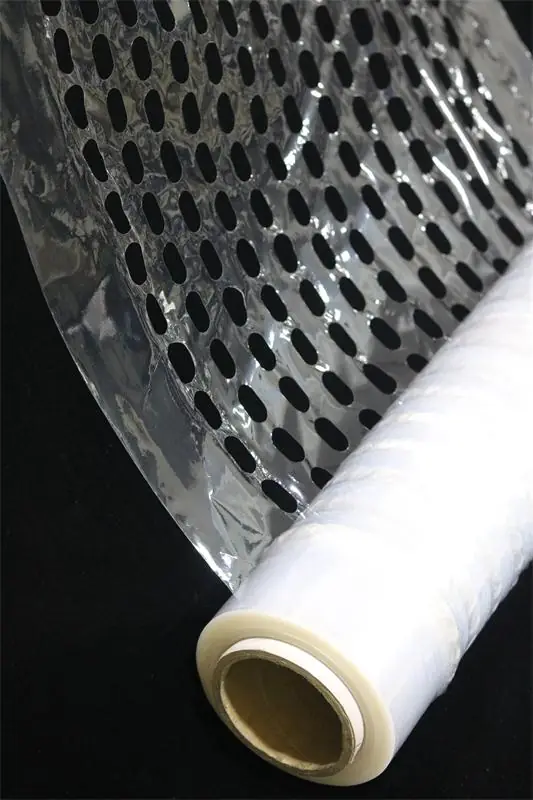
Ventilated stretch film carries thirteen perforations in every row, formed within the film web. Pallet netting goes further and leaves a continuous open mesh. In both cases warm moist air can leave the pallet instead of condensing inside it, and any water that does form has a route to evaporate.
Film gives a smoother surface and more protection against dust and handling marks, with thirteen open holes in every row. Netting gives far more open area but leaves the load exposed. Warmer and wetter loads generally point toward netting, drier and more regular loads toward film.
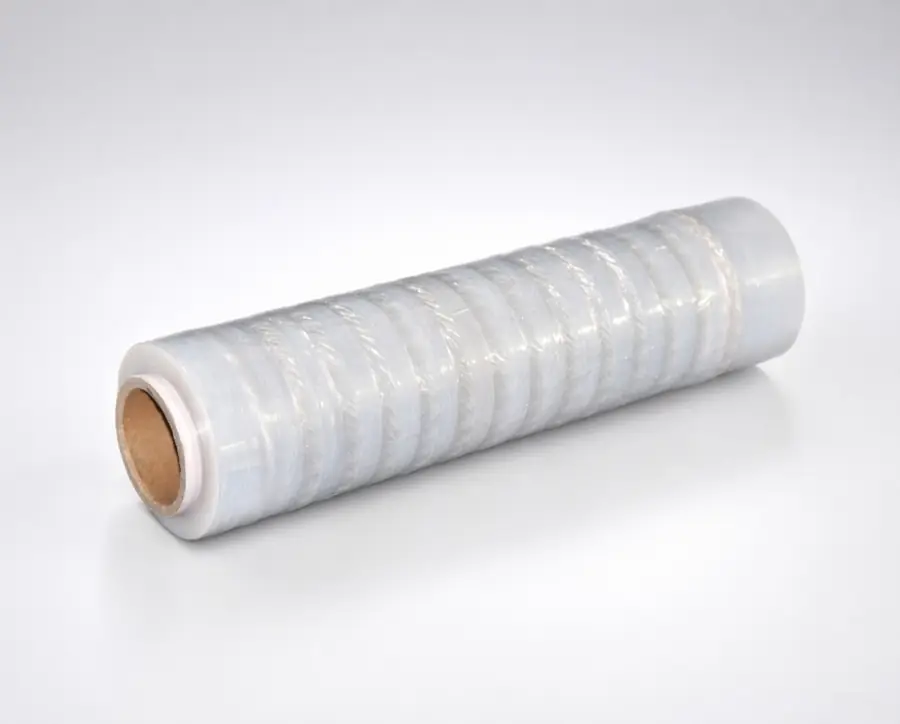
25 micron prestretchable perforated film for machine wrapping with 230 percent prestretch and high load holding force
View Product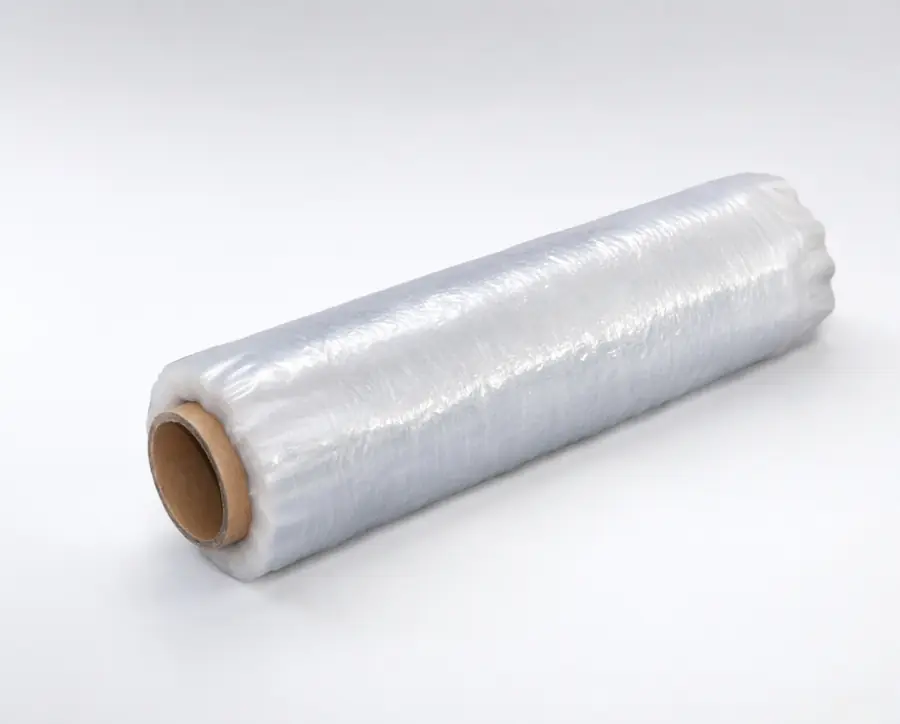
8 micron already prestretched perforated film for machine and hand wrapping with the lowest film weight per pallet
View Product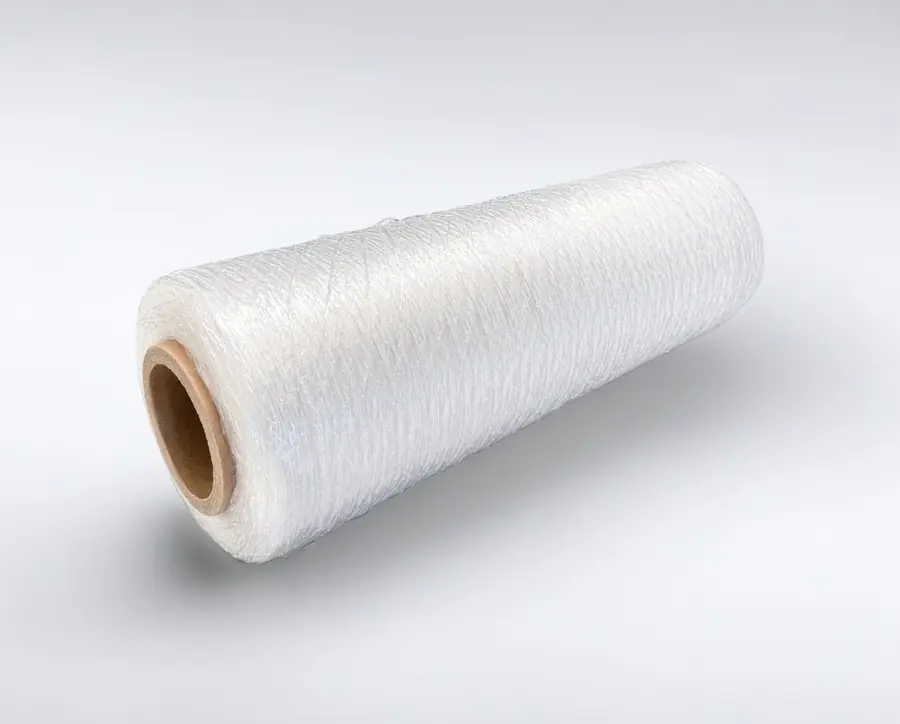
100 percent virgin HDPE knitted pallet net for open air containment of irregular and warm loads
View ProductAir moves both ways through a perforated wrap, which is the point. The pallet is not being sealed against the world, it is being kept from trapping its own moisture. In practice a load that can dry stays drier than a load sealed while wet.
No. Any pallet that changes temperature can produce it, including ambient goods wrapped warm off a line or export loads crossing climate zones.
Netting has the largest open area and suits the warmest and wettest loads. Film suits loads that also need a smoother, more protected surface.
Compare the same product on the same route with the two wraps and inspect at goods inwards. One shipment each is usually enough to see it.
Load type, pallet size, weight, wrapper model and the temperature goods are wrapped at. A photo helps if the load is irregular.