Product Guide
How to Read a Stretch Film Data Sheet
Prestretch elongation at break tensile stress and weight per metre in plain language
Prestretch elongation at break tensile stress and weight per metre in plain language
A stretch film data sheet is a short document, and every line on it changes something on your wrapping line. Here is what each one is telling you.
How much film is on the roll and how wide the web is. Together they give you the area on the roll, which is where any cost per pallet calculation starts. Width also decides how many passes it takes to cover a load height.
Measured before stretching. The applied film on a pallet is thinner than the sheet figure because it has been elongated. This is why comparing two films on thickness alone is misleading if one is prestretched and the other is not.
How far the film is elongated. On a prestretchable grade this happens on your wrapper, so it is a machine setting. On a prestretched grade it happens in production, so the film arrives at its final dimensions. A prestretch figure of 230 percent means one metre of film covers far more than one metre of pallet face.
The point at which the film fails. The relationship between this and the prestretch figure is the most useful thing on the sheet. JMSH01 is prestretched to 230 percent with a break at 250 percent, a working margin. JMSH02 is prestretched to 50 percent with a break at 55 percent, a much narrower margin because most of the stretch has already been used.
The pulling force the web takes before it parts, quoted in kilograms. This is the number that most closely tracks how heavy and irregular a load the film will hold. JMSH01 is 26 kg. JMSH02 is 15 kg.
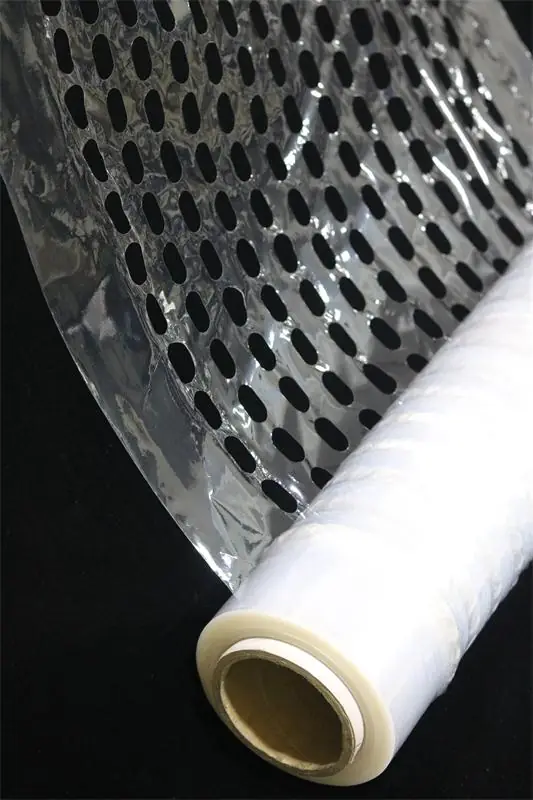
On a ventilated film, the perforation count across the web. Both Jiamei grades carry thirteen. This is what separates a ventilated film from a solid one of the same gauge.
Weight per metre converts directly into plastic per pallet once you know your pass count and prestretch. Weight per roll tells you what an operator has to lift and how long a roll lasts. A 440 m manual roll at 1.37 kg is a different object from an 11 kg machine roll.
The most under used column. Width to five percent, thickness to two microns and weight per metre to five percent give your goods inwards team a concrete check. If a delivery is outside those figures it will not behave like the sample you approved, and you have a basis for saying so.
| Do not compare thickness alone | A prestretched 8 micron film and an unstretched 25 micron film are not comparable on gauge. |
|---|---|
| Compare tensile stress at break | This tracks containment capability more closely than thickness does. |
| Compare weight per metre | This is the plastic per pallet figure once you add your pass count. |
| Check the prestretch to break gap | A narrow gap means the film should be applied gently, not pulled further. |
| Check the roll formats | A grade that only comes in 11 kg machine rolls is not a hand wrapping option. |
| Check tolerances exist at all | A sheet with no tolerances gives you nothing to measure against on delivery. |
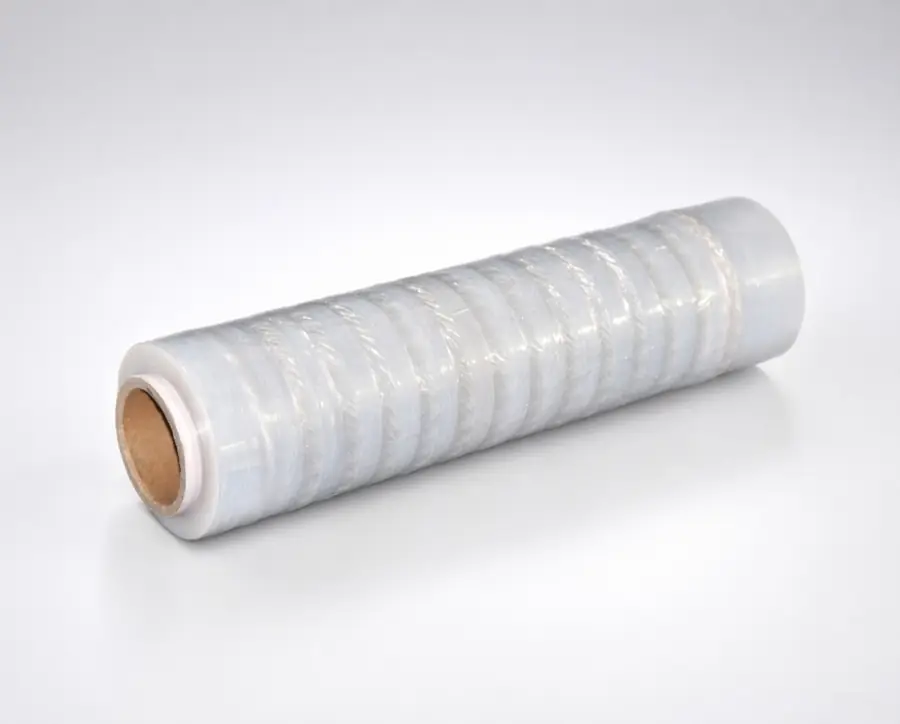
25 micron prestretchable perforated film for machine wrapping with 230 percent prestretch and high load holding force
View Product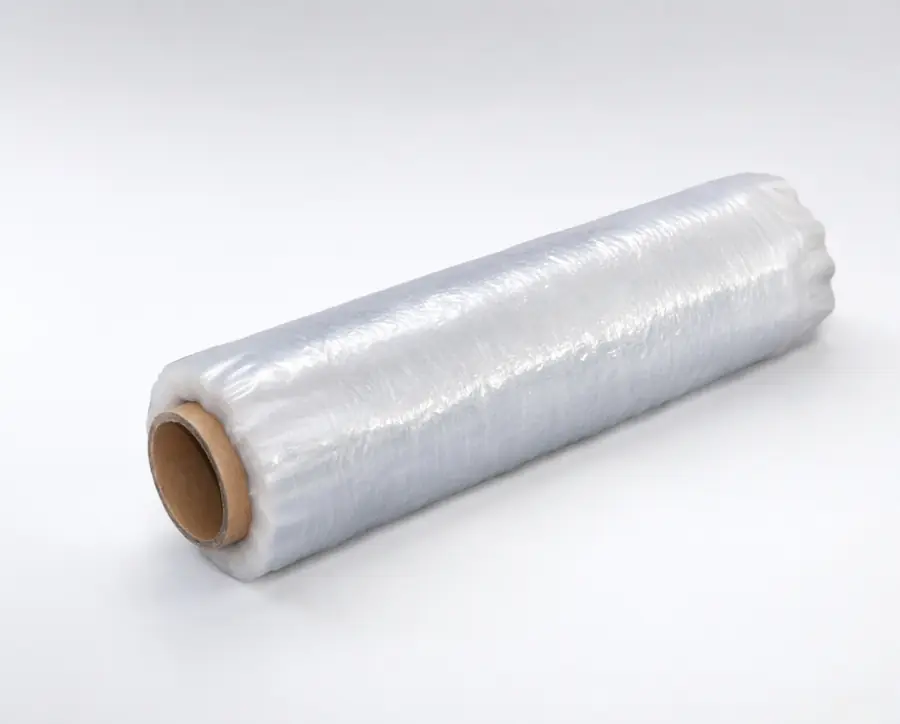
8 micron already prestretched perforated film for machine and hand wrapping with the lowest film weight per pallet
View Product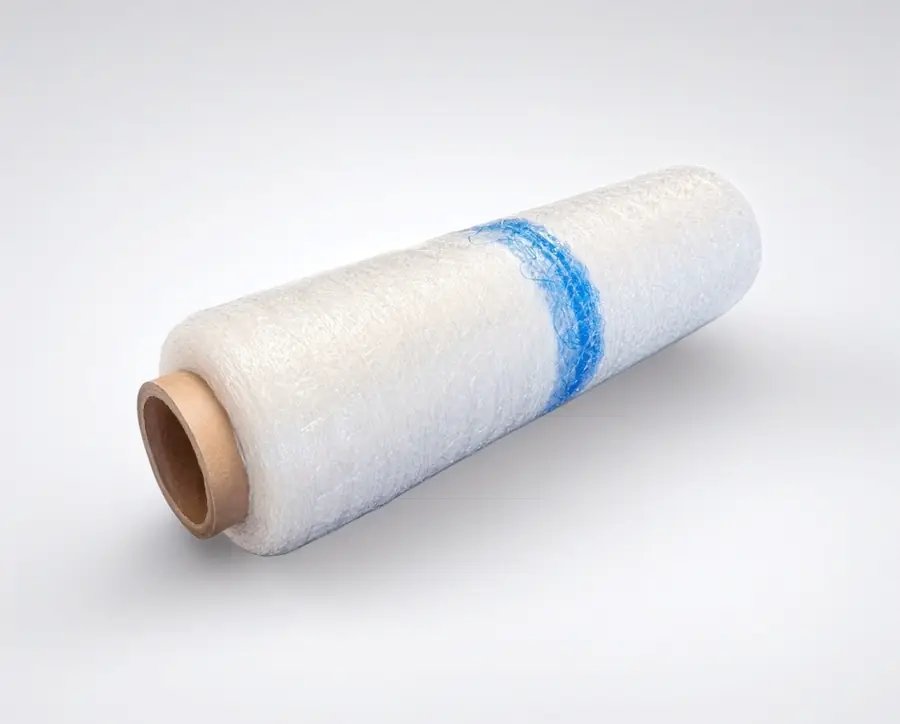
100 percent virgin MPE stretchable pallet net that recovers around the load and holds tension through transport
View ProductPrestretch is the working figure the film is designed to be applied at. Elongation at break is where it fails. The difference between them is the margin that keeps the web from breaking at pallet corners.
Tensile stress at break if your problem is holding the load, weight per metre if your problem is packaging cost or plastic reduction.
Yes, that is the point of the sheet. Compare tensile stress at break and weight per metre directly rather than assuming perforation means weaker.
Weigh a full roll against the stated roll weight, measure the web width and check average thickness. All three carry published tolerances.
Send the load details and a photo. We would rather look at your actual pallet than guess from a description.