Solution
Load Stability
A wrap has one mechanical job: keep the load in the shape it left in. Ventilation must not cost you that.
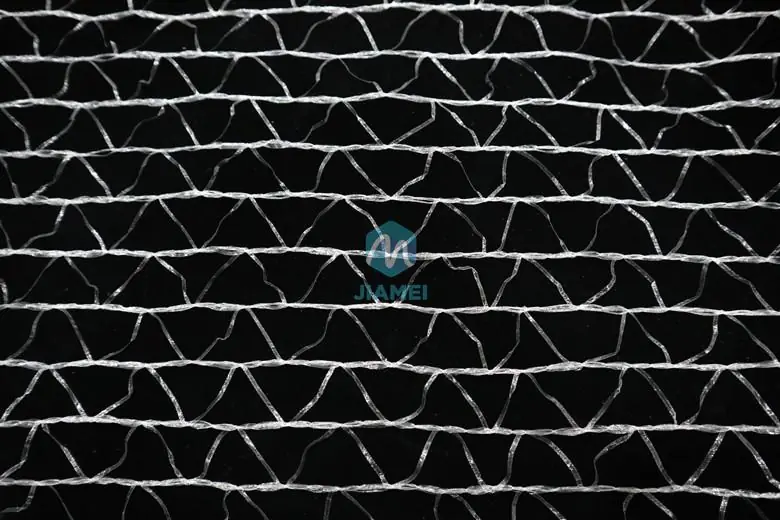
A wrap has one mechanical job: keep the load in the shape it left in. Ventilation must not cost you that.
On a stretch film, the containment force applied to a load comes from the film web being held under tension. Perforations do not remove that. JMSH01 still carries a tensile stress at break of 26 kg and an elongation at break of 250 percent, and it is applied at a prestretch of up to 230 percent.
The number to watch is the gap between the prestretch you set on the wrapper and the elongation at break of the film. Set the machine at or near the break figure and the web will fail at pallet corners, where the geometry is worst.
Film bridges. If a pallet has different case heights across a layer, a film web spans from the tallest carton to the next, leaving the step underneath unsupported. A knitted net follows the profile and grips the edges instead.
Elastic MPE netting goes further. Its stretch rate of 15 to 50 percent is determined by the weight of the load, so it draws out over the load and then pulls back in. When the load settles in transit the net follows it down and stays in contact, where a rigid wrap would go slack.
Heavy, dense, regular loads suit the 25 micron prestretchable film. Uniform stacked crates suit standard HDPE netting. Mixed case sizes, compressible goods and long transport legs suit elastic MPE netting.
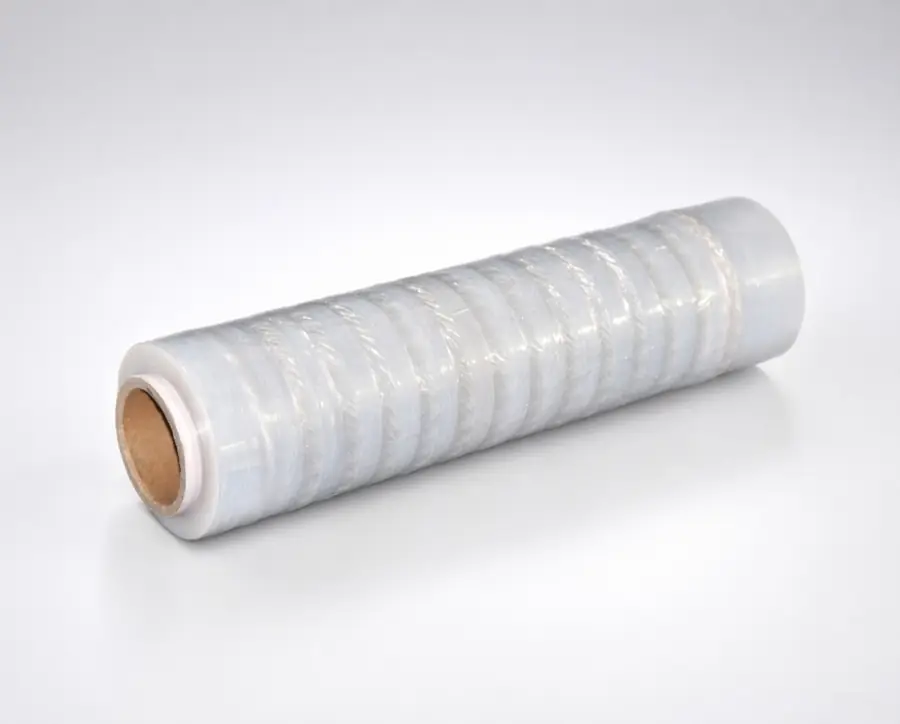
25 micron prestretchable perforated film for machine wrapping with 230 percent prestretch and high load holding force
View Product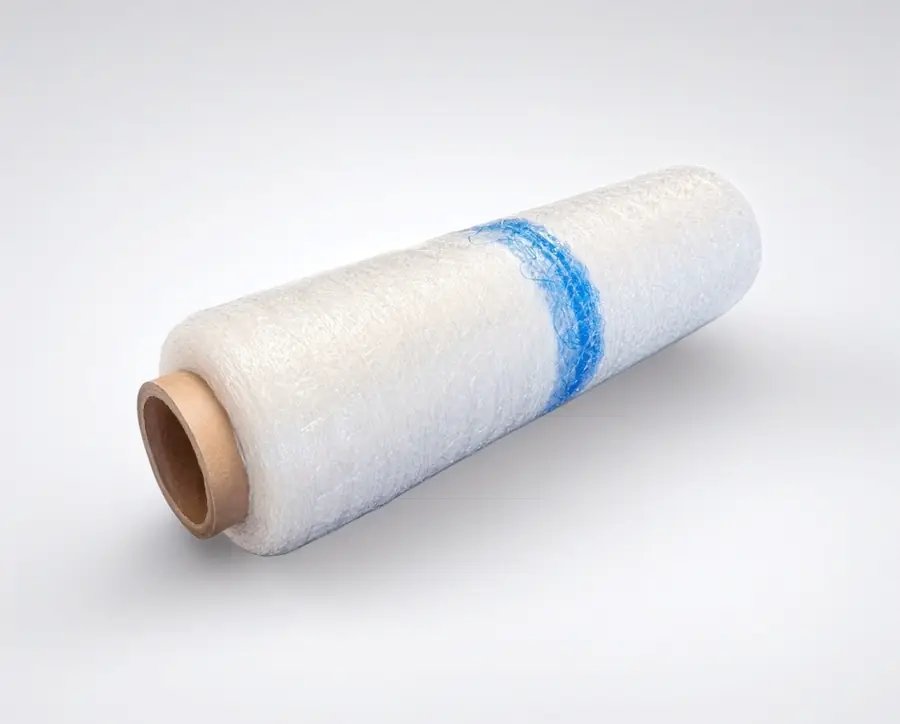
100 percent virgin MPE stretchable pallet net that recovers around the load and holds tension through transport
View Product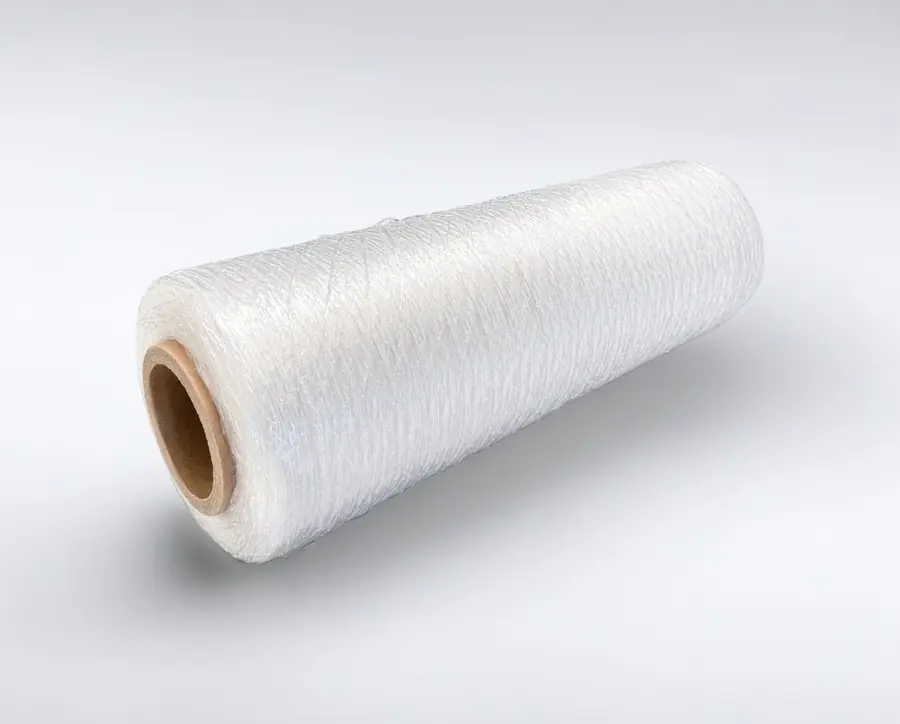
100 percent virgin HDPE knitted pallet net for open air containment of irregular and warm loads
View ProductThe holes are formed within the film web rather than cutting across it. JMSH01 reaches 26 kg tensile stress at break with 250 percent elongation at break, which handles most palletised loads.
The load is settling. A rigid wrap stays where it was applied while the load moves away from it. Elastic MPE netting stretches 15 to 50 percent depending on load weight and keeps pulling in.
Corners apply the highest local strain. If prestretch is set close to the elongation at break, corners are where the web runs out of margin first. Back the prestretch setting down a step.
Netting. Film bridges from the tallest carton to the next and leaves the step underneath unsupported. Knitted mesh conforms to the profile.
Load type, pallet size, weight, wrapper model and the temperature goods are wrapped at. A photo helps if the load is irregular.