
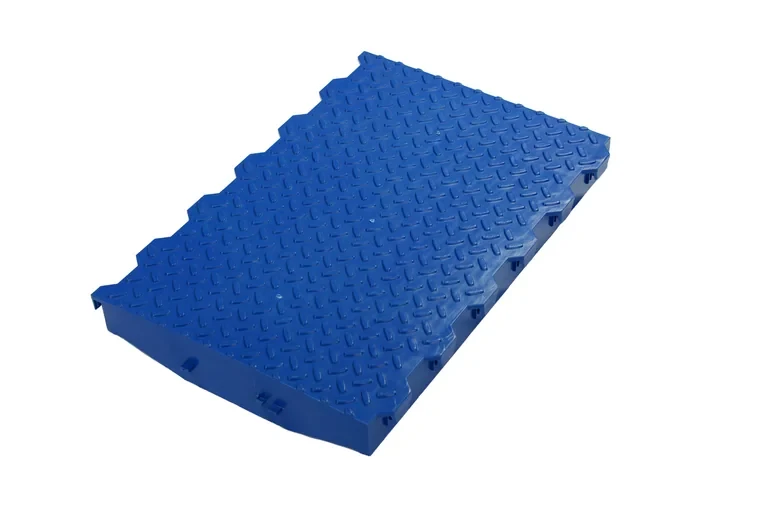
 Slatted Floors
LW Plastic Slat
LW-series PP slat floor with wide drainage gaps and a saw-tooth anti-slip face, made in spans from 200 to 600 mm.
PP / HDPE600×400 / 600×500 / 600×600 mm
Slatted Floors
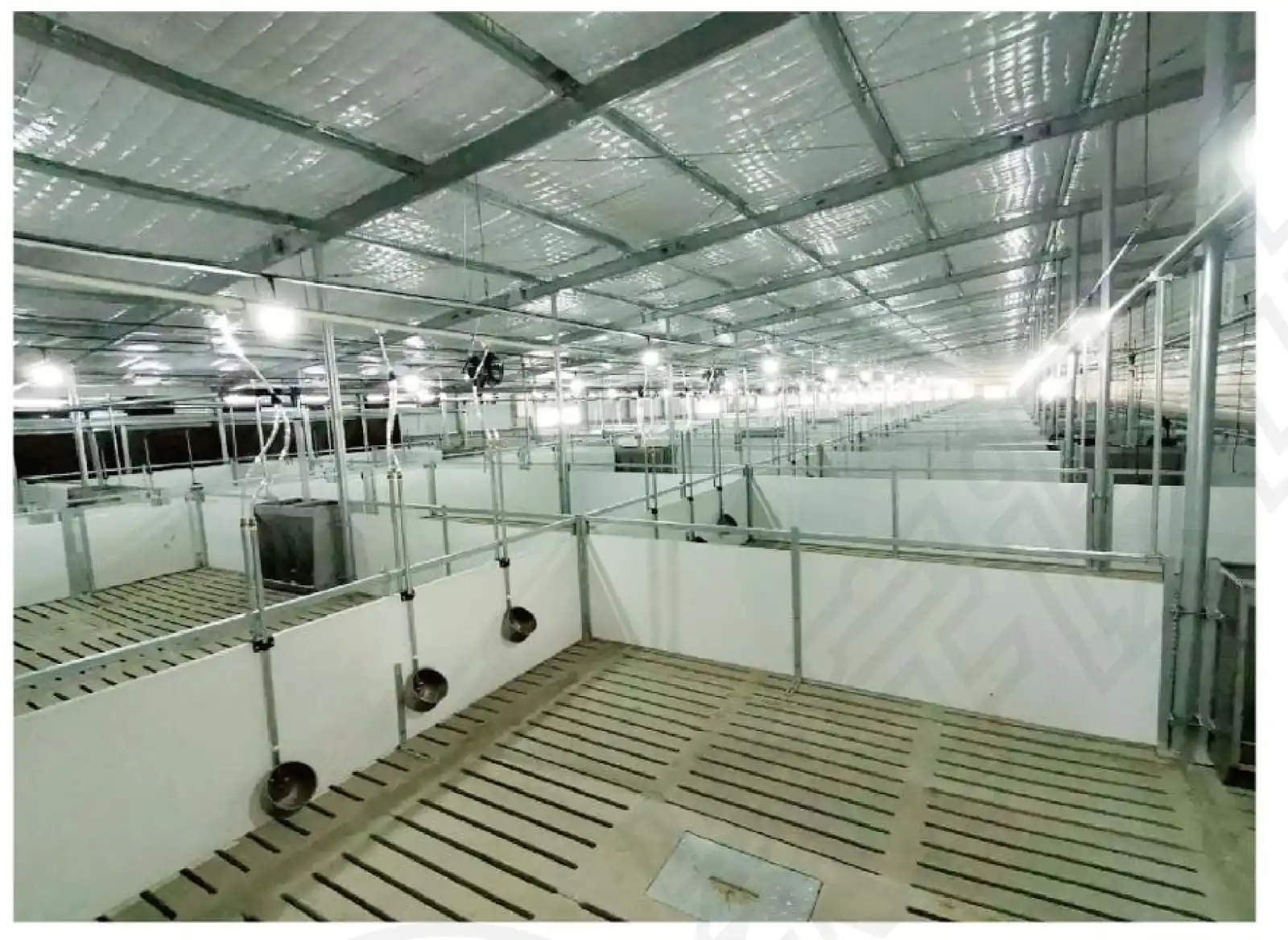
Ductile cast-iron slat insert for the dunging area, where the floor takes the most weight and the most wear.
Cast iron is used where plastic is asked to do too much: under the sow, at the dunging end of a pen, and in any position that sees concentrated weight and constant abrasion. The ductile iron casting carries that load without deflection and holds its gap dimension for the life of the building.
JGM supplies cast-iron slats as inserts within a plastic floor rather than as a whole-room floor, so the harder material sits only where it earns its cost. Finish is hot-dip or coated to slow corrosion in a washdown environment.
Key benefits
A ductile iron casting does not sag between beams the way a thin plastic panel can under a concentrated load.
The drainage gap is cast, not moulded, so it does not close up or wear open under abrasion.
In a farrowing crate the iron area under the sow draws heat from her, which helps keep her comfortable while the piglets stay on the heated plastic side.
The insert is dimensioned to sit in the same beam grid as the plastic slats around it.
Iron takes that abrasion instead and the plastic floor around it lasts longer.
An iron area under the sow conducts heat away, unlike a fully insulated plastic floor.
Inserting iron only in the high-wear zone keeps the majority of the room in lower-cost plastic.
One-factory supply
Flooring, penning, feeding, water and climate are made on the same site, so a room can be specified and shipped as one order.
See the turnkey packageSpecifications
Figures below are taken from the JGM product catalogue. Anything we cannot source from it is marked TBC and confirmed with your quotation rather than estimated.
| Item | Specification |
|---|---|
| Material | Ductile cast iron |
| Finish | Hot-dip or coated |
| Typical position | Dunging zone; sow area of a farrowing crate |
| Panel sizes | TBC confirm with our engineers for your beam grid |
| Weight per panel | TBC |
| Packing | Quantity |
|---|---|
| Packing | TBC advised with the quotation once panel size is fixed |
Ask for the full size chart and carton-loading data for your order.
Ductile cast iron. The Cast Iron Slat is cast in ductile iron and then finished — hot-dip or coated — before dispatch. Casting the drainage gap rather than forming it means the opening keeps its dimension for the life of the panel, which is the reason iron is used in positions where abrasion would open up or close down a moulded gap.
Comparison
| Alternative | When to choose it instead |
|---|---|
| LW Plastic Slat | Plastic is lighter, warmer and cheaper per square metre; iron is for the wear zone only. |
| Waterdrop (LWS) Plastic Slat | Use LWS across the piglet side of a crate and cast iron under the sow. |
| FRP T-Beam Support | Check beam capacity when adding cast iron to a floor originally designed for plastic. |
Use guide
Confirm the beam grid and the load case with our engineers before ordering — cast iron is heavier than the plastic panel it replaces.
Position the insert where manure is dropped and where the sow lies, not across the whole pen.
Set the insert flush with the surrounding plastic so there is no step for an animal to catch.
Inspect the coating annually in rooms washed with acidic disinfectant and touch up where it has been cut.
Answers
It is possible but rarely worth the cost and weight. Cast iron is normally used as an insert in the dunging zone or under the sow, with plastic across the rest of the pen.
Panel sizes are confirmed against your beam grid — send the span and the pen layout and our engineers will confirm what can be cast. Standard dimensions are marked TBC on this page until then.
Hot-dip gives the longest service in a wet room; a coated finish is used where colour matching or cost is the priority.
Tell us the existing beam type and span. Cast iron is heavier than plastic and the support has to be checked before the order is placed.
Related products
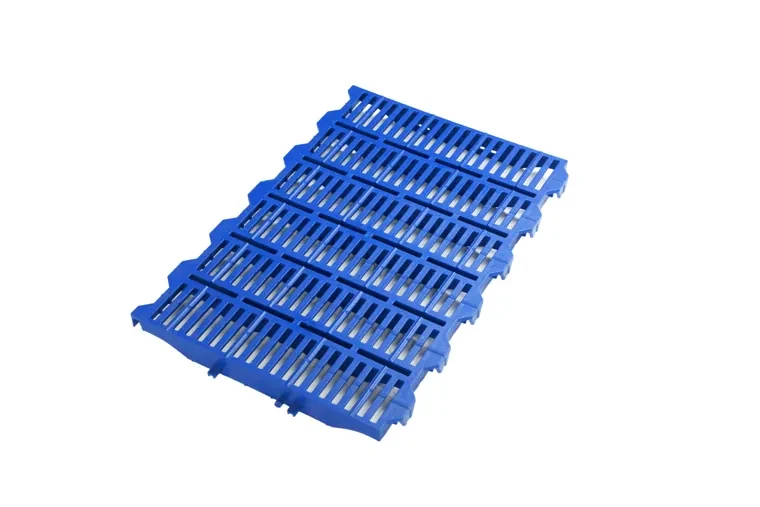
Slatted Floors
LW-series PP slat floor with wide drainage gaps and a saw-tooth anti-slip face, made in spans from 200 to 600 mm.
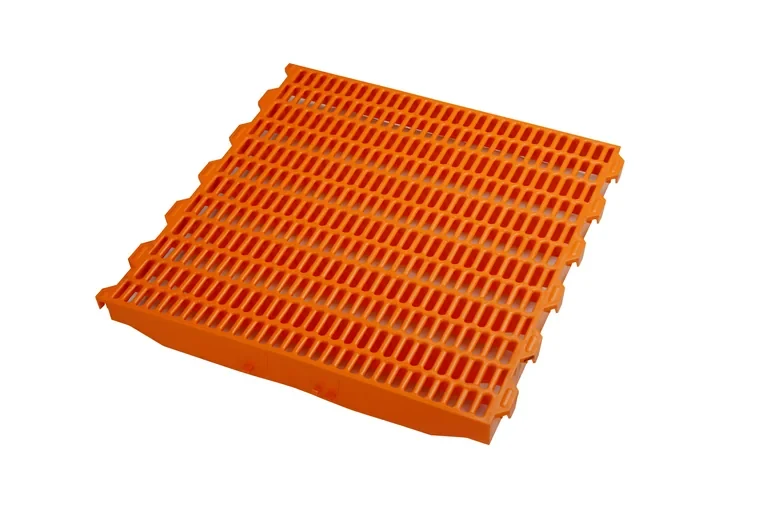 Slatted Floors
Waterdrop-pattern LWS slat with rounded holes for fast drainage and quick washdown in farrowing and nursery rooms.
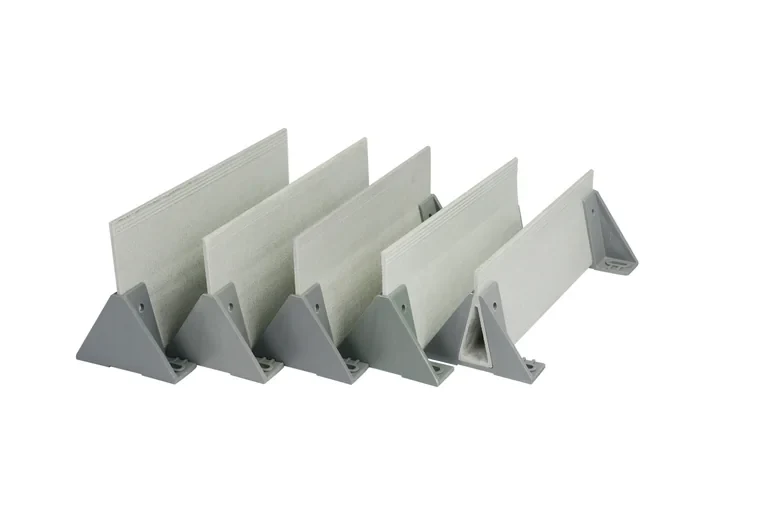 FRP Beams
Pultruded fibreglass T-beam that carries plastic and cast-iron slats across the manure pit and does not corrode doing it.
 Partitions
Integrated farrowing and weaner penning, engineered around the flooring and feeders that go in the same room.
Related reading
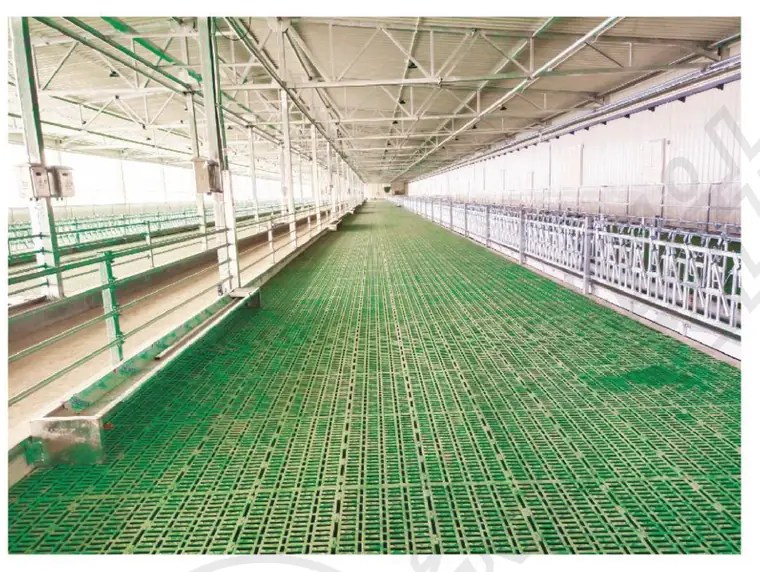 Installation Guide
A slat floor that is set out correctly takes a day. One that is not takes a week and never quite sits flat. Here is the order of work.
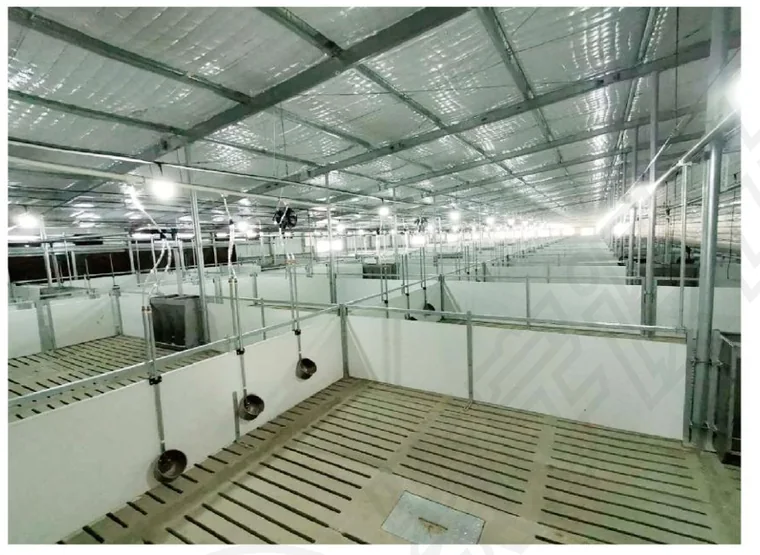 Design Guide
Disinfectant only works on a surface it can reach. Most biosecurity failures are surface-design failures, decided when the equipment was specified.
Talk to an engineer
Tell us the room size, the animal stage and the capacity you are aiming at. Our engineers reply with a layout, an equipment list and a quotation.